
About Dion Archaeological Park
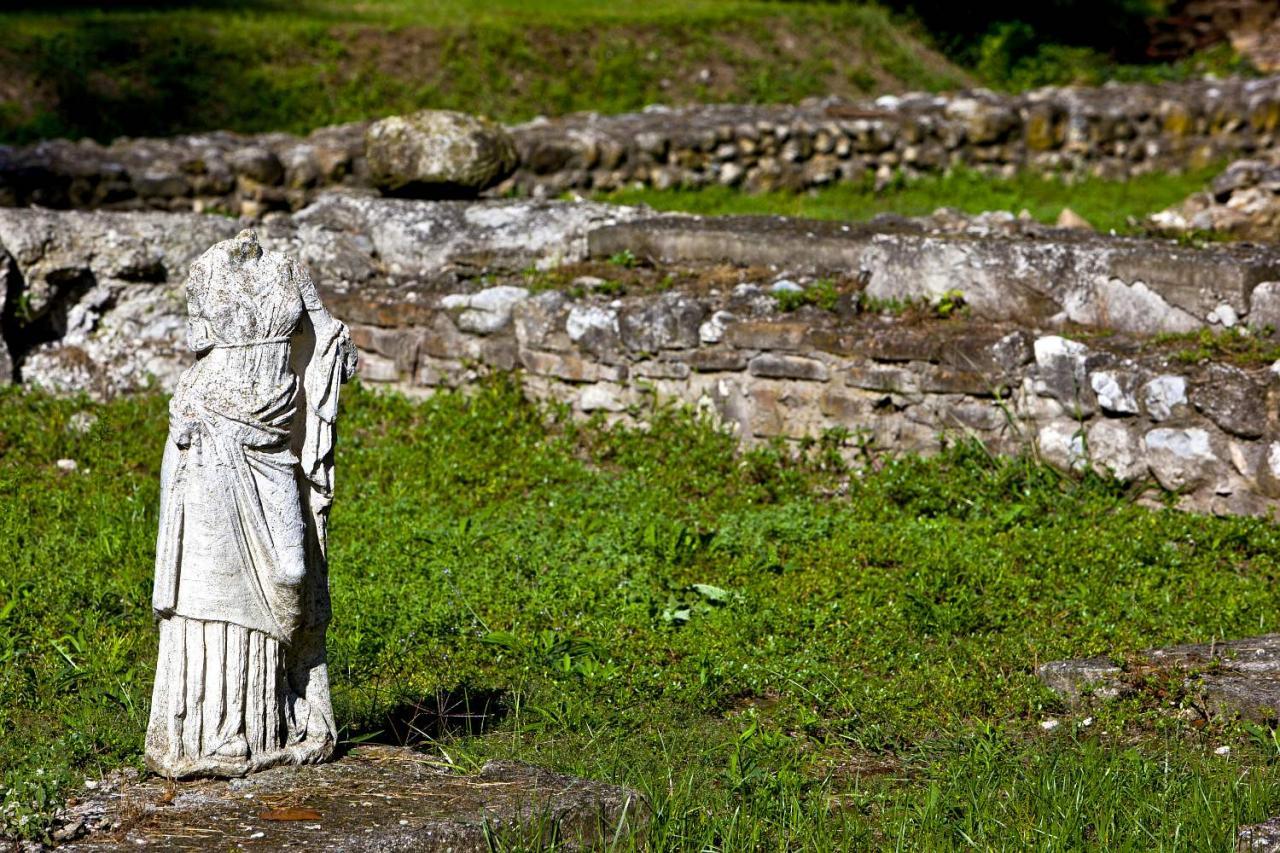
The Dion Archaeological Park is one of the most important archaeological sites of ancient Macedonia. Located at the northern foothills of Mount Olympus, the legendary home of the Olympian gods, Dion was the principal religious center of the ancient Macedonian kingdom and a sacred place dedicated above all to Olympian Zeus.
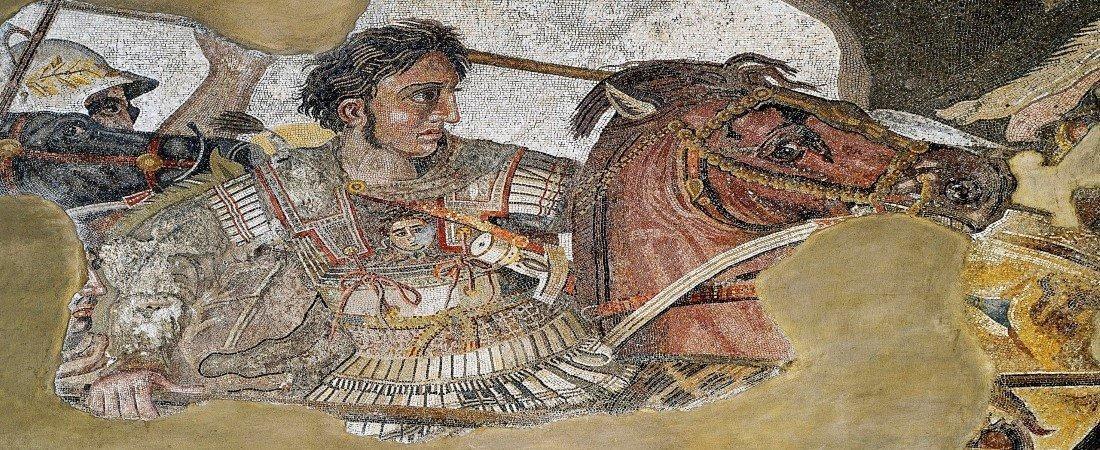
For centuries, Macedonian kings came to Dion to offer sacrifices, celebrate victories and hold religious festivals. Philip II celebrated important military successes here, while Alexander the Great offered sacrifices and held games at Dion before beginning his campaign into Asia.
Today, the archaeological park combines the remains of ancient sanctuaries with an extensive fortified city containing paved streets, Roman baths, theaters, luxurious houses, early Christian basilicas and monuments surrounded by abundant vegetation and spring water.
Dion Archaeological Park at a Glance
- Location: Pieria, Central Macedonia, at the foothills of Mount Olympus
- Ancient importance: religious center of the Macedonian kingdom
- Main deity: Olympian Zeus
- First written reference: Thucydides, in 424 BC
- Major development: especially from the late 5th century BC onward
- Roman period: became the colony Colonia Iulia Augusta Diensis
- Main monuments: Sanctuaries of Zeus, Demeter, Isis and Asklepios, Hellenistic and Roman theaters, Roman baths and luxurious residences
- Important historical connection: Philip II and Alexander the Great
- Museum highlight: the ancient hydraulis, or water organ
Dion – The Sacred City of the Ancient Macedonians
Dion occupied a special position in the ancient Macedonian kingdom because of its close relationship with Mount Olympus and the worship of Zeus.
The name Dion itself is connected with Zeus, and the Sanctuary of Olympian Zeus became the most important religious center of the Macedonians.
The kings of Macedonia regularly visited Dion for sacrifices, celebrations, political ceremonies and military rituals. The sanctuary therefore combined religion with the public display of royal authority.
Mount Olympus and Dion
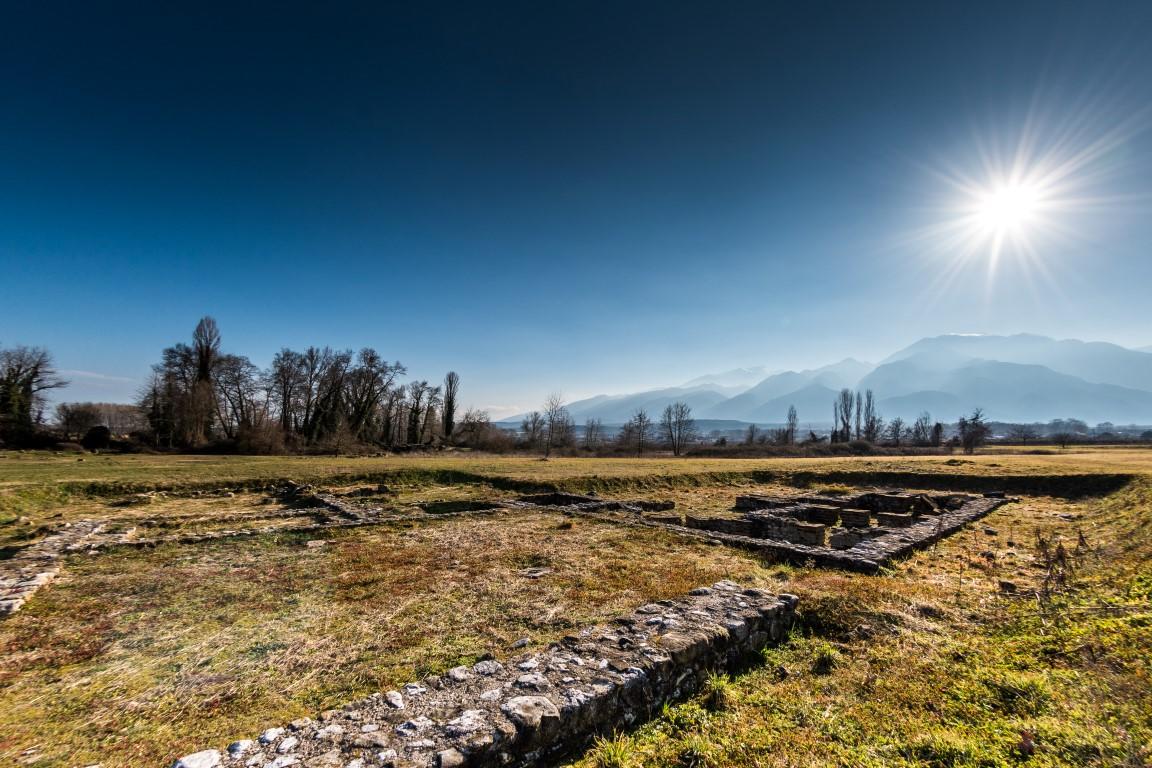
Dion lies beneath Mount Olympus, the highest mountain in Greece and, according to ancient Greek mythology, the home of Zeus and the other Olympian gods.
This extraordinary setting played an important role in the religious identity of Dion. Worship of Zeus, the Muses and other deities developed in a landscape filled with springs, rivers and views toward the sacred mountain.
Archaeological evidence has even been discovered high on Mount Olympus itself, demonstrating that religious activity connected with Zeus extended beyond the city and its sanctuaries.
The Sanctuary of Olympian Zeus
The Sanctuary of Olympian Zeus was the most important sacred area at Dion and one of the principal religious centers of the ancient Macedonian kingdom.
During the reign of King Archelaus in the late 5th century BC, Dion acquired even greater importance. Festivals and competitions were organized in honor of Zeus and the Muses, strengthening the site's role as a religious and political center.
Macedonian rulers used the sanctuary for sacrifices, military celebrations and ceremonies connected with the army and the kingdom.
Alexander the Great at Dion
Dion is closely connected with Alexander the Great.
Before beginning his great campaign against the Persian Empire, Alexander came to Dion, where sacrifices were offered to Olympian Zeus and games were held.
The sanctuary therefore became associated with one of the most important events in Macedonian and ancient Greek history: the beginning of Alexander's campaign into Asia.
After his victory at the Battle of the Granicus in 334 BC, Alexander also commemorated the Macedonian cavalrymen who had fallen in battle with a famous sculptural dedication created by Lysippos.
Philip II and the Royal Festivals
Alexander's father, Philip II of Macedon, also used Dion as an important location for royal celebrations.
Military victories were celebrated in the sanctuary, and the religious festivals held there provided an opportunity to bring together the Macedonian court, army and population.
Dion therefore functioned not simply as a place of worship but as one of the principal ceremonial centers of the Macedonian kingdom.
The Olympia at Dion
During the reign of King Archelaus, a major festival known as the Olympia at Dion developed in honor of Zeus and the Muses.
The festival lasted for several days and included musical, theatrical and athletic events.
The close association between Dion, Zeus and the nine Muses gave these celebrations both religious and cultural importance within Macedonia.
The Sanctuaries of Dion
The sacred area south of the fortified city contained several important sanctuaries dedicated to different gods and goddesses.
Among the principal religious monuments discovered at Dion are:
- Sanctuary of Olympian Zeus
- Sanctuary of Zeus Hypsistos
- Sanctuary of Demeter
- Sanctuary of Asklepios
- Sanctuary of Isis and the Egyptian Gods
Together, these sanctuaries demonstrate how the religious life of Dion changed and expanded over many centuries.
The Sanctuary of Demeter
The Sanctuary of Demeter is one of the oldest known sanctuaries at Dion.
Its origins date to the end of the 6th century BC, and religious activity continued there for centuries with repeated modifications and additions.
Demeter and her daughter Persephone were closely associated with fertility, agriculture and the cycle of life and death, making their cult particularly important in the agricultural landscape surrounding Dion.
The Sanctuary of Zeus Hypsistos
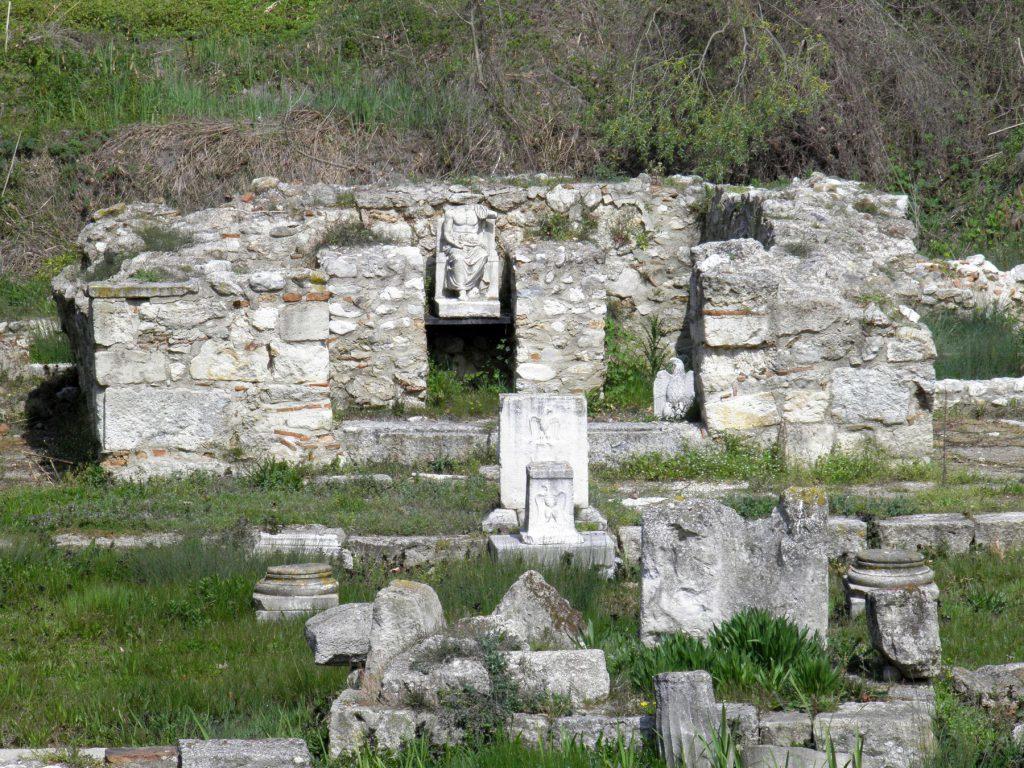
During the Roman period, the cult of Zeus Hypsistos, meaning “Zeus the Highest,” became particularly important at Dion.
The sanctuary contained a cult statue of Zeus and numerous votive monuments, including representations of eagles, one of the principal symbols associated with the god.
The sanctuary demonstrates how older Greek religious traditions continued while also developing new forms during the Roman period.
The Sanctuary of Isis
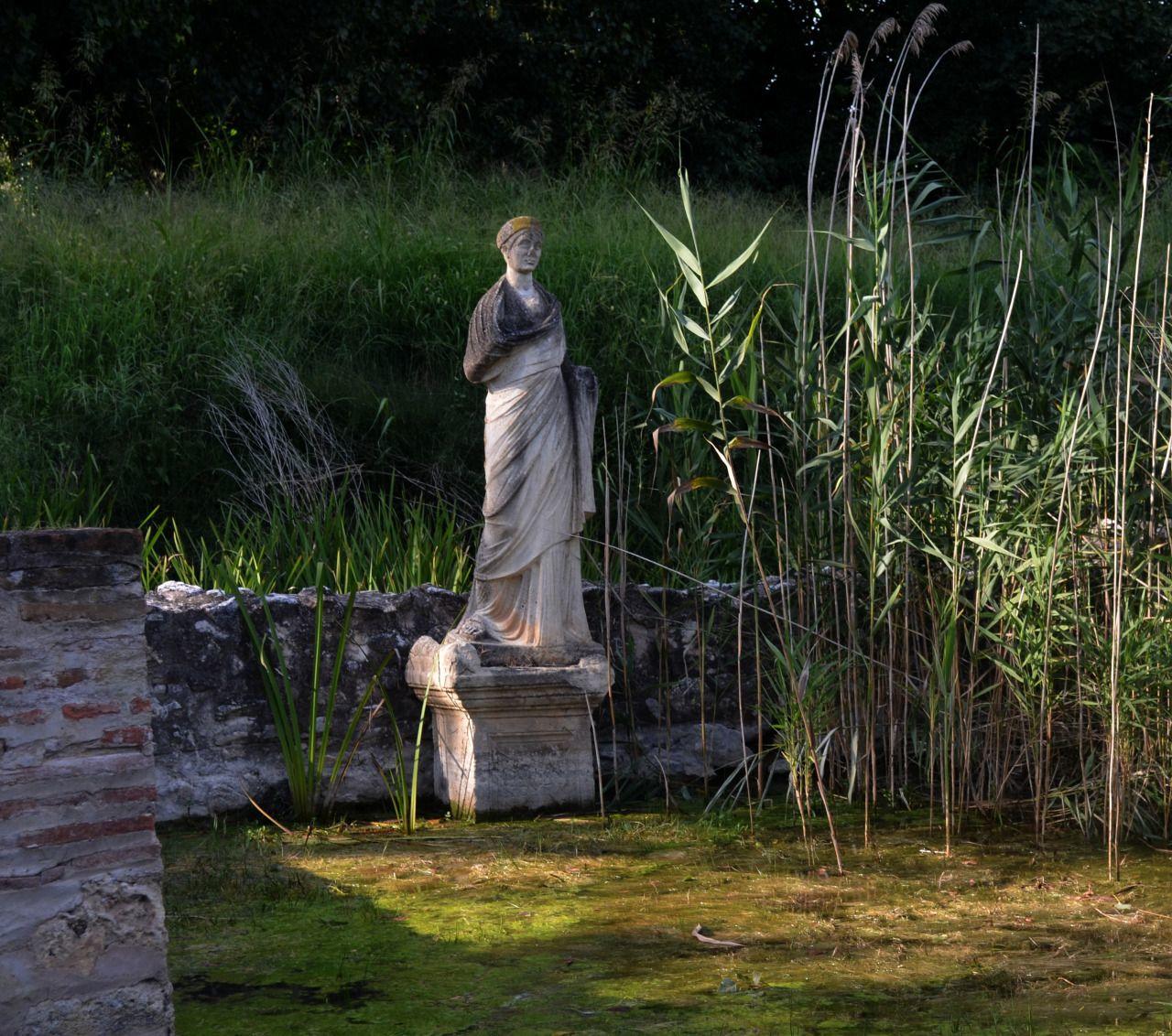
One of the most atmospheric areas of Dion is the Sanctuary of Isis, dedicated to Egyptian deities whose worship became widespread throughout the Greek and Roman worlds.
The sanctuary developed particularly during the Roman period and included several temples dedicated to different divine figures, including Isis Lochia, Isis Tyche and Aphrodite Hypolympidia.
Water played an important role in the design and religious symbolism of the sanctuary. Springs and constructed water channels passed through the complex, creating an environment especially appropriate for the worship of Isis and other Egyptian deities.
The presence of Egyptian cults at Dion demonstrates the international character of religious life in the Roman Empire and the ability of ancient communities to incorporate new gods into older sacred landscapes.
The Sanctuary of Asklepios
Dion also contained a sanctuary dedicated to Asklepios, the ancient Greek god of medicine and healing.
The presence of the sanctuary reflects the importance of healing cults throughout the Greek world and adds another dimension to the diverse religious character of Dion.
The abundant springs and natural water of the area would have formed an appropriate setting for a cult associated with health and purification.
The Hellenistic Theater
Dion preserves the remains of a large Hellenistic Theater associated with the religious and cultural festivals of the sanctuary.
Theater and music played an important role in the celebrations held in honor of Zeus and the Muses.
The location of the theater close to the sacred area shows how religious worship and cultural performances formed part of the same festival tradition.
The Roman Theater
A second theater was constructed during the Roman period.
The Roman Theater reflects the continuing importance of performances and public entertainment after Dion became part of the Roman world.
The existence of both a Hellenistic and a Roman theater allows visitors to see how theatrical architecture and public entertainment developed over different periods of the city's history.
The Fortified City of Dion
North of the sanctuary area lies the ancient fortified city.
During the reign of Cassander, around the end of the 4th and beginning of the 3rd century BC, Dion was surrounded by monumental defensive walls and reorganized according to a regular urban plan.
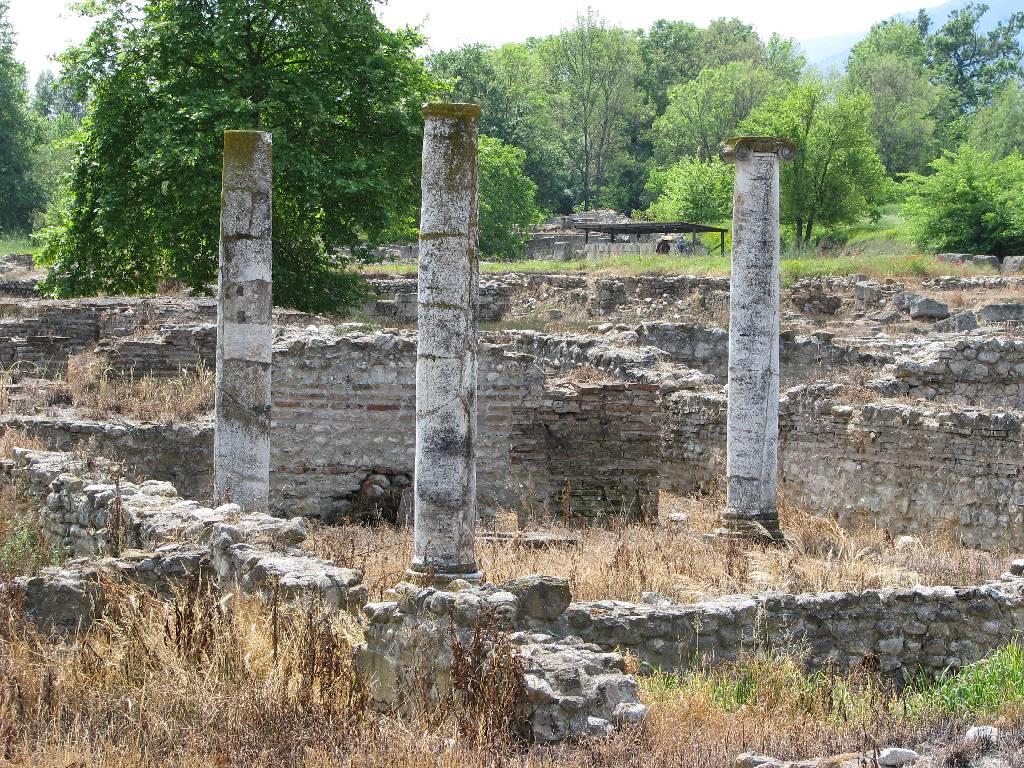
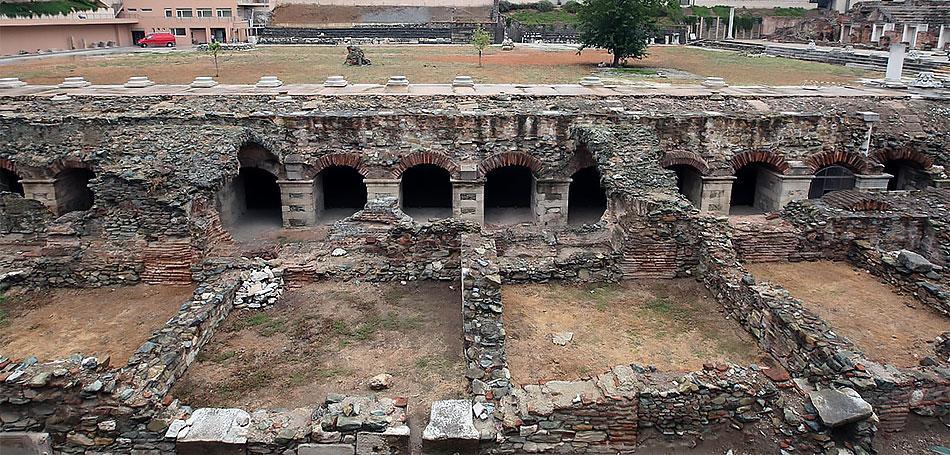
Visitors can still walk through parts of the ancient street system and see public buildings, shops, houses, baths and other structures that reveal the organization of daily urban life.
Dion as a Roman Colony
A major new period in the history of Dion began under Roman rule.
After the rise of Augustus, Dion became a Roman colony known as Colonia Iulia Augusta Diensis.
The city experienced renewed prosperity, particularly during the Roman Imperial period. New public buildings, baths, shops and luxurious private residences transformed the urban landscape.
Despite its Roman colonial status, Greek culture and language continued to play an important role in the life of the city.
The Roman Forum and Streets
The Roman city developed around a network of paved streets and monumental public spaces.
The Roman Forum served as an important center of commercial and public activity, while shops and other buildings lined the principal streets.
Walking through the archaeological park today gives visitors an unusual opportunity to experience the plan of an ancient city rather than simply a collection of isolated monuments.
The Great Roman Baths
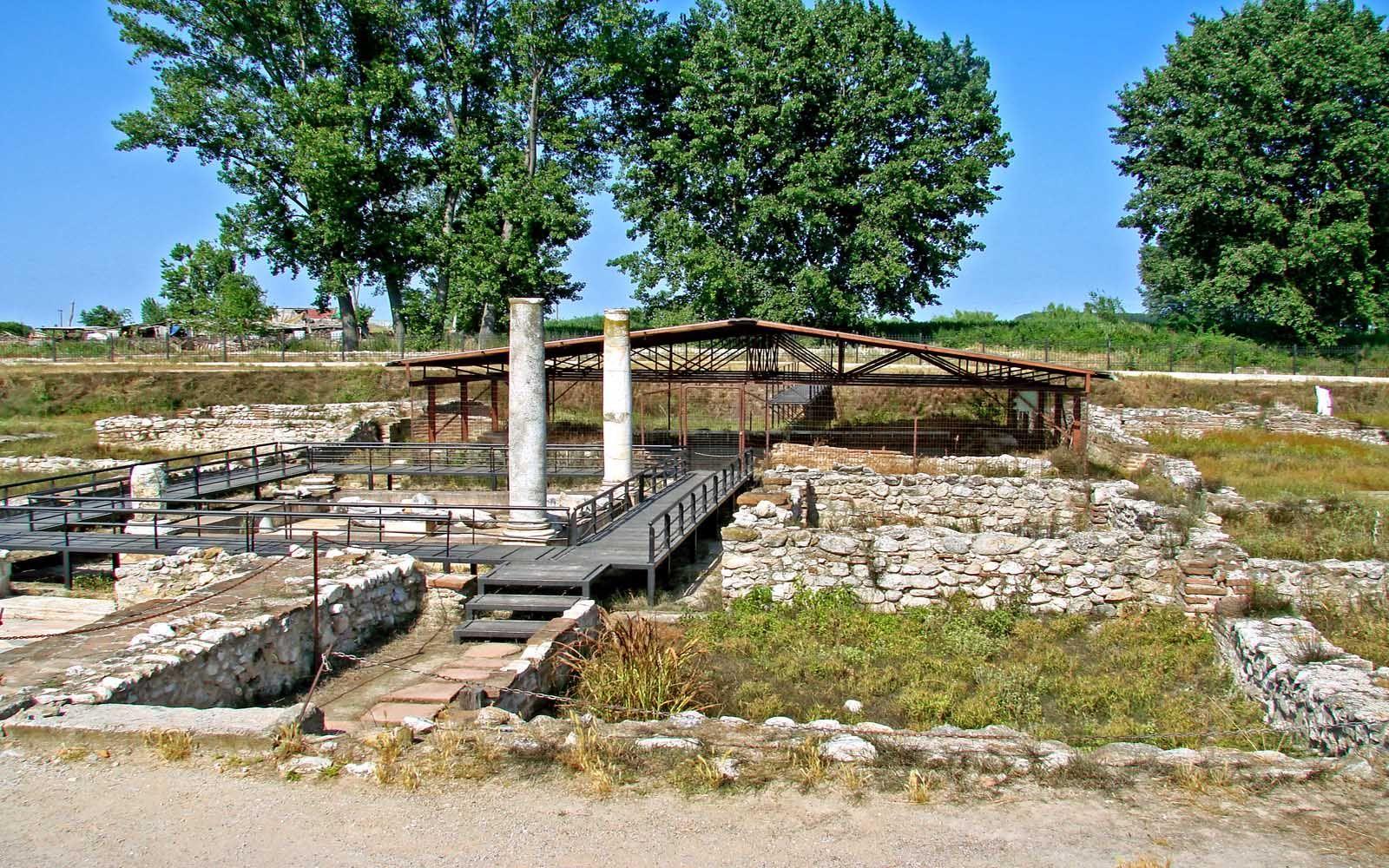
Among the most impressive remains of Roman Dion are its large public bath complexes.
The baths included rooms for hot, warm and cold bathing together with spaces for relaxation and social activity.
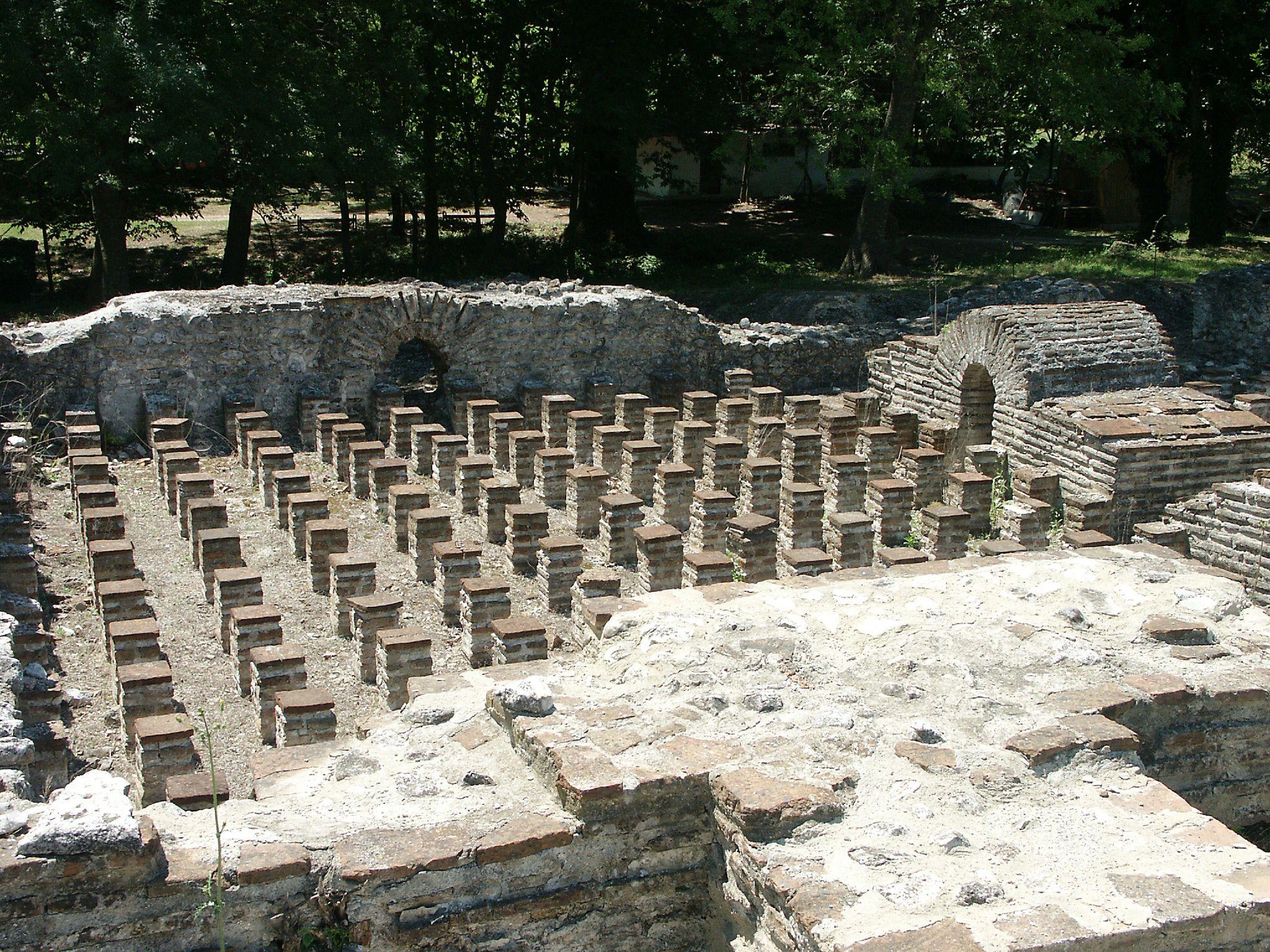
Parts of the ancient hypocaust system survive, showing how hot air circulated beneath raised floors to heat rooms from below.
The baths were also decorated with mosaics, sculptures and architectural elements, demonstrating the wealth and sophistication of Roman Dion.
The Villa of Dionysus
One of the most important private residences discovered at Dion is the luxurious Villa of Dionysus.
The large residential complex dates mainly to the Roman period and reflects the wealth of the city's elite.
Its most celebrated discovery is the magnificent Mosaic of Dionysus, depicting the god Dionysus in a richly decorated scene.
For conservation and protection, the famous mosaic is now housed in the Archaeotheke of Dion, located next to the Archaeological Museum, rather than remaining exposed within the ancient residence.
Luxury Houses in Roman Dion
The Villa of Dionysus was not the only impressive residence in the ancient city.
Archaeologists have discovered several large residential complexes, including houses traditionally known as the House of Euboulos, the House of Epigenes, the House of Leda, the House of Zosa and the House of Athena.
Their large dimensions, mosaic floors, painted walls and valuable objects demonstrate the prosperity enjoyed by members of the urban elite during the Roman period.
Dion in the Early Christian Period
Christianity gradually transformed Dion during Late Antiquity.
The city became the seat of a bishopric, and Christian churches were constructed as the older pagan religious traditions declined.
A large episcopal basilica was built within the later fortified city, while another cemetery basilica stood outside the walls.
These monuments represent one of the final periods of prosperity in the long history of ancient Dion.
The Decline of Ancient Dion
Natural disasters, invasions and broader political and economic changes gradually affected Dion during Late Antiquity.
The inhabited area became smaller, and the city was enclosed within a reduced defensive circuit during the late 4th or early 5th century AD.
Over time, the ancient city was abandoned and many of its monuments were gradually covered by soil, vegetation and sediments.
The Rediscovery and Excavation of Dion
The ruins of Dion attracted the attention of travelers and scholars during the modern period, but systematic archaeological investigation developed much later.
Modern excavations have revealed an extraordinarily extensive archaeological landscape containing sanctuaries, theaters, houses, streets, baths, early Christian churches and cemeteries.
Long-term archaeological research by the Aristotle University of Thessaloniki played a major role in uncovering and studying ancient Dion.
Today, Dion is considered the most extensively excavated archaeological site in the Mount Olympus region.
The Natural Landscape of Dion
One of the features that distinguishes Dion from many other archaeological sites is its unusually rich natural environment.
Springs, streams, trees and dense vegetation surround many of the ancient monuments. Water was always an important element of the landscape and influenced both daily life and religious activity.
The archaeological park should not, however, be described simply as a swamp. The site combines the sacred landscape of the ancient sanctuaries with the remains of an organized and fortified urban center.
The Archaeological Museum of Dion
The Archaeological Museum of Dion is located a short distance from the archaeological park and displays finds discovered during excavations of the ancient city, sanctuaries and cemeteries.
The collections include statues, inscriptions, architectural elements, everyday objects, religious offerings and material from the public and private buildings of Dion.
Finds are organized according to the areas in which they were discovered, helping visitors connect the objects in the museum with the monuments they have seen in the archaeological park.
The Hydraulis of Dion
One of the most unusual discoveries from Dion is the ancient hydraulis, or water organ.
The instrument was discovered during excavations in 1992 and is now displayed in a specially designed area of the Archaeological Museum of Dion.
The hydraulis used hydraulic pressure to regulate the air supplied to its pipes and represents a remarkable example of ancient musical and mechanical technology.
The instrument itself was originally invented in Hellenistic Alexandria by the engineer Ctesibius, and the discovery at Dion provides exceptional evidence for the development of complex musical instruments in antiquity.
Dion Archaeological Park Today
Today, the Dion Archaeological Park allows visitors to explore several different periods of ancient history within a single landscape.
The sanctuaries reveal the religious importance of Dion to the ancient Macedonians, while the theaters, Roman streets, bath complexes and luxurious houses illustrate the development of the city during Hellenistic and Roman times.
The Early Christian basilicas document its final important historical phase, while the Archaeological Museum and Archaeotheke preserve many of the most significant objects discovered during excavation.
With Mount Olympus rising above the site, Dion remains one of the most distinctive archaeological destinations in northern Greece.
Tours We Recommend