
About Panathenaic Stadium (Kallimarmaro) in Athens City

The Panathenaic Stadium, also known as Kallimarmaro, is one of the most distinctive landmarks in Athens and the only stadium in the world built entirely of marble.
Located in a natural hollow between the hills of Ardittos and Agra, the stadium combines the history of ancient Greek athletics with the revival of the modern Olympic Games.
The name Kallimarmaro refers to its beautiful marble appearance, created with white Pentelic marble from Mount Penteli.
The Panathenaic Stadium at a Glance
The history of the stadium stretches back more than two thousand years.
An earlier racecourse existed on the site before the Athenian statesman Lycurgus developed a permanent stadium around 330–329 BC for athletic competitions connected with the Great Panathenaic Games.
The stadium later underwent a spectacular transformation during the Roman period, when it was rebuilt in marble by the wealthy Athenian benefactor Herodes Atticus.
Centuries later, the ancient stadium was rediscovered and reconstructed, eventually becoming the central venue of the first modern Olympic Games in 1896.
The Ancient Stadium
The original stadium was closely connected with the Panathenaic Games, one of the most important festivals of ancient Athens.
The festival was held in honor of the goddess Athena and included religious ceremonies, processions, musical competitions, and athletic contests.
Around 330–329 BC, Lycurgus oversaw the construction of a more permanent stadium on the site of an earlier racecourse.
Its elongated form followed the natural terrain between the surrounding hills, creating an ideal setting for foot races and other athletic competitions.
Herodes Atticus and the Marble Stadium
During the Roman period, the stadium was transformed by Herodes Atticus, a wealthy Athenian senator, public benefactor, and patron of major building projects.
Between approximately AD 140 and 143, the stadium was rebuilt on a monumental scale using white Pentelic marble.
The new structure could accommodate tens of thousands of spectators, traditionally estimated at around 50,000.
This marble reconstruction gave the stadium much of the monumental character associated with the name Kallimarmaro today.
As ancient athletic festivals declined during Late Antiquity, the stadium gradually ceased to function as a major sporting venue. Over the centuries, much of its marble was removed and reused in other buildings.
Rediscovery and the Zappas Olympics
Interest in the ancient stadium returned during the 19th century, when archaeological research and the revival of Greek national identity brought renewed attention to the site.
Systematic excavations were carried out in 1869–1870 under the architect and archaeologist Ernst Ziller.
The stadium subsequently hosted athletic competitions known as the Zappas Olympics in 1870 and 1875.
These early sporting events formed part of the wider movement that eventually led to the revival of the modern Olympic Games.
The First Modern Olympic Games of 1896
The Panathenaic Stadium became internationally famous when Athens was selected to host the first modern Olympic Games in 1896.
The stadium was reconstructed in marble for the Games, with important financial support from the Greek benefactor Georgios Averoff.
It hosted the opening and closing ceremonies and several major competitions during the historic event.
The successful Games of 1896 established the stadium as one of the most recognizable symbols of the modern Olympic movement.
The Panathenaic Stadium and the 2004 Olympic Games
More than a century later, the Panathenaic Stadium again became part of Olympic history when Athens hosted the 2004 Summer Olympic Games.
During the Games, the stadium hosted the archery competition and served as the finishing point for both the men's and women's Olympic marathon events.
The use of the historic stadium during the 2004 Games created a direct connection between ancient Greek athletics, the first modern Olympics of 1896, and the contemporary Olympic movement.
The Athens Marathon
The Panathenaic Stadium is closely associated with the modern Athens Marathon. The Authentic.
The race follows a route inspired by the legendary journey from Marathon to Athens and finishes inside the Panathenaic Stadium.
For thousands of runners from Greece and around the world, entering the marble stadium at the end of the marathon is one of the most memorable moments of the event.
The Olympic Flame Ceremony
The Panathenaic Stadium also plays an important ceremonial role in the modern Olympic tradition.
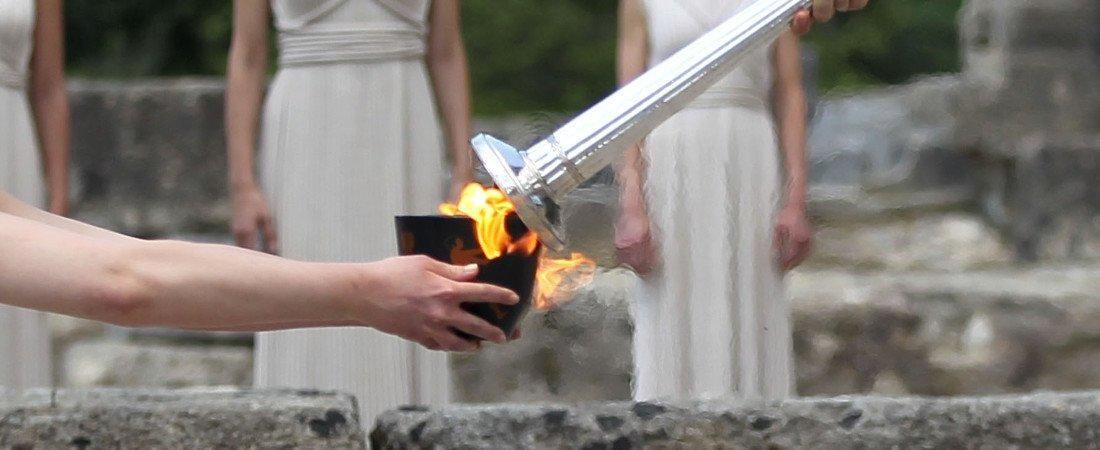
After the Olympic Flame is lit at Ancient Olympia and travels through Greece, the stadium frequently hosts the official handover ceremony.
During this ceremony, the Hellenic Olympic Committee formally presents the Olympic Flame to representatives of the country hosting the next Olympic Games.
This tradition reinforces the stadium's unique connection with both Greece's ancient athletic heritage and the international Olympic movement.
The Panathenaic Stadium Today
Today, the Panathenaic Stadium remains both a historic monument and an active venue.
Visitors can walk through the marble stands, enter the track area, explore parts of the stadium complex, and experience one of the most important locations in Olympic history.
The stadium also continues to host sporting events, official ceremonies, and selected cultural events.
Its extraordinary combination of ancient origins, Roman reconstruction, 19th-century restoration, and modern Olympic history makes the Panathenaic Stadium one of the most important landmarks to visit in Athens.


See the Panathenaic Stadium with one of our tours:
Tours We Recommend


7 Day Combined Tour Package to Athens City and Santorini Island
From: