
Parthenon in Athens: History, Architecture & Sculptures

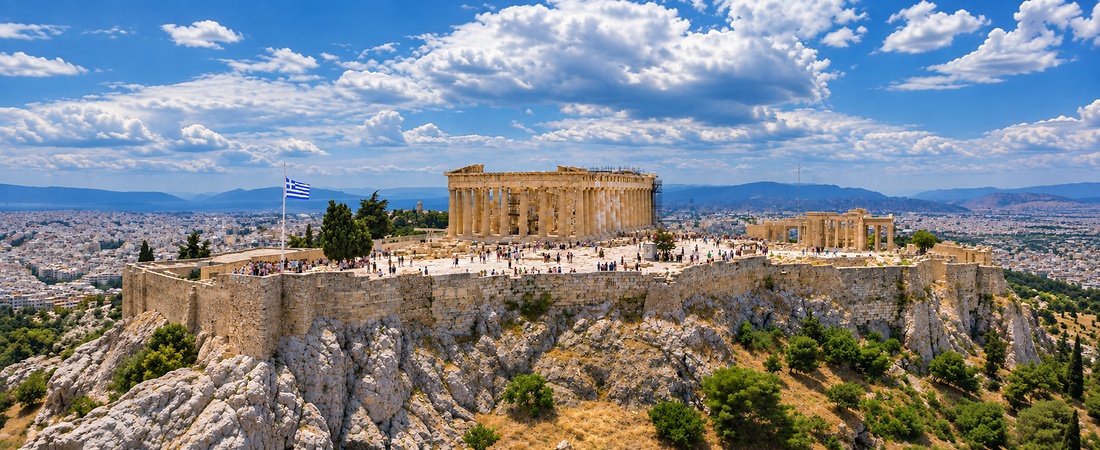
The Parthenon is the most famous monument on the Acropolis of Athens and one of the greatest surviving achievements of Classical Greek architecture.
Dedicated to Athena Parthenos, the patron goddess of Athens, the temple was built during the height of Athenian power in the 5th century BC. Construction began in 447 BC, the main building was substantially completed by 438 BC, and sculptural decoration continued until approximately 432 BC.
For more than 2,400 years, the Parthenon has been among the most recognizable symbols of ancient Greece, Classical Athens and Athenian cultural achievement. Discover its architecture, sculptures and remarkable history.
The Parthenon at a Glance
The Parthenon formed the centerpiece of the great rebuilding program undertaken on the Acropolis during the leadership of the Athenian statesman Pericles.
The architects were Iktinos and Kallikrates, while the sculptor Pheidias supervised the artistic program associated with the temple.
The building is primarily a Doric temple, although it incorporates important Ionic elements, particularly the continuous sculpted frieze around the upper walls of the inner structure.
The Parthenon is widely regarded as a masterpiece of Greek architecture because of its proportions, sculptural decoration and subtle refinements.
Architecture and Construction
The Parthenon was built almost entirely from Pentelic marble, quarried from Mount Penteli northeast of Athens.
The exterior colonnade consists of eight columns across each end and seventeen along each side. Because the corner columns are shared, the exterior contains 46 columns in total.
Although the temple appears perfectly straight, its architects introduced subtle architectural refinements. The platform is slightly curved, the columns lean gently inward, and each column has a small swelling known as entasis. These adjustments contribute to the visual balance for which the building is famous.
Athena Parthenos
Inside the main chamber of the temple once stood an enormous statue of Athena Parthenos, created by Pheidias.
The statue was approximately 12 meters high and made with gold and ivory over an internal structure, a technique known as chryselephantine sculpture.
Athena was represented standing in armor, holding a smaller figure of Nike, the goddess of victory, with a large decorated shield beside her.
The original statue has not survived, but its appearance is known from ancient descriptions, coins, reliefs and later copies.
The Parthenon as a Treasury
The Parthenon was associated with the worship and representation of Athena, but it also had an important financial function.
Precious objects and valuable offerings were stored within the building, while funds connected with the Delian League and later Athenian power were also kept on the Acropolis.
The temple therefore combined religious, civic, artistic and financial significance in Classical Athens.
The Sculptural Decoration
The Parthenon was decorated with one of the most ambitious sculptural programs of the ancient Greek world. The three major groups were the pediments, metopes and continuous Ionic frieze.
The east pediment represented the birth of Athena, while the west depicted the contest between Athena and Poseidon for Athens. Learn more about the myth of Athena and Poseidon.
The temple had 92 sculpted metopes, showing mythological battles between gods and Giants, Greeks and Amazons, Lapiths and Centaurs, and scenes related to the Trojan War.
The continuous Ionic frieze was approximately 160 meters long. It is generally interpreted as showing the procession of the Greater Panathenaia, Athens’ important festival in honor of Athena.
From Ancient Temple to Christian Church
The Parthenon remained standing long after Classical antiquity and was adapted to new religious uses.
During Late Antiquity, commonly dated to around the 6th century AD, it was converted into a Christian church and was eventually dedicated to the Virgin Mary.
The conversion changed parts of the ancient structure, but continuous use also contributed to its survival through much of the medieval period.
The Parthenon During the Ottoman Period
After Athens came under Ottoman rule, the Parthenon was eventually converted into a mosque.
For centuries, the building continued to serve a religious function while retaining much of its ancient structure. This changed dramatically during the war between Venice and the Ottoman Empire.
The Explosion of 1687
On 26 September 1687, Venetian forces bombarded the Acropolis in an attempt to capture Athens from the Ottomans.
Ottoman forces were using the Parthenon to store gunpowder. A Venetian projectile struck the building, igniting the ammunition and causing a devastating explosion.
The blast destroyed much of the central section, brought down walls and columns and severely damaged its sculptures. Before the explosion, the Parthenon had survived in a considerably more complete condition.
Lord Elgin and the Parthenon Sculptures
At the beginning of the 19th century, while Athens was under Ottoman rule, Thomas Bruce, 7th Earl of Elgin, arranged for the removal of sculptures and architectural elements from the Acropolis.
Between approximately 1801 and 1805, his agents removed significant portions of the Parthenon’s surviving sculptural decoration, together with objects from other Acropolis monuments.
The collection was acquired by the British Museum in 1816, where many of the sculptures remain today.
The circumstances and extent of the authorization given to Elgin remain disputed. The British Museum maintains that the removals took place with Ottoman permission and that the acquisition was reviewed by the British Parliament. Greek authorities argue that the sculptures are integral to the monument and have long called for their reunification in Athens.
The Reunification Debate
The question of the Parthenon sculptures gained international attention through the efforts of Greek actress and Minister of Culture Melina Mercouri.
In 1982, she presented Greece’s case for their return at a UNESCO conference in Mexico, helping establish the issue as a major international cultural debate.
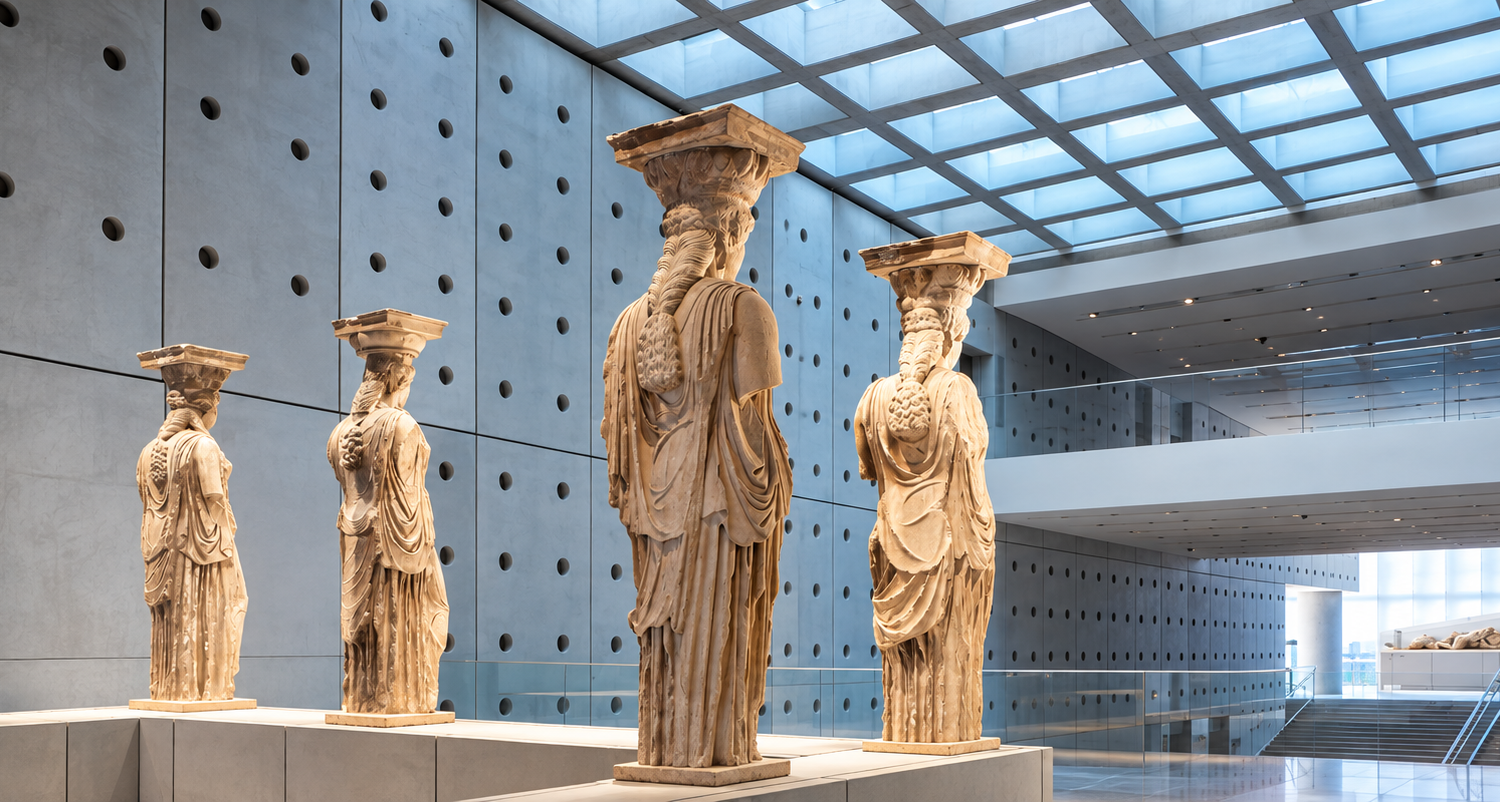
Greece continues to seek reunification of surviving Parthenon sculptures in Athens, where the Acropolis Museum has a gallery designed to present the sculptural decoration in its original sequence.
The Parthenon Today
Today, the Parthenon remains the central monument of the Acropolis of Athens and one of the world's most significant archaeological landmarks.
Long-term conservation and restoration work continues to protect the ancient structure, stabilize damaged architectural members and correct problems from earlier restoration projects.
Visitors cannot enter the temple interior, but they can walk around the monument and observe its architecture, surviving sculptures and commanding position above Athens.
A visit to the nearby Acropolis Museum offers a more complete understanding of the Parthenon’s history, architecture and surviving decoration.
Visit the Parthenon on a Guided Athens Tour
See the Parthenon and Acropolis monuments on one of two Hop in Sightseeing experiences. Choose a morning city tour with the Acropolis Museum or a full-day experience continuing to Cape Sounion.
For more about the wider archaeological site, see our Acropolis of Athens visitor guide. For the legendary story of Athena and Poseidon, explore our Acropolis mythology guide.


See the Parthenon and the Acropolis Area with one of our tours:
Tours We Recommend


7 Day Combined Tour Package to Athens City and Santorini Island
From: