
About Corinth Canal
The Corinth Canal is one of the most remarkable engineering landmarks in Greece, cutting through the narrow Isthmus of Corinth and connecting the Gulf of Corinth with the Saronic Gulf.
The canal is approximately 6.3 kilometers long and creates a direct maritime passage between the Ionian side of Greece and the Aegean, avoiding the much longer voyage around the Peloponnese.
Although the idea of cutting through the Isthmus dates back to antiquity, the modern canal was finally constructed during the late 19th century and officially opened in 1893.
The Corinth Canal at a Glance
The Corinth Canal passes through one of the narrowest points of the Isthmus of Corinth.
Its total length is approximately 6,343 meters. At the surface, the canal is about 24.6 meters wide, while the navigable width near the bottom is narrower.
The water depth is approximately 8 meters, making the canal suitable mainly for smaller commercial vessels, tourist ships, and yachts rather than large modern ocean-going ships.
Despite its relatively narrow dimensions, the canal remains one of the most distinctive waterways in Greece and an impressive example of late 19th-century engineering.
The Ancient Dream of Cutting the Isthmus
The idea of creating a waterway across the Isthmus of Corinth is more than two thousand years old.
Ancient rulers understood that cutting through the narrow strip of land could dramatically reduce the maritime distance between the Corinthian and Saronic gulfs.
Several ancient leaders considered or attempted such a project, but the technical difficulties were enormous for the engineering capabilities of the time.
Instead, the ancient Greeks developed another solution: the Diolkos.
The Diolkos – The Ancient Overland Route
The Diolkos was a paved overland route used to transport ships and cargo across the Isthmus of Corinth.
It was constructed during the Archaic period, probably in the 6th century BC, and remained in use for many centuries.
The route connected the Saronic side of the Isthmus with the Corinthian Gulf, allowing ships or their cargoes to be hauled across land instead of sailing around the Peloponnese.
The name Diolkos is connected with the idea of dragging or hauling something across.
Sections of the ancient stone roadway still survive today and provide important evidence of the engineering solutions developed by the ancient Greeks.
Periander and the First Canal Plans
According to ancient tradition, one of the earliest rulers to consider cutting a canal through the Isthmus was Periander, Tyrant of Corinth, around the late 7th or early 6th century BC.
The project was abandoned, most likely because the technical challenges were beyond the capabilities of the period.
Instead, the Diolkos provided a practical alternative for transporting vessels and cargo between the two gulfs.
Over the centuries, other rulers also considered cutting a canal, including Demetrius Poliorcetes and later Roman leaders.
Nero’s Attempt in 67 AD
The most serious ancient attempt to construct a canal was made by the Roman Emperor Nero in AD 67.
According to historical accounts, Nero ceremonially began the project himself using a golden pickaxe.
Thousands of workers, prisoners, and slaves were involved in the excavation.
However, the project was abandoned after Nero's death and the political instability that followed in Rome.
Parts of Nero's ancient excavation works remained visible for centuries and later helped demonstrate that the idea of cutting the Isthmus had been seriously considered long before the modern canal.
The Modern Canal Project
The idea of constructing the Corinth Canal was revived after the creation of the modern Greek state.
Interest increased during the 19th century as major international engineering projects such as the Suez Canal demonstrated what modern construction techniques could achieve.
In 1881, the project was formally awarded to a company led by the Hungarian general and entrepreneur István Türr, with engineer Béla Gerster playing a major technical role.
Construction officially began in 1882.
The project faced major financial and engineering difficulties, and the original company eventually collapsed.
Work was later continued by a Greek company, with the support of prominent Greek businessman Andreas Syngros.
Construction and Opening in 1893
After more than a decade of difficult construction work, the Corinth Canal was finally completed in 1893.
The official inauguration took place on 25 July 1893.
The completion of the canal represented a major engineering achievement for Greece and fulfilled a project that had been imagined since antiquity.
By providing a direct passage through the Isthmus, the canal significantly shortened many maritime routes between western and eastern Greece.
Engineering of the Corinth Canal
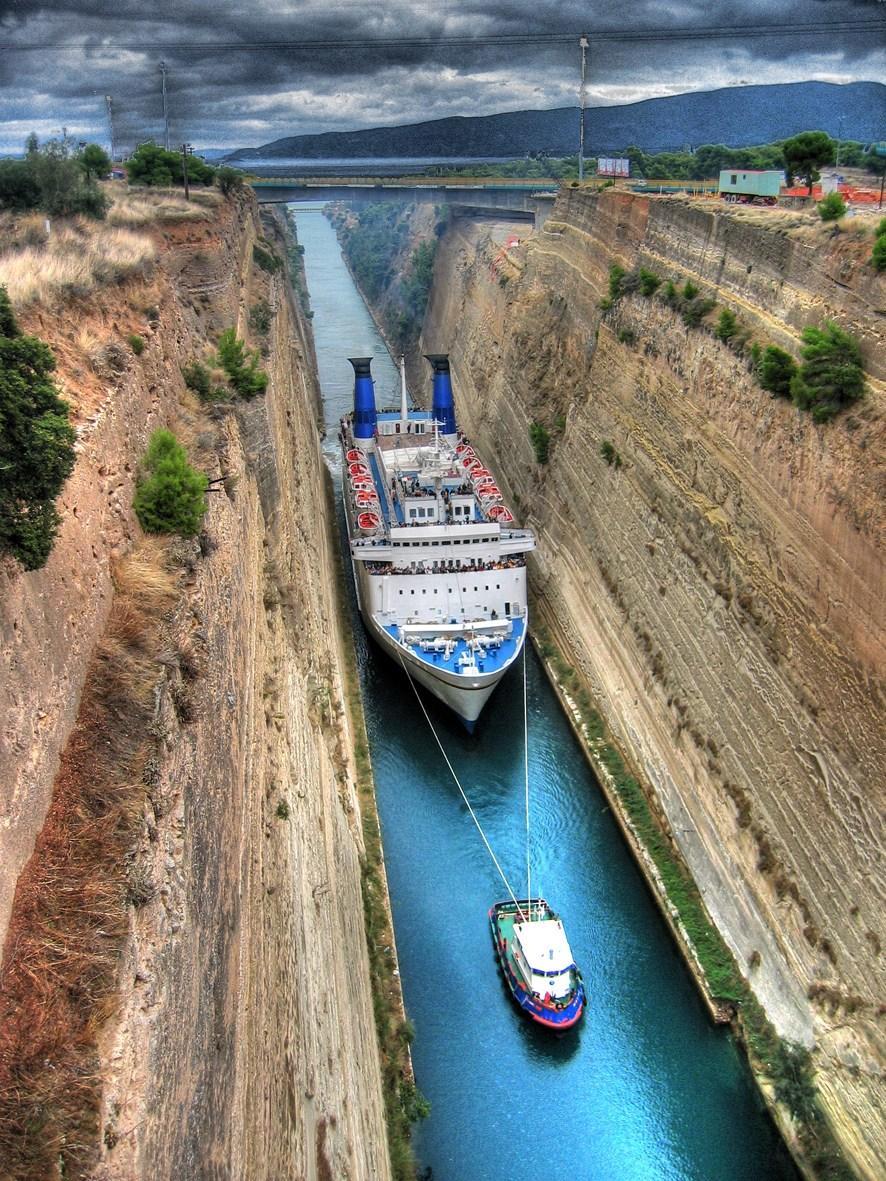
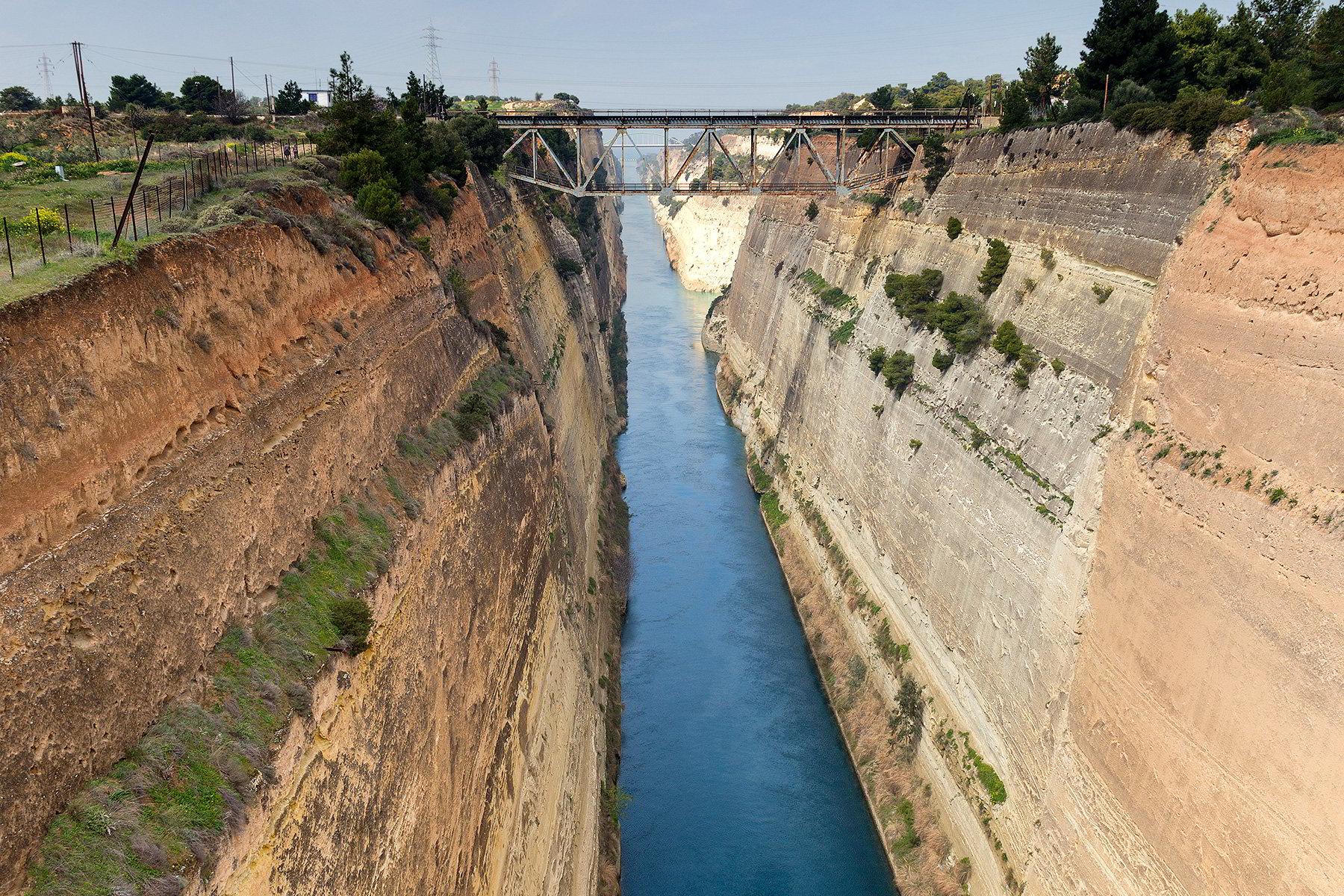
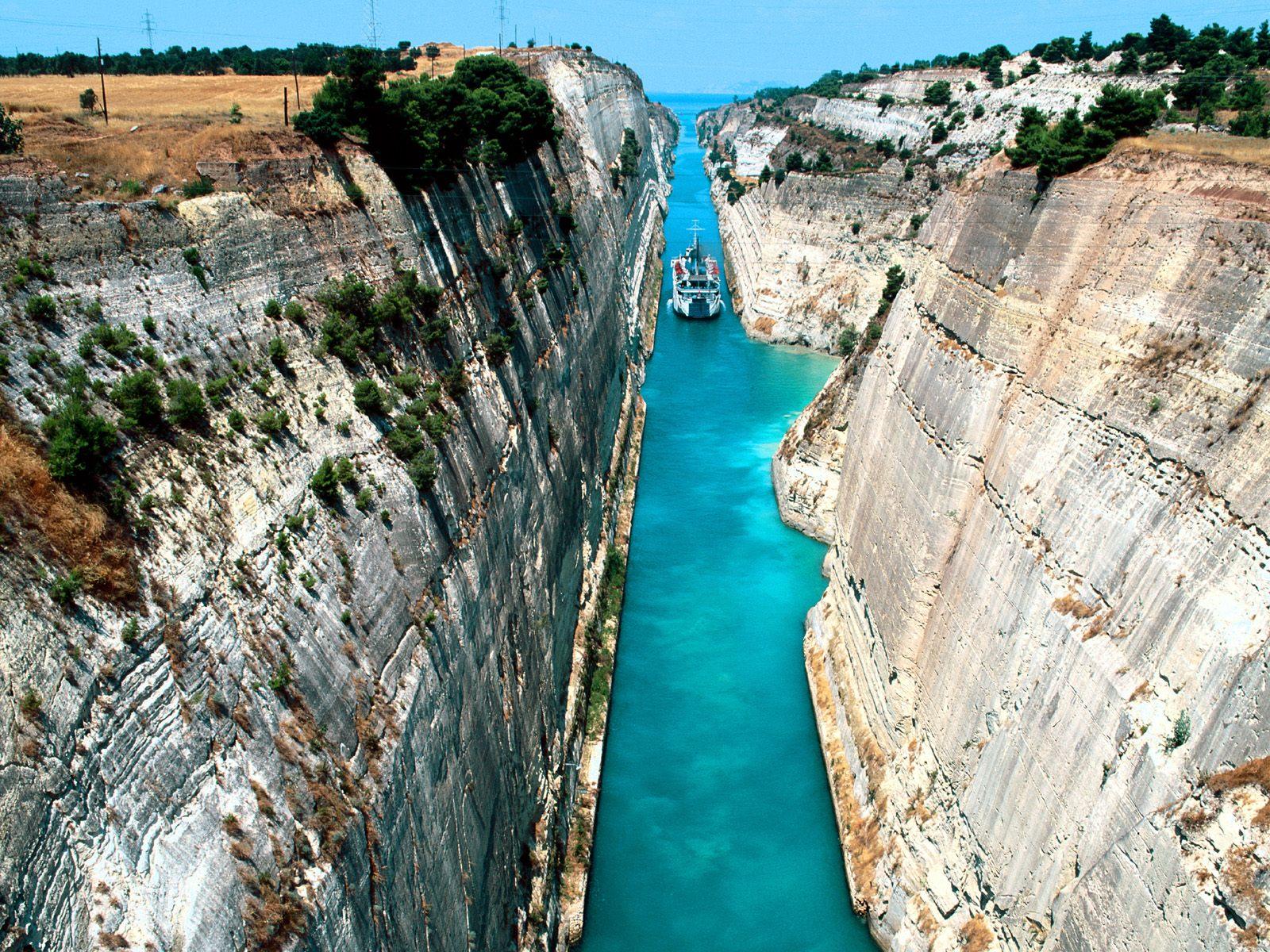
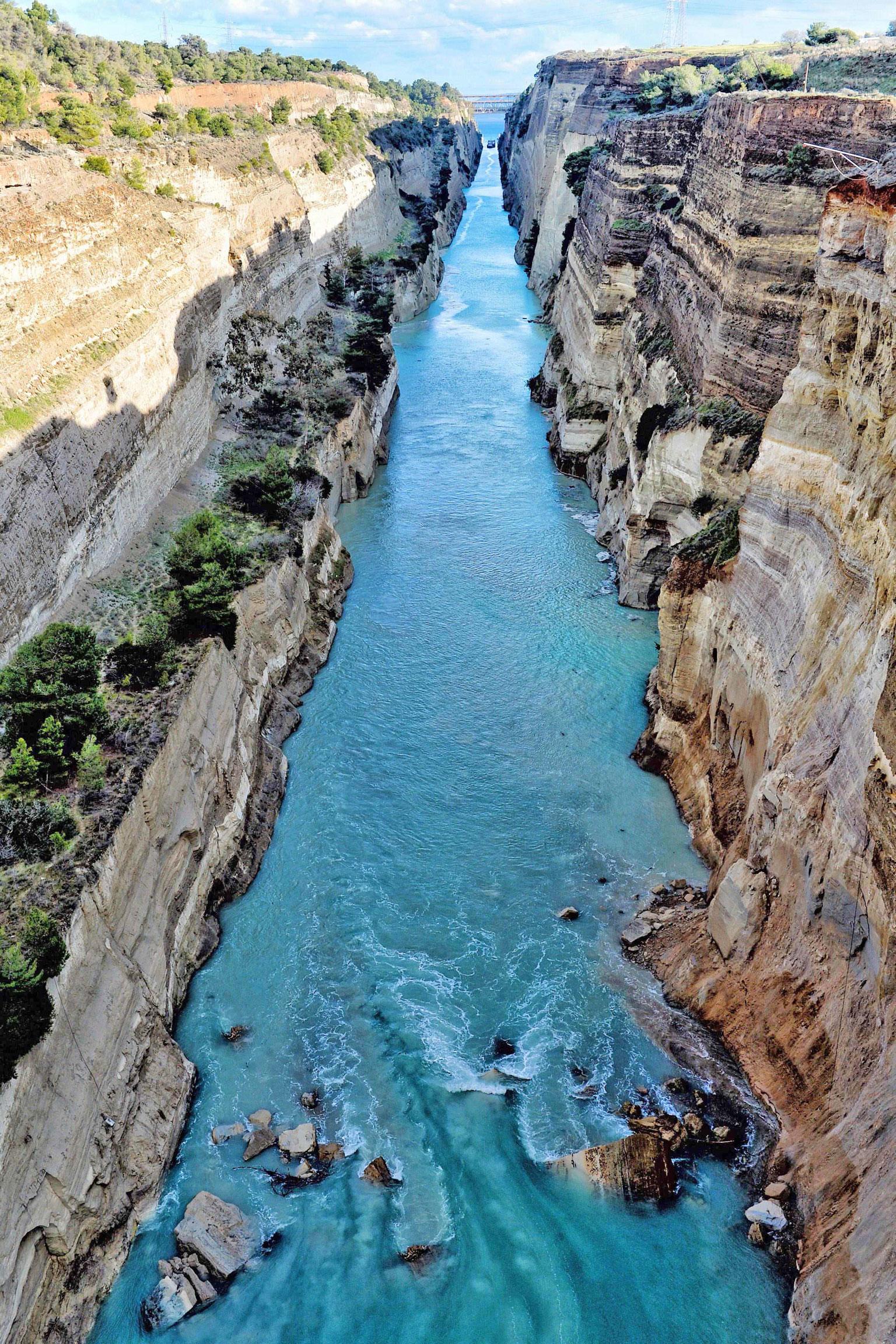
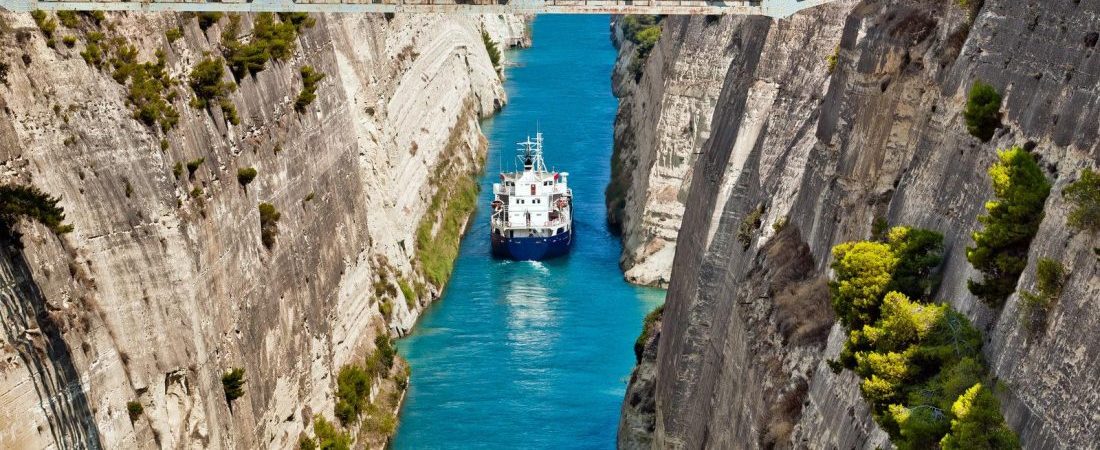
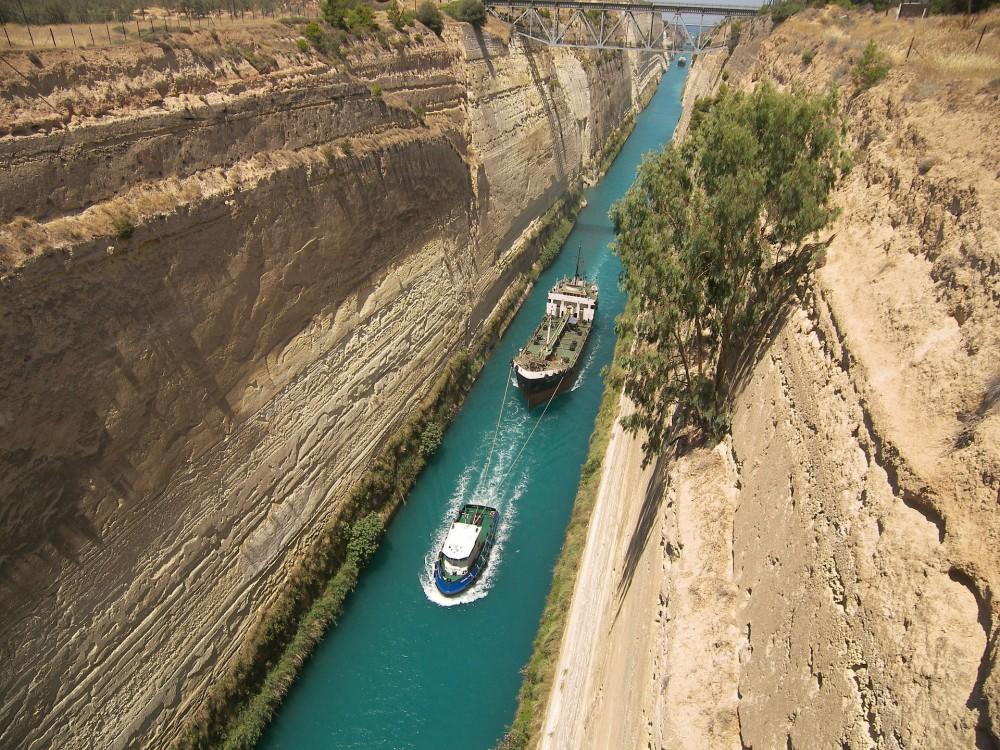
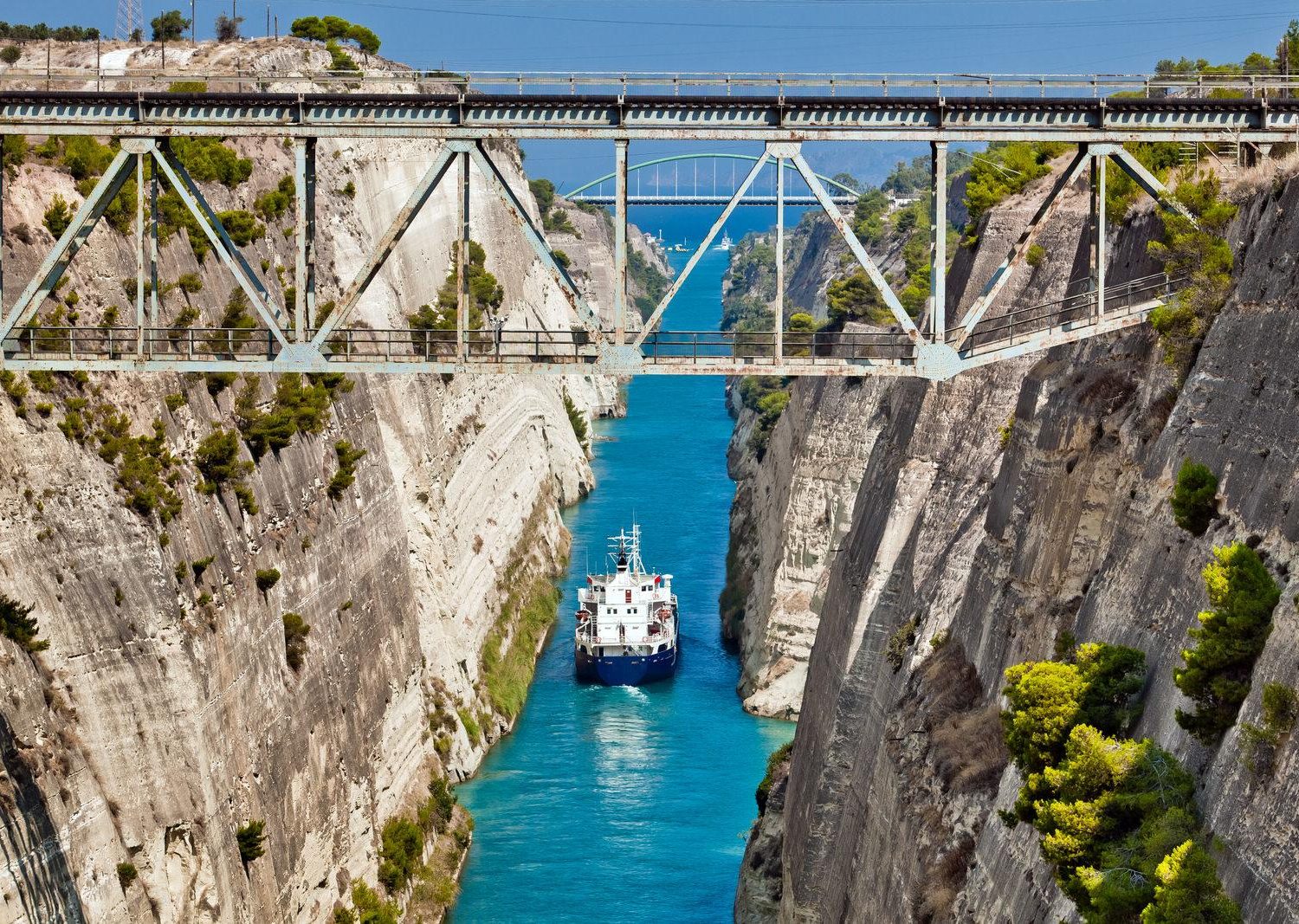
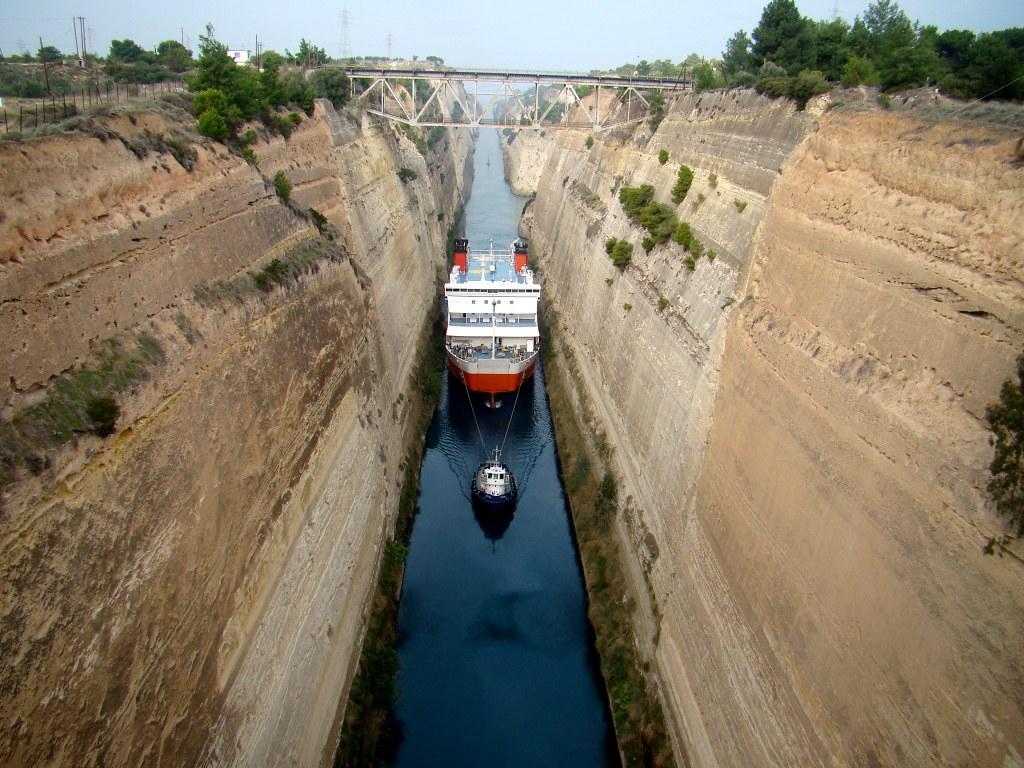
The canal was cut through solid rock, creating steep vertical walls on both sides of the waterway.
In some areas, the surrounding land rises many tens of meters above the surface of the canal.
The narrow passage creates a dramatic visual effect, particularly when vessels travel between the high rock walls.
Because of its limited width, the canal is not suitable for most large modern commercial ships.
Instead, it is mainly used by smaller vessels, tourist ships, private yachts, and selected commercial traffic.
The Submersible Bridges
One of the most unusual engineering features of the Corinth Canal is the presence of submersible bridges at both ends of the waterway.
These bridges are located at Poseidonia and Isthmia.
Unlike conventional lifting bridges, the road sections are lowered below the surface of the water when ships need to pass.
After the vessel has crossed, the bridge rises again and road traffic resumes.
The Canal During World War II
The Corinth Canal suffered serious damage during the Second World War.
In 1944, retreating German forces caused major destruction to the canal and surrounding infrastructure.
Large quantities of earth, rock, and debris collapsed into the waterway, making navigation impossible.
Extensive repair work was required after the war, and the canal remained closed for several years before returning to normal operation.
The Corinth Canal Today
Today, the Corinth Canal remains an active waterway and one of the most recognizable engineering landmarks in Greece.
It is used mainly by tourist vessels, yachts, and smaller commercial ships.
Thousands of vessels transit the canal each year, while many more visitors stop at the road bridges above to view the dramatic narrow waterway from above.
The canal continues to provide a shorter route between the Corinthian and Saronic gulfs, although its limited dimensions prevent most modern large ships from using it.
Visit the Corinth Canal
The Corinth Canal is an easy stop on many excursions from Athens toward the Peloponnese.
Visitors can admire the canal from the bridges above, where the steep rock walls and narrow waterway create one of the most striking man-made landscapes in Greece.