
Acropolis of Athens: History, Monuments & Visitor Guide
Acropolis of Athens: History, Monuments & Visitor Guide
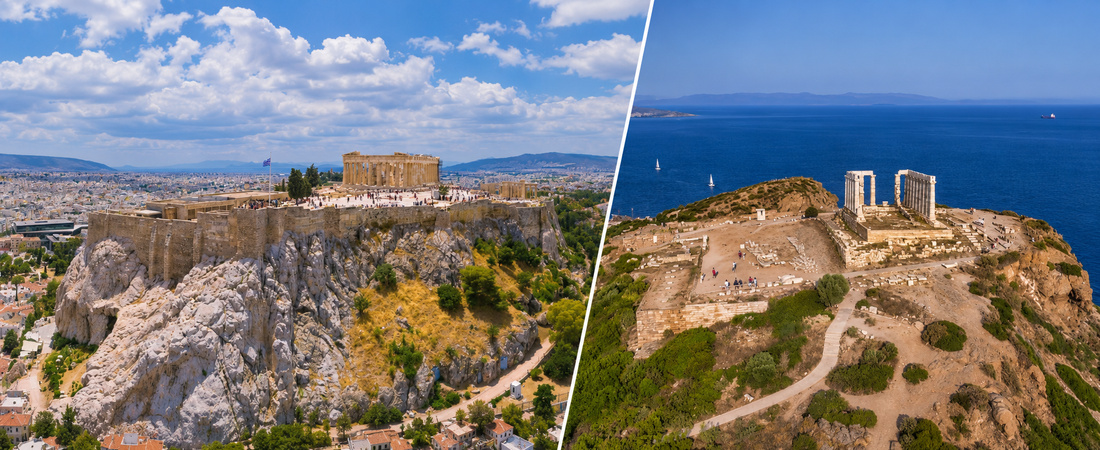
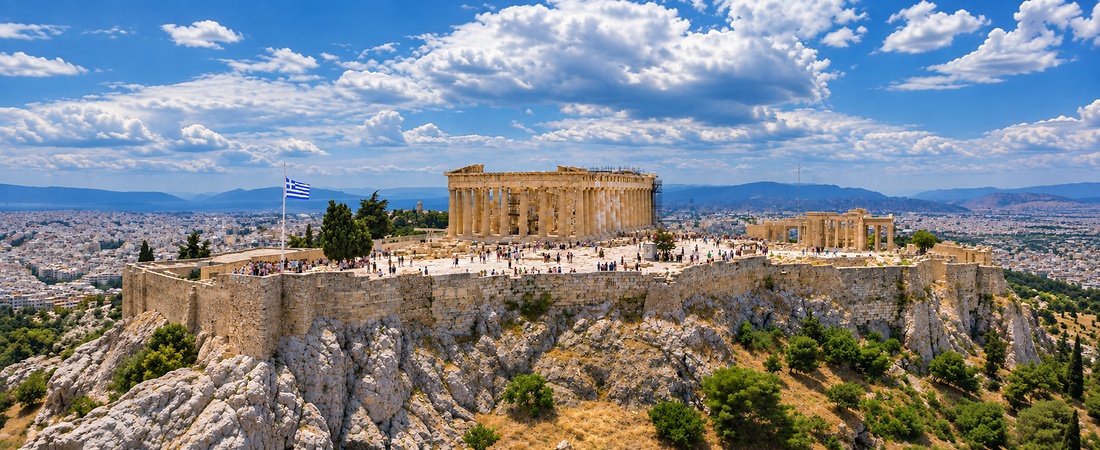
The Acropolis of Athens is one of the most important archaeological sites in the world and a recognizable symbol of ancient Athens. Rising above the modern city, the sacred rock preserves monuments that represent the artistic, architectural, religious, and political achievements of Classical Greece.
At its center stands the Parthenon , dedicated to Athena, the patron goddess of Athens. Around it are the Propylaia, the Temple of Athena Nike, the Erechtheion, and other remains that together form one of the greatest architectural complexes of the ancient world.
The Acropolis has overlooked Athens for thousands of years. Its monuments have survived wars, religious transformations, explosions, earthquakes, pollution, and centuries of change, yet they remain among the most influential creations of Greek civilization.
In 1987, the Acropolis of Athens was inscribed on the UNESCO World Heritage List in recognition of its exceptional importance to world culture.
The Acropolis at a Glance
The word Acropolis means the "high city" or "upper city." Its steep rocky sides made the hill a natural defensive position, while its commanding location offered extensive views across Athens, Attica, and toward the sea.
Archaeological evidence shows that the Acropolis was inhabited from the Late Neolithic period, during the 4th millennium BC. During the Mycenaean period, the summit was fortified and probably contained the residence of a local ruler.
Over time, the character of the Acropolis changed. As the city of Athens expanded onto the surrounding plain, the hill developed primarily into the city's most important religious sanctuary.
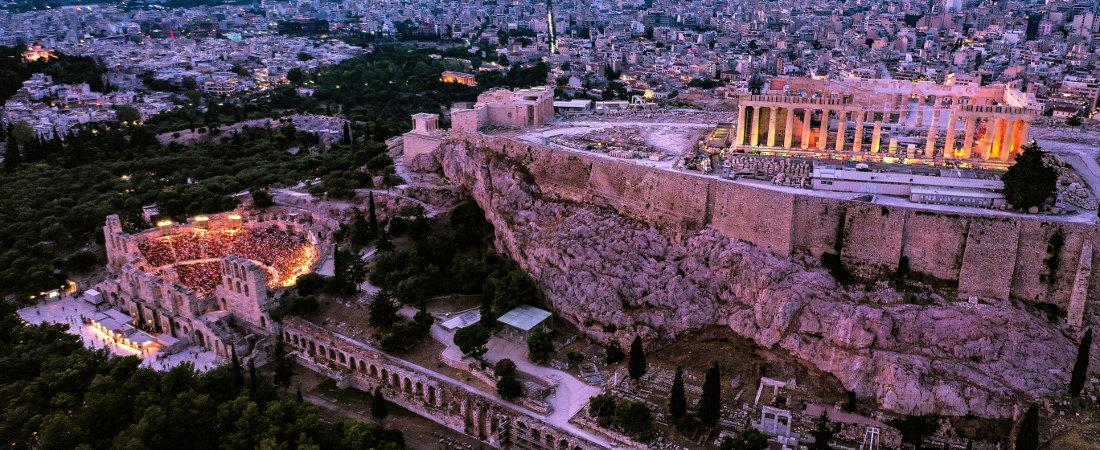
Today, standing on the Acropolis offers a remarkable view of both ancient and modern Athens. From the summit, visitors can see the Ancient Agora, the Theater of Dionysus, the Temple of Hephaestus, Plaka, Mount Lycabettus, and much of the modern city.
The Persian Destruction and the Rebuilding of the Acropolis
In 480 BC, during the Persian invasion of Greece, Persian forces captured Athens and destroyed or severely damaged the temples and other monuments on the Acropolis.
Remains of some of these earlier buildings were later incorporated into the Acropolis walls. Architectural fragments and unfinished column drums from the earlier Parthenon can still be identified in parts of the fortifications.
Several decades after the Persian Wars, Athens entered a period of extraordinary political and cultural influence.
Under the leadership of the statesman Pericles, an ambitious rebuilding program transformed the Acropolis during the second half of the 5th century BC. Some of the greatest architects and artists of Classical Greece participated in the project, while the sculptor Pheidias played a leading role in its artistic program.
The four principal monuments created or completed during this period were the Parthenon, the Propylaia, the Temple of Athena Nike, and the Erechtheion.
The Propylaia and the Entrance to the Acropolis
The monumental entrance to the Classical Acropolis is the Propylaia, constructed during the 5th century BC.
Designed as far more than a simple gateway, the Propylaia created an impressive architectural transition between the outside world and the sacred area at the summit of the Acropolis.
Before reaching the Propylaia, visitors also pass through the Beulé Gate, a much later fortified entrance dating from the Roman period. It is named after the French archaeologist Ernest Beulé, who uncovered it in 1852.
The contrast between the later defensive gate and the elegant Classical Propylaia reflects the many different periods of history preserved on the Acropolis.
The Temple of Athena Nike
Standing on a bastion near the entrance to the Acropolis is the small and elegant Temple of Athena Nike.
This Ionic temple was dedicated to Athena in her aspect as the goddess who brought victory. Its elevated position beside the Propylaia made it one of the most prominent monuments encountered by anyone approaching the sacred summit.
Although much smaller than the Parthenon, the Temple of Athena Nike is admired for its refined proportions and sculptural decoration.
The monument has undergone several phases of restoration during the modern era, including major conservation and reconstruction work carried out as part of the long-term restoration program of the Acropolis monuments.
The Erechtheion and the Caryatids
To the north of the Parthenon stands the Erechtheion, one of the most unusual and complex temples of ancient Athens.
Constructed between approximately 421 and 406 BC, the building accommodated several important cults and sacred traditions. Its eastern section was associated with Athena Polias, while other areas were connected with Poseidon-Erechtheus, Hephaestus, and the hero Boutes.
The Erechtheion was also closely associated with the famous mythological contest between Athena and Poseidon for the protection of Athens.
According to the myth, Poseidon struck the rock with his trident, while Athena offered the city an olive tree. The Athenians chose Athena's gift, and the city took her name.
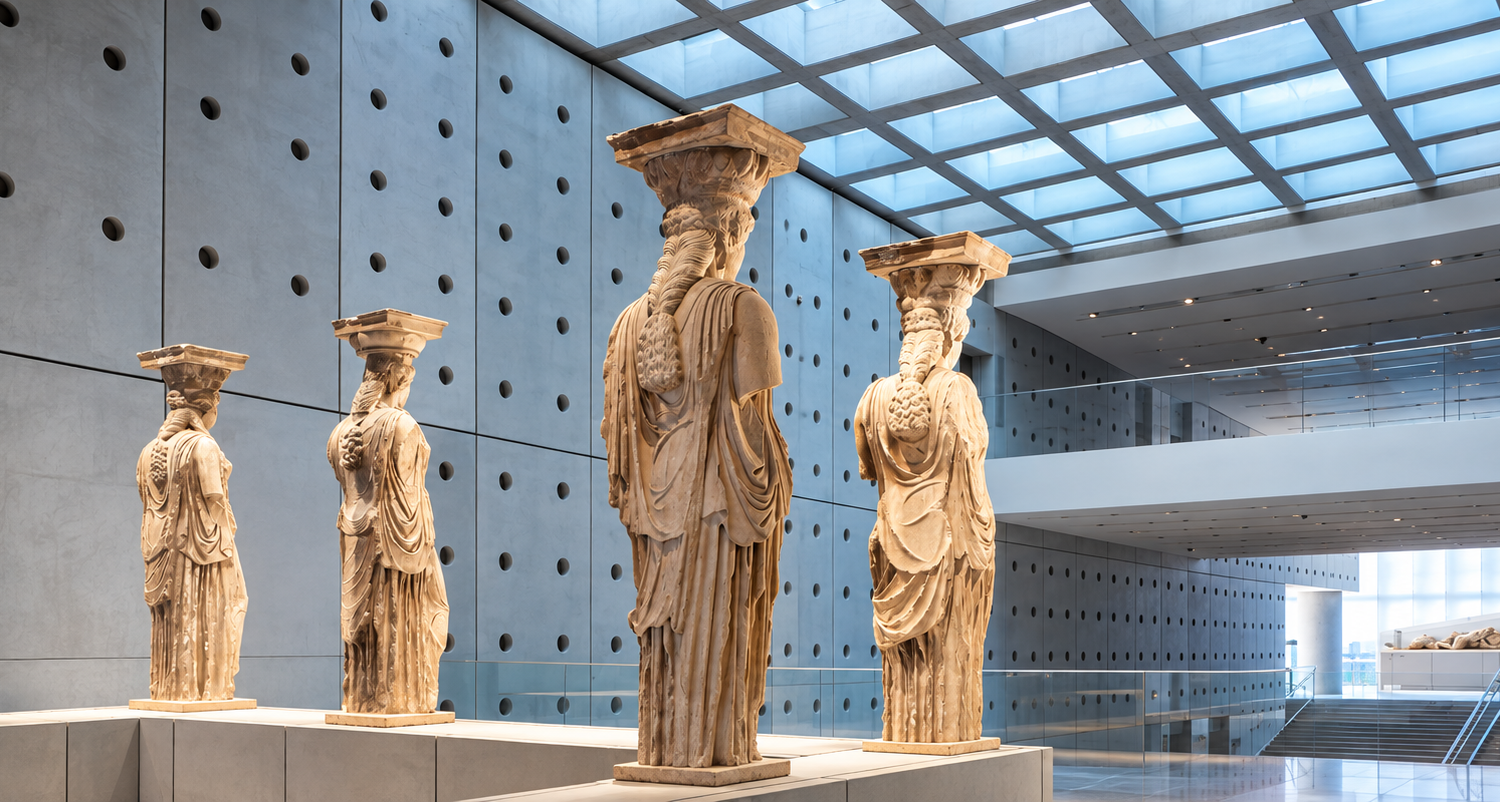
The most famous feature of the Erechtheion is the Porch of the Caryatids, where six sculpted female figures served as architectural supports instead of ordinary columns.
The figures seen supporting the porch today are replicas installed to protect the originals from environmental damage. Five of the original Caryatids are displayed in the Acropolis Museum, while the sixth is held by the British Museum in London.
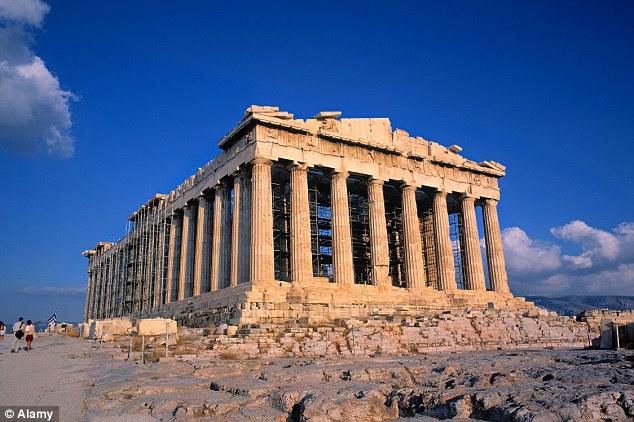
The Parthenon
The Parthenon is the largest and most famous temple on the Acropolis and one of the masterpieces of Classical Greek architecture.
Construction began in 447 BC. The main building was completed by 438 BC, while sculptural work continued until around 432 BC. The architects were Iktinos and Kallikrates, while Pheidias supervised the temple's sculptural program.
The Parthenon was constructed almost entirely from Pentelic marble, quarried from Mount Penteli northeast of Athens.
The temple was primarily dedicated to Athena Parthenos, or Athena the Virgin, the divine protector of Athens.
Its exterior colonnade consisted of eight columns across each end and seventeen along each side. Because the corner columns are shared, the exterior colonnade contained 46 columns in total.
Despite its apparently perfect straight lines, the Parthenon contains numerous subtle architectural refinements.
The platform of the temple is slightly curved, the columns lean subtly inward, and each column has a gentle swelling known as entasis. These refinements contribute to the building's remarkable visual balance and harmony.
The Statue of Athena Parthenos
Inside the main chamber of the Parthenon once stood an enormous statue of Athena Parthenos, created by Pheidias.
The statue was approximately 12 meters high and was made using gold and ivory over an internal structure, a technique known as chryselephantine sculpture.
Athena was represented standing in armor, wearing a helmet and holding a figure of Nike, the goddess of victory. A large shield stood beside her.
The original statue has not survived, but its appearance is known from ancient descriptions, coins, reliefs, and later copies.
The Acropolis Museum preserves a Roman-period marble copy on a much smaller scale that helps visitors understand the appearance of Pheidias' famous creation.
The Sculptures of the Parthenon
The Parthenon was decorated with one of the most ambitious sculptural programs of the ancient Greek world.
Three major groups of architectural sculpture decorated the temple: the pediments, metopes, and continuous Ionic frieze.
The two triangular pediments presented myths closely connected with Athena. The east pediment depicted the birth of Athena, while the west pediment represented the contest between Athena and Poseidon for the patronage of Athens.
The Parthenon also contained 92 sculpted metopes. These represented great mythological conflicts, including battles between the Olympian gods and Giants, Greeks and Amazons, Lapiths and Centaurs, and episodes associated with the Trojan War.
A separate continuous Ionic frieze approximately 160 meters long surrounded the upper exterior walls of the inner temple.
The frieze is generally interpreted as representing the procession of the Greater Panathenaia, the most important religious festival celebrated in honor of Athena. It included horsemen, chariots, musicians, sacrificial animals, officials, citizens, and the Olympian gods.
The sculptural decoration combined religion, mythology, civic identity, and the artistic ideals of Classical Athens.
The Colors of the Acropolis
Although visitors today see mainly the natural white and warm golden tones of Pentelic marble, the ancient monuments were not originally completely white.
Architectural and sculptural details on the Acropolis were decorated with color. Traces and scientific analysis have shown that pigments were used on many ancient Greek temples and sculptures.
Red, blue, and other colors, together with painted and sometimes gilded details, helped emphasize architectural elements and sculptural decoration.
Much of this ancient polychromy has disappeared over the centuries, leaving the exposed marble that visitors see today.
From Ancient Temple to Christian Church
The Parthenon's history did not end with the decline of ancient Greek religion.
During Late Antiquity, the building was converted into a Christian church. It remained an important Christian monument for centuries and underwent architectural changes to accommodate its new religious function.
Following the Ottoman conquest of Athens, the Parthenon was later converted into a mosque.
These transformations allowed the building to remain in continuous use for many centuries, but they also altered parts of its ancient structure.
The Explosion of 1687
One of the most destructive events in the history of the Parthenon occurred in 1687.
During the war between Venice and the Ottoman Empire, Ottoman forces used the Parthenon to store gunpowder.
Venetian forces under Francesco Morosini bombarded the Acropolis. A shell struck the Parthenon, igniting the stored gunpowder and causing a massive explosion.
The blast destroyed much of the central part of the temple, brought down sections of the walls and columns, and severely damaged its sculptural decoration.
Before this event, the Parthenon had survived in a much more complete condition despite more than two thousand years of history.
The Parthenon Sculptures and Lord Elgin
At the beginning of the 19th century, when Athens was under Ottoman rule, Thomas Bruce, 7th Earl of Elgin, arranged for the removal of a large number of sculptures and architectural elements from the Acropolis.
Between 1801 and 1805, his agents removed a substantial part of the surviving sculptural decoration of the Parthenon, as well as pieces from other Acropolis monuments.
The collection was acquired by the British Museum in 1816, where many of the sculptures remain today.
The circumstances and extent of the authorization given to Elgin remain the subject of a long-running dispute.
The British Museum maintains that Elgin acted with permission from the Ottoman authorities and that the acquisition was later examined by the British Parliament. Greek authorities have long argued that the removal deprived the monument of integral parts of its sculptural decoration and continue to seek the reunification of the surviving Parthenon sculptures in Athens.
The Acropolis Through Later History
Over the centuries, the Acropolis contained buildings and additions from many different historical periods.
Churches, Ottoman structures, defensive installations, and a large medieval tower once stood among or beside the ancient monuments.
During the 19th century, archaeologists and the newly established Greek state began removing many later structures in an effort to reveal what was considered the Classical appearance of the Acropolis.
One of the best-known lost structures was the Frankish Tower that once stood near the Propylaia. It was demolished in 1875, with financial support from archaeologist Heinrich Schliemann.
Today, modern conservation practice recognizes the importance of studying the many historical phases through which the Acropolis has passed.
Restoration of the Acropolis
The monuments visitors see today are the subject of one of the world's most important and carefully studied conservation programs.
Modern systematic restoration and conservation work on the Acropolis has been directed by a specialist committee established in 1975.
The work involves archaeological research, structural stabilization, conservation of ancient marble, correction of problems created by earlier restorations, and the careful repositioning of surviving architectural members.
Where new material is necessary for structural reasons, restorers use compatible marble while ensuring that modern additions can be distinguished from the ancient material.
Major restoration programs have been completed on monuments including the Erechtheion, the Propylaia, and the Temple of Athena Nike, while conservation and restoration work on the Parthenon and the Acropolis walls continues.
The Acropolis Museum
A visit to the Acropolis is greatly enhanced by visiting the nearby Acropolis Museum.
The museum preserves and displays original sculptures, architectural elements, inscriptions, votive offerings, and other discoveries from the Acropolis and its surrounding slopes.
One of its highlights is the Parthenon Gallery, designed so that the surviving sculptural elements can be viewed in the same relative positions they occupied on the ancient temple.
Original sculptures preserved in Athens are displayed alongside casts representing surviving sections held in museums outside Greece, allowing visitors to understand the original sequence of the Parthenon's sculptural decoration.
The museum also houses five of the original Caryatids from the Erechtheion and numerous works representing the long history of the Acropolis before, during, and after the Classical period.
Nearby Ancient Sites and Viewpoints
The Acropolis formed the religious center of a much larger ancient city, and several important archaeological sites can be seen from its summit.
Below the southern slope lies the Theater of Dionysus, closely connected with the development of ancient Greek drama.
To the northwest is the Ancient Agora, the political, commercial, and social center of ancient Athens, where the exceptionally well-preserved Temple of Hephaestus still stands.
Nearby hills also offer important connections with the history of ancient Athens:
- Areopagus Hill, associated with one of the city's ancient councils and offering excellent views toward the Acropolis.
- The Pnyx, where the citizen assembly of democratic Athens met.
- Philopappos Hill, also known as the Hill of the Muses, crowned by the monument of Gaius Julius Antiochus Epiphanes Philopappos from the Roman period.
Visiting the Acropolis of Athens Today
Today, the Acropolis remains the most important ancient landmark of Athens and one of the most visited archaeological sites in Greece.
Visitors should allow enough time to explore not only the Parthenon but also the Propylaia, the Temple of Athena Nike, the Erechtheion, the surrounding archaeological remains, and the remarkable views across Athens.
The experience becomes even more complete when combined with the Acropolis Museum and the major archaeological sites surrounding the sacred hill.
Planning Your Visit to the Acropolis
Allow time for security checks, uneven pathways, steps, and the monuments at the summit. Comfortable walking shoes, drinking water, and sun protection are especially helpful in warm weather. The Acropolis is an exposed archaeological site, so consider the season and weather when planning your visit.
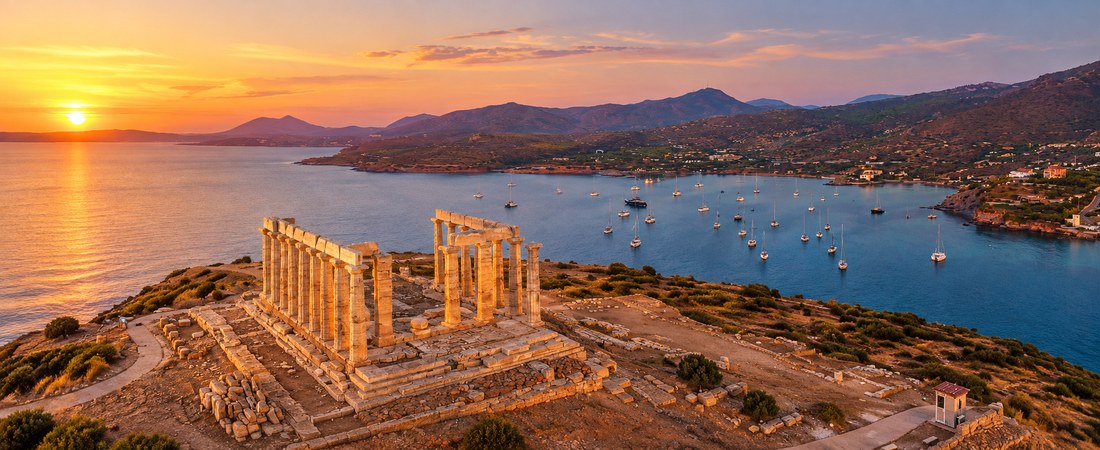
To make your visit easier, consider joining one of our organized Athens sightseeing tours. Hop in Sightseeing offers guided experiences that combine the Acropolis and Acropolis Museum, with the option to continue to Cape Sounion and the Temple of Poseidon on a full-day excursion. Explore our recommended tours below to find the experience that best suits your travel plans.
Choose Your Athens Acropolis Tour
Would you like to explore Athens' most famous ancient landmarks in a morning, or enjoy a longer experience that also visits Cape Sounion? Hop in Sightseeing offers two guided options. Both include visits to the Acropolis and Acropolis Museum; choose the itinerary that best fits your plans.
Tour schedules and pickup arrangements are subject to the details shown on each booking page. Compare both itineraries before making your reservation.
From its prehistoric beginnings and the Golden Age of Classical Athens to its Christian, Ottoman, and modern history, the Acropolis of Athens represents thousands of years of continuous human history in the heart of the Greek capital.




See The Acropolis Of Athens and the Parthenon with one of our tours: