
About Ancient Olympia Archaeological Site

Ancient Olympia is one of the most important archaeological sites in Greece and the birthplace of the Olympic Games. Located in the region of Elis in the western Peloponnese, the sanctuary developed at the foot of Mount Kronion, in the fertile valley formed by the Alpheios and Kladeos rivers.
Ancient Olympia was not simply an athletic venue. It was one of the great Pan-Hellenic sanctuaries of ancient Greece, dedicated primarily to Zeus. Religion, athletic competition, politics, art and the ideals associated with fair competition came together here for more than a thousand years.
Today, visitors can walk through the Sanctuary of Zeus, enter the Ancient Stadium, explore the remains of temples and athletic facilities and visit the Archaeological Museum of Olympia, home to some of the greatest masterpieces of ancient Greek sculpture.
Ancient Olympia at a Glance
- Location: Elis, western Peloponnese
- Setting: valley of the Alpheios and Kladeos rivers, below Mount Kronion
- Early human presence: prehistoric times
- Major cult: Zeus, established as the dominant cult by the early 1st millennium BC
- Olympic chronology: traditionally recorded from 776 BC
- Games: celebrated every four years
- Main monuments: Temple of Zeus, Temple of Hera, Ancient Stadium, Palaestra, Gymnasium, Philippeion and Workshop of Pheidias
- UNESCO: Archaeological Site of Olympia, inscribed on the World Heritage List in 1989
Why Ancient Olympia Was So Important
Ancient Olympia became one of the most important religious, athletic and political meeting places of the Greek world.
Greeks from many different city-states traveled to Olympia to worship Zeus, offer dedications and participate in or watch the Olympic Games.
The sanctuary was therefore much more than a sports complex. Temples, altars, treasuries, administrative buildings, accommodation facilities and athletic structures developed around the sacred area.
Olympia eventually became a symbol of Pan-Hellenic identity, bringing together communities that were often politically independent and sometimes hostile to one another.
The Birthplace of the Olympic Games
Ancient Olympia is internationally recognized as the birthplace of the Olympic Games.
The surviving ancient Olympic register traditionally begins in 776 BC, when Koroibos of Elis was recorded as the winner of the stadion footrace.
This date should not necessarily be understood as the literal beginning of athletic competition at Olympia. Ancient traditions described earlier contests, while different myths attributed the foundation of the Games to gods and heroes.
From the 8th century BC onward, however, the Olympic Games developed into the most famous athletic festival of the ancient Greek world and were celebrated every four years in honor of Zeus.
The Mythical Origins of the Olympic Games
The ancient Greeks preserved several different stories about how the Olympic Games began.
According to one mythological tradition, Zeus defeated his father Cronus in a contest at Olympia. Other traditions associated the foundation of the Games with Heracles, who was believed to have organized athletic competitions in honor of Zeus and established the sacred boundaries of the Altis.
Another important founding myth concerns Pelops. According to the story, Pelops defeated King Oenomaus in a chariot race and later established games connected with his victory and the death of Oenomaus.
The story of Pelops became so important at Olympia that the chariot race between Pelops and Oenomaus was represented on the eastern pediment of the Temple of Zeus.
These accounts belong to Greek mythology and religious tradition and should be distinguished from the historical record of the Olympic Games.
The Sanctuary of Zeus
At the center of Ancient Olympia was the great Sanctuary of Zeus.
The sacred heart of the sanctuary was known as the Altis, a sacred grove containing the principal temples, altars, religious buildings and votive monuments.
By the 10th century BC, Olympia had developed into an important center for the worship of Zeus, and over the following centuries the sanctuary became increasingly monumental.
Kings, cities, athletes and private individuals dedicated statues, weapons, tripods and other offerings to the gods, transforming Olympia into one of the richest religious landscapes of the ancient Greek world.
The Temple of Zeus
The Temple of Zeus was the most important monumental building in Ancient Olympia.
Constructed approximately between 476 and 457 BC, the large Doric temple dominated the sacred Altis during the Classical period.
Its sculptural decoration was among the masterpieces of ancient Greek art. The eastern pediment depicted the mythical chariot race between Pelops and Oenomaus, while the western pediment represented the battle between the Lapiths and Centaurs.
The metopes of the temple illustrated the famous Twelve Labors of Heracles.
The Statue of Zeus – One of the Seven Wonders
Inside the Temple of Zeus once stood one of the most celebrated works of art of the ancient world: the monumental Statue of Zeus created by the sculptor Pheidias.
Made from gold and ivory and standing more than 12 meters high, the statue represented Zeus seated on an elaborate throne.
Created around the 5th century BC, it became famous throughout antiquity and was later counted among the Seven Wonders of the Ancient World.
The statue itself has not survived, but architectural remains, ancient descriptions and archaeological discoveries help us understand its extraordinary scale and importance.
The Workshop of Pheidias
Near the Temple of Zeus are the remains of the building traditionally identified as the Workshop of Pheidias.
Archaeological discoveries from the building support its connection with the famous sculptor and the creation of the great chryselephantine statue of Zeus.
The workshop is particularly important because it provides rare archaeological evidence connected with one of the most famous artists of Classical Greece.
During the Early Christian period, a basilica was later constructed over the building.
The Temple of Hera
The Temple of Hera, or Heraion, is one of the oldest monumental temples at Olympia.
Built around 600 BC in the Doric order, it originally honored Hera and formed an important part of the sacred Altis.
The temple once contained important votive offerings and treasures, including the famous statue of Hermes by Praxiteles, which was discovered during excavations and is now displayed in the Archaeological Museum of Olympia.
The Olympic Flame and the Altar of Hera
Ancient Olympia maintains a powerful symbolic connection with the modern Olympic Games.
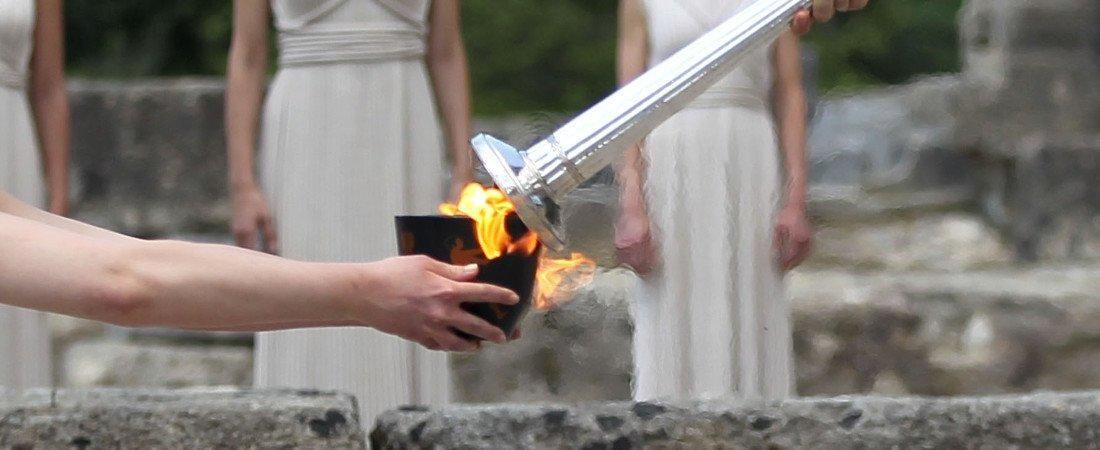
Today, the ceremonial lighting of the Olympic Flame takes place near the Temple of Hera before the modern Olympic Games.
The flame is lit using the rays of the sun and then begins its journey toward the city hosting the next Olympic Games.
This modern ceremony connects contemporary Olympism with the ancient sanctuary where the Games were celebrated for centuries.
The Ancient Stadium of Olympia
The Ancient Stadium was the main venue for athletic competition during the Olympic Games.
The stadium visible today represents the final major phase of the monument and lies east of the sacred Altis.
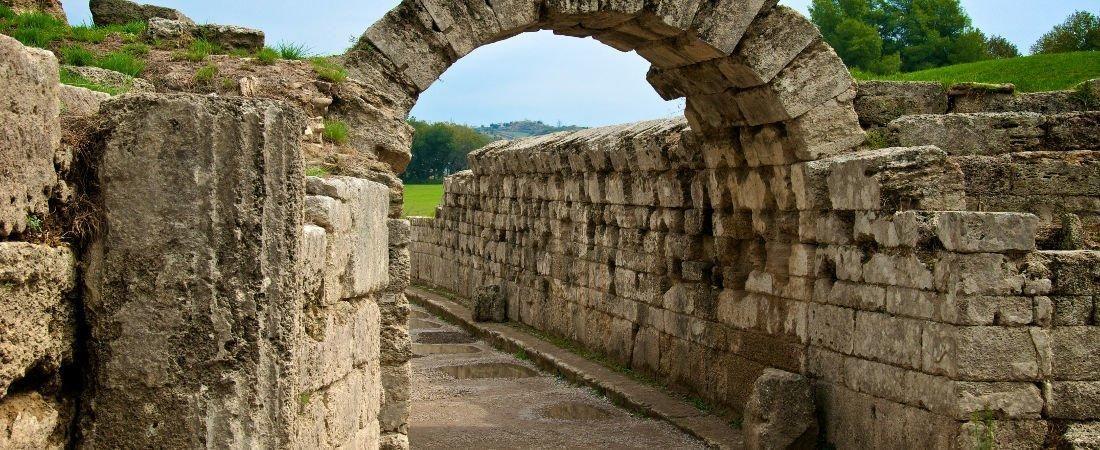
Athletes entered through a monumental passage known as the Crypt before competing on the long running track.
Spectators watched from the surrounding earth embankments rather than from permanent stone seating like that found in many later Greek and Roman stadiums.
The stadium hosted running events and other competitions associated with the Olympic festival and could accommodate many thousands of spectators.
The Olympic Games and the Sacred Truce
The Olympic Games were held every four years and attracted athletes and spectators from across the Greek world.
An important institution associated with the Games was the Sacred Truce, or Ekecheiria.
The truce should not be understood simply as the end of every war throughout Greece. Its principal purpose was to protect Olympia and allow athletes, officials and spectators to travel to and from the Games safely.
This tradition helped establish Olympia as neutral sacred territory during the period surrounding the festival.
Competition, Rules and the Olympic Ideal
Victory at Olympia brought exceptional prestige to an athlete and his home city.
Unlike modern Olympic champions, ancient winners did not receive gold medals. The official prize at Olympia was a wreath made from the sacred wild olive tree, known as the kotinos.
Athletes were expected to respect the rules of competition. Before the Games, athletes and judges took oaths connected with fair conduct.
Violations could result in fines, and money collected from some penalties was used to create bronze statues of Zeus known as the Zanes, which stood near the entrance to the Stadium as a reminder of the importance of honest competition.
The Palaestra and Gymnasium
Olympia contained specialized facilities where athletes prepared before competing.
The Palaestra was particularly associated with training for sports such as wrestling, boxing and the pankration.
The nearby Gymnasium provided space for running, throwing and other athletic preparation.
These buildings demonstrate the level of organization required to prepare athletes for one of the most prestigious competitions in the ancient Mediterranean world.
The Philippeion
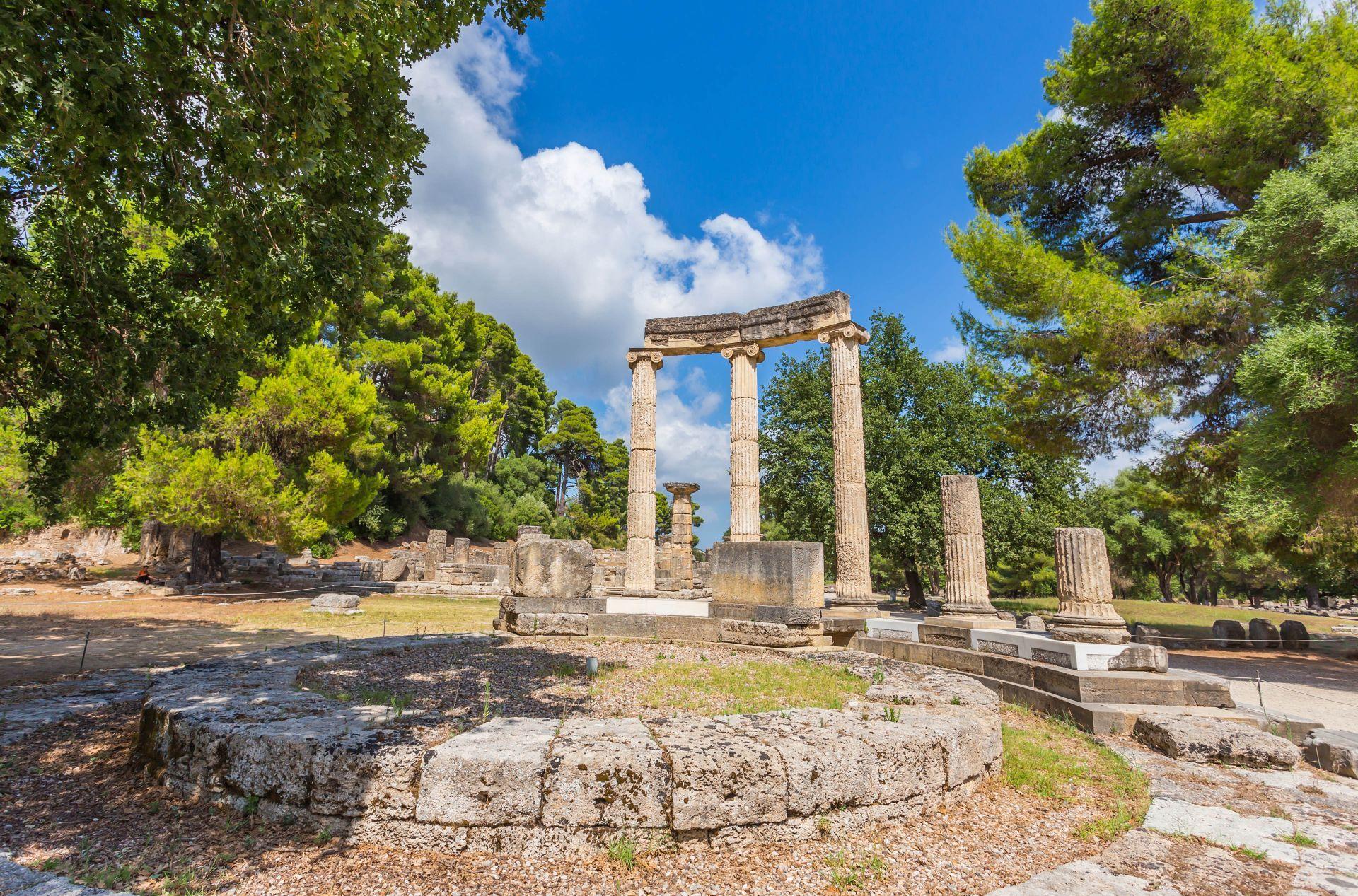
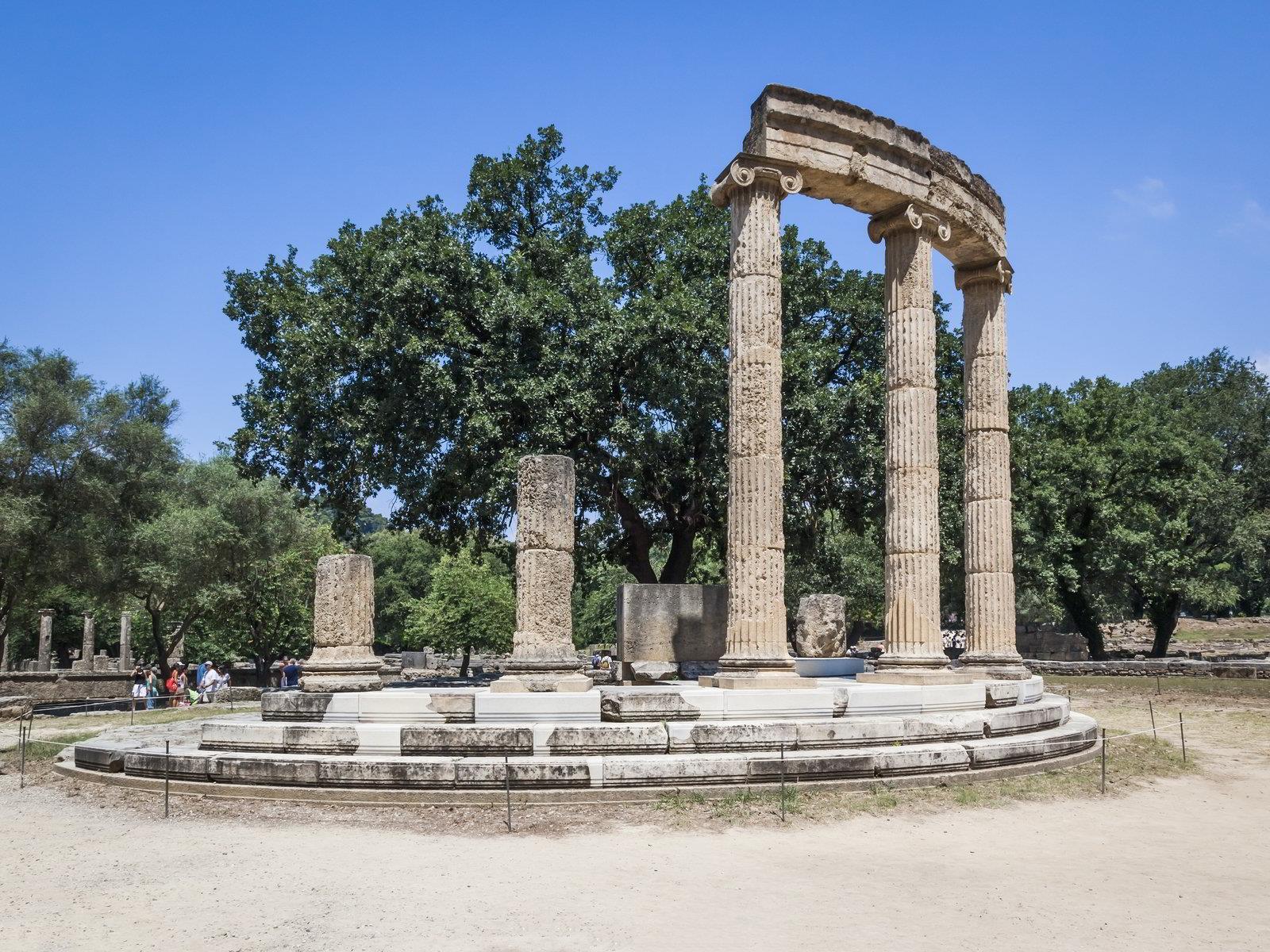
The Philippeion is one of the most distinctive monuments within the Altis.
This elegant circular building was dedicated by Philip II of Macedon following his victory at the Battle of Chaeronea in 338 BC.
His son Alexander the Great later added statues representing members of the Macedonian royal family.
The monument reflects both the political importance of Olympia and the prestige associated with placing a major dedication within the sanctuary of Zeus.
The Archaeological Museum of Olympia
The Archaeological Museum of Olympia houses many of the most important discoveries from the Sanctuary of Zeus.
Among its greatest masterpieces are the sculptural decoration from the Temple of Zeus, the celebrated Hermes traditionally attributed to Praxiteles and the magnificent Nike of Paionios.
The museum also contains bronze objects, terracotta sculptures, votive offerings and numerous artifacts that illustrate the religious, artistic and athletic history of the sanctuary.
A visit to the museum is essential for understanding how the monumental buildings of Ancient Olympia originally appeared and how the sanctuary developed over many centuries.
The Museum of the History of the Olympic Games
Ancient Olympia also has a museum dedicated specifically to the history of the ancient Olympic Games.
The Museum of the History of the Olympic Games of Antiquity presents the development of athletic competition from its origins through the height of the ancient Games.
Its exhibits help visitors understand the different athletic events, the prizes awarded to competitors and the religious and social significance of the Games within ancient Greek society.
The End of the Ancient Olympic Games
The Olympic Games continued for many centuries through the Greek and Roman periods.
By Late Antiquity, major religious and political changes transformed the ancient sanctuary. The traditional pagan festivals eventually came to an end, while earthquakes, flooding and other natural events contributed to the gradual abandonment and burial of many monuments.
A Christian community later developed in part of the area, including a basilica built over the former Workshop of Pheidias.
The ruins of Olympia were gradually covered by sediment until systematic archaeological excavation brought the sanctuary back to light in modern times.
Ancient Olympia and UNESCO World Heritage
In 1989, the Archaeological Site of Olympia was inscribed on the UNESCO World Heritage List.
UNESCO recognizes Olympia for its exceptional religious, artistic and architectural importance and for its unique connection with the Olympic Games.
The sanctuary preserves an extraordinary concentration of temples, athletic structures, public buildings and works of art representing many centuries of ancient Greek history.
Ancient Olympia Today
Today, Ancient Olympia remains one of Greece's most important archaeological destinations and one of the world's most recognizable historic sporting sites.
Visitors can walk through the sacred Altis, stand beside the ruins of the Temple of Zeus, see the Temple of Hera, enter the Ancient Stadium and explore the places where athletes prepared and competed more than two thousand years ago.
The Archaeological Museum adds another dimension to the experience by preserving many of the masterpieces originally created for the sanctuary.
Ancient Olympia also maintains a living connection with the modern Olympic Movement through the ceremony of the Olympic Flame.
Visit Ancient Olympia from Athens
Ancient Olympia can be visited as part of a journey through the Peloponnese and is commonly combined with other major archaeological destinations such as Mycenae, Epidaurus and Delphi.






See the Ancient Olympia Archaeological Site with one of our tours:
Tours We Recommend

3 Day Tour To Epidaurus, Mycenae, Nauplio, Olympia and Delphi Archaeological Sites
From: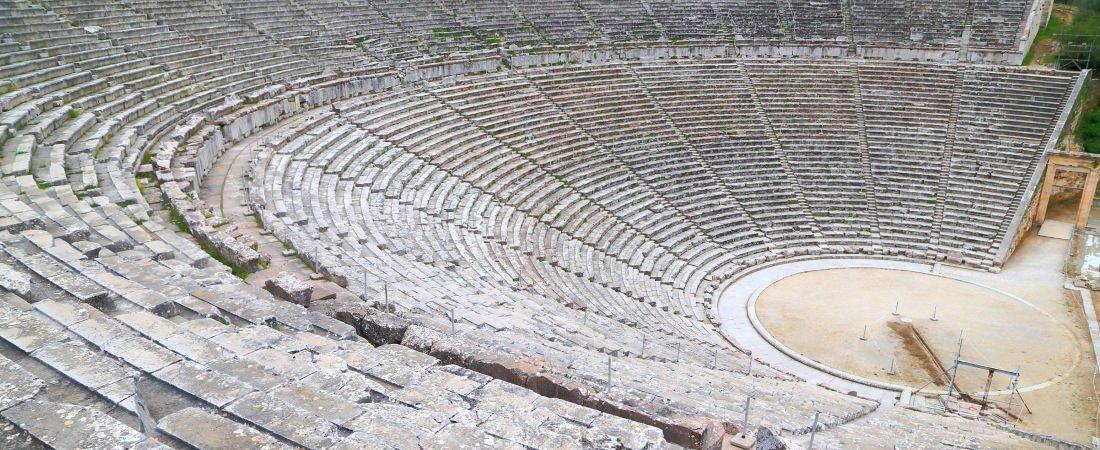
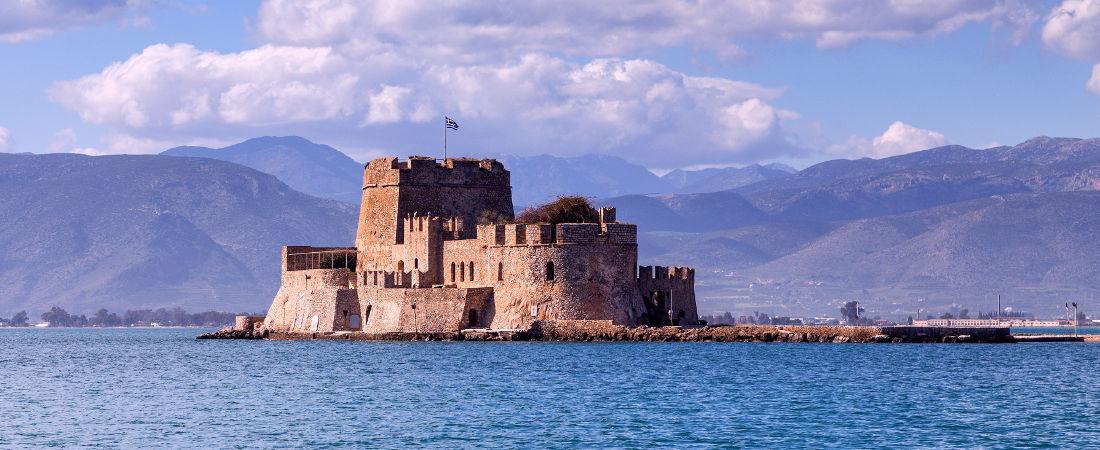
4 Day Classical Tour To Epidaurus, Mycenae, Nauplion, Olympia, Delphi and Meteora Monasteries
From: