
About Sanctuary of Asklepios at Epidaurus
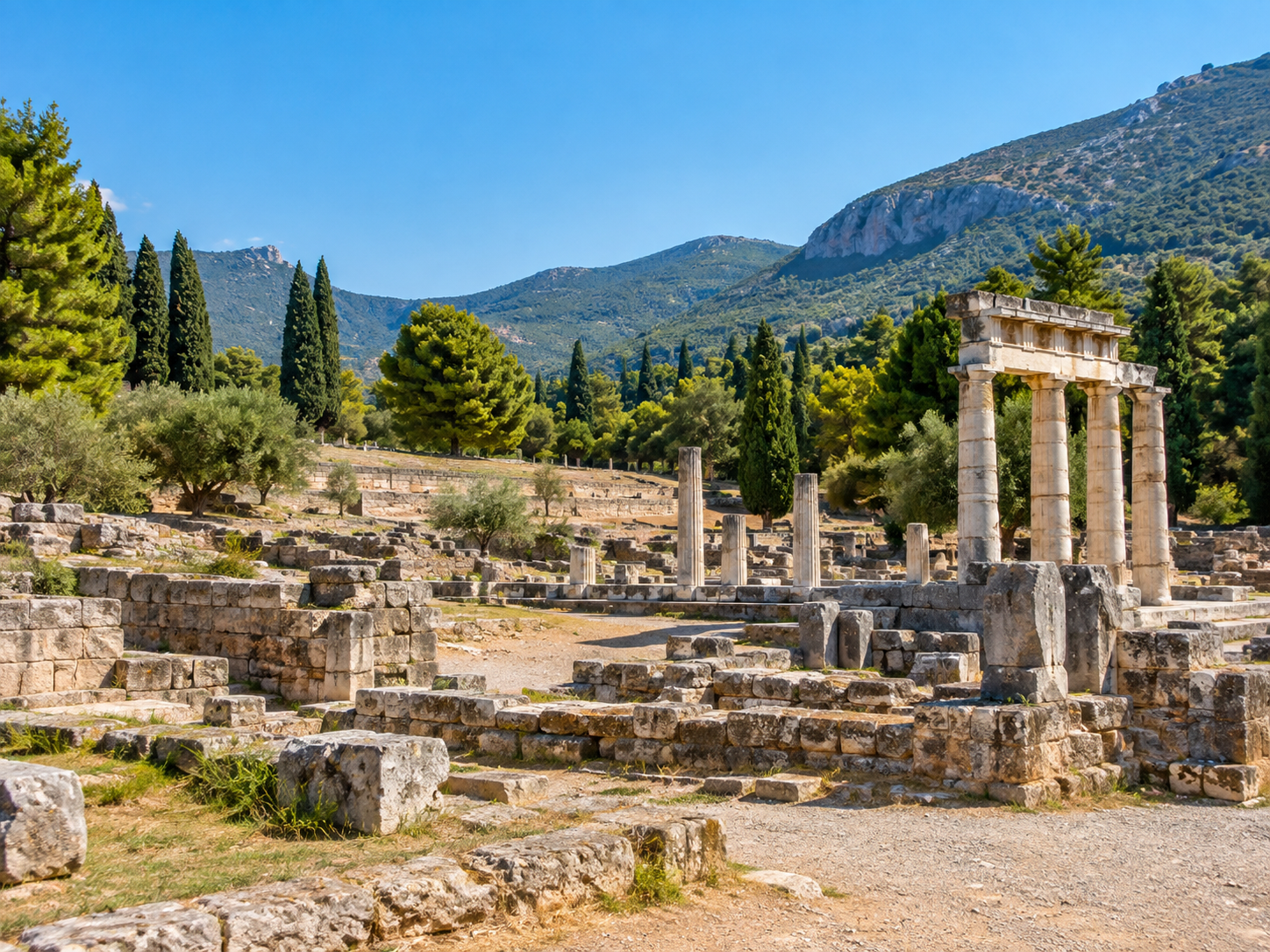
The Sanctuary of Asklepios at Epidaurus was the most important healing center of the ancient Greek world and one of the most influential religious sanctuaries of antiquity. Located in the peaceful landscape of Argolis in the northeastern Peloponnese, the sanctuary attracted patients and pilgrims from across Greece and later from throughout the Roman world.
Dedicated to Asklepios, the god of medicine and healing, the sanctuary combined religion, treatment, exercise, rest, bathing, music and theater. Its monuments reveal how the ancient Greeks approached health as a combination of physical, spiritual and psychological well-being.
The Sanctuary of Asklepios at a Glance
- Location: Epidaurus, Argolis, northeastern Peloponnese
- Main deity: Asklepios, god of medicine and healing
- Development of the sanctuary: mainly from the 6th century BC onward
- Period of greatest prosperity: 4th and 3rd centuries BC
- Major monuments: Temple of Asklepios, Abaton, Tholos, Ancient Theater, Stadium and Temple of Artemis
- Main healing practice: ritual incubation, known as enkoimesis
- UNESCO: inscribed on the World Heritage List in 1988
Asklepios – The God of Healing
According to Greek mythology, Asklepios was the son of Apollo and became the divine protector of medicine and healing.
He was commonly represented holding a staff with a serpent wrapped around it. This symbol, known today as the Rod of Asklepios, remains one of the most recognizable symbols of medicine.
Serpents were sacred to Asklepios and were closely associated with healing, renewal and the cult practiced at his sanctuaries.
From Apollo Maleatas to Asklepios
The religious history of Epidaurus began before the great sanctuary of Asklepios was established.
On nearby Mount Kynortion, worship was associated with Apollo Maleatas, whose sanctuary developed above the later healing complex.
By the 6th century BC, the cult of Asklepios had become firmly established in the valley below. Over time, Epidaurus grew into the most famous healing sanctuary of the Greek world.
Healing at Ancient Epidaurus
People traveled to Epidaurus seeking relief from illness and physical suffering. Healing practices combined religious ritual with attention to the body and general well-being.
Visitors underwent purification before participating in the sanctuary's healing rituals. One of the most important practices was enkoimesis, or ritual incubation.
Patients slept inside a sacred building and believed that Asklepios could appear to them in dreams and reveal a cure or provide healing directly.
Inscriptions discovered at Epidaurus record stories of people who believed they had been cured through the intervention of the god.
The Abaton
The Abaton, also known as the Enkoimeterion, was one of the most important buildings associated with healing.
It was here that patients participated in ritual sleep after completing the necessary preparations and purification.
The building was expanded as the fame of the sanctuary increased and more people traveled to Epidaurus seeking treatment.
The Temple of Asklepios
The Temple of Asklepios stood at the religious heart of the sanctuary.
Constructed during the 4th century BC, the temple housed the cult of the healing god and was one of the principal monuments of the complex.
In antiquity, it contained a cult statue of Asklepios seated on a throne and holding his staff, with a sacred serpent beside him.
The Tholos of Epidaurus
The Tholos, also known as the Thymele, was one of the most remarkable buildings of the sanctuary.
Constructed during the 4th century BC, it was a circular building of exceptional architectural quality, combining Doric and Corinthian elements.
Beneath the floor was a complex system of concentric underground passages. The exact purpose of the building is still debated, but it was clearly connected with the religious functions of the sanctuary.
The Ancient Theater of Epidaurus
The famous Ancient Theater of Epidaurus formed part of the wider sanctuary and was constructed during the late 4th century BC.
It is internationally renowned for its harmonious proportions, remarkable state of preservation and exceptional acoustics.
Theater, music and performances were connected with festivals held in honor of Asklepios and formed an important part of the cultural and religious life of the sanctuary.
The theater remains in use today and continues to host performances during the summer.
The Stadium
The sanctuary also included a large Stadium, where athletic competitions were held during festivals dedicated to Asklepios.
Physical exercise was an important element of Greek culture and was closely connected with ideas of health, balance and physical well-being.
The presence of both a theater and a stadium demonstrates that Epidaurus was not simply a place for treatment but a complex religious and cultural center.
Accommodation and Facilities
As the reputation of Epidaurus grew, thousands of pilgrims and patients traveled to the sanctuary.
Large buildings were constructed to accommodate visitors, including the Katagogeion, together with baths, dining areas, stoas and other facilities.
The scale of these buildings demonstrates how important and highly organized the sanctuary had become.
Important Monuments of the Sanctuary
- Temple of Asklepios
- Abaton or Enkoimeterion
- Tholos or Thymele
- Temple of Artemis
- Ancient Theater of Epidaurus
- Stadium
- Monumental Propylaia
- Katagogeion
- Baths and dining facilities
The Sanctuary During the Roman Period
The Sanctuary of Asklepios continued to attract visitors during the Roman period.
In the 2nd century AD, the Roman senator Sextus Julius Antoninus financed restoration work and new buildings at the sanctuary.
These improvements included facilities for patients and visitors and demonstrate that Epidaurus remained an important healing and religious center many centuries after its Classical peak.
The Archaeological Museum of Epidaurus
The Archaeological Museum of Epidaurus is located close to the archaeological site and contains important finds discovered during the excavations of the sanctuary.
Its collections include sculptures, inscriptions, architectural fragments and objects connected with religious practices and the history of the Asklepieion.
Architectural reconstructions from buildings such as the Temple of Asklepios, the Temple of Artemis and the Tholos help visitors understand how these monuments originally appeared.
Epidaurus and the History of Medicine
The Sanctuary of Asklepios occupies an important place in the long history of medicine and healthcare.
Healing at Epidaurus remained strongly connected with religion, but the sanctuary also emphasized bathing, exercise, diet, rest and the overall condition of the patient.
This combination of ritual and practical care makes Epidaurus an important example of the gradual development of organized approaches to health in the ancient world.
UNESCO World Heritage Site
In 1988, the Sanctuary of Asklepios at Epidaurus was inscribed on the UNESCO World Heritage List.
The site is recognized for the exceptional quality of its architecture, its influence on healing sanctuaries throughout the ancient world and its importance in the history of medicine.
The Sanctuary of Asklepios Today
Today, visitors can walk through the remains of one of the most important sacred and healing centers of antiquity.
The Temple of Asklepios, the Abaton, the Tholos, the Stadium and the Ancient Theater together reveal how religion, medicine, athletics and the arts were combined within a single sanctuary.
The peaceful natural setting remains an important part of the experience and helps visitors understand why Epidaurus became such a powerful center of healing in the ancient world.
Visit Epidaurus from Athens
The Sanctuary of Asklepios at Epidaurus can be visited from Athens and is often combined with other important destinations in the Argolis region, including Mycenae and Nafplio.
Discover the Sanctuary of Asklepios, the Ancient Theater of Epidaurus and the history of one of the most important healing centers of antiquity


Admire The Sanctuary of Asklepios at Epidaurus with one of our tours:
Tours We Recommend

3 Day Tour To Epidaurus, Mycenae, Nauplio, Olympia and Delphi Archaeological Sites
From:
5 Day Tour To Epidaurus, Nauplion, Mycenae, Olympia, Delphi and Meteora Monasteries
From: