Places We Visit
The Epidaurus Ancient Theater
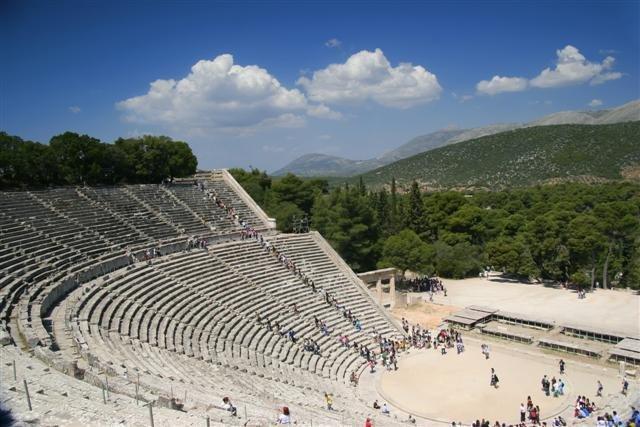
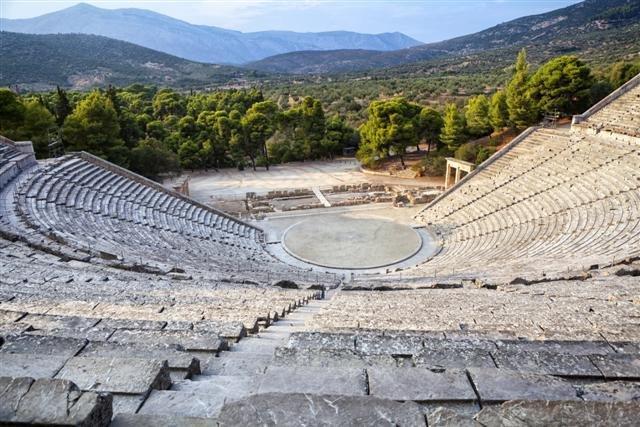
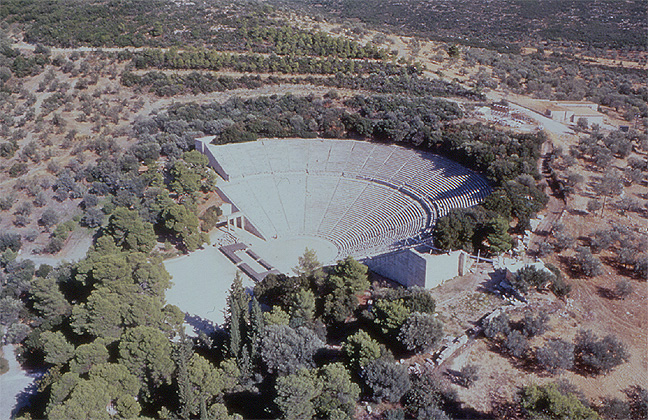
Above all, the Epidaurus Ancient Theater is world-renowned for its exceptional acoustics, considered among the finest of any ancient theater. It is located within the sanctuary complex of the Sanctuary of Asklepios. Adjacent to the theater lies the Sanctuary of Asklepios, dedicated to the Greek god of healing. This was the most important healing center of the Greek and Roman world. Although it belonged to the small coastal city of Epidaurus, its reputation quickly spread far beyond the Argolis region.
Widely regarded as the birthplace of organized medicine, the sanctuary is believed to have inspired more than 200 healing centers (asklepieia) across the eastern Mediterranean. Its monuments are masterpieces of ancient Greek art and provide valuable insight into early medical practices, illustrating the transition from healing attributed to the gods to more systematic medical approaches.
Important Structures of the Sanctuary
Several significant buildings were constructed within the sanctuary complex, including:
- The Classical Temple
- The Altar of Apollo
- The Great Stoa (Gallery)
- The Priests’ Residence
- The Temenos of the Muses
- The Temple of Asklepios
- The Abaton (healing dormitory)
- The Tholos (circular building)
- The Epidaurus Ancient Theater
- The Stadium
- The Banqueting Hall and Hostel
Religious Significance and History
The entire area was devoted to the worship of healing deities. Earlier, a Mycenaean sanctuary dedicated to a healing goddess stood on Mount Kynortion, northeast of Epidaurus. Worship continued in the region until it declined following earthquakes around the 6th century AD.
In contrast, the Epidaurus Ancient Theater remains in use today and hosts performances during the Epidaurus Festival each summer.
The nearby Archaeological Museum of Epidaurus, established in 1909, is known for its reconstructions of temples, columns, and inscriptions, offering valuable insight into the sanctuary’s history.
Origins and Mythology
The sanctuary of Epidaurus Ancient Theater, founded in the 16th century BC, was operating until the 11th century BC. Initially associated with the worship of Apollo, the site later became closely linked to Asklepios, who, according to mythology, was the son of Apollo and was born in this area.
Over time, the sanctuary expanded around a sacred well and incorporated important structures such as the Abaton, early altars, and spaces for ritual feasting.
Healing practices at Epidaurus combined physical and spiritual elements. Patients underwent purification rituals followed by incubation (a form of ritual sleep), during which the god Asklepios was believed to appear in dreams and prescribe treatments.
Final retainer
During the 2nd century AD, the Roman Consul Antonine financed the refurbishment of old buildings and new constructions. After that, in the 4th century BC, the sanctuary was refurbished one last time.
Today, the Archaeological Museum of Epidaurus houses an important collection of Greek and Roman sculptures, inscriptions, and medical instruments. Highlights include statues of Asklepios and Hygeia, as well as architectural reconstructions such as Doric columns of the Temple of Asklepios and the Temple of Goddess Artemis.
The site stands as a remarkable testament to the evolution of medicine, religion, and architecture in the ancient world.
Discover the breathtaking acoustics and timeless beauty of the Ancient Theatre of Epidaurus on one of our expertly Guided Tours.
Admire the Epidaurus Ancient Theater with one of our tours:
Tours We Recommend