
About Temple of Poseidon at Cape Sounion
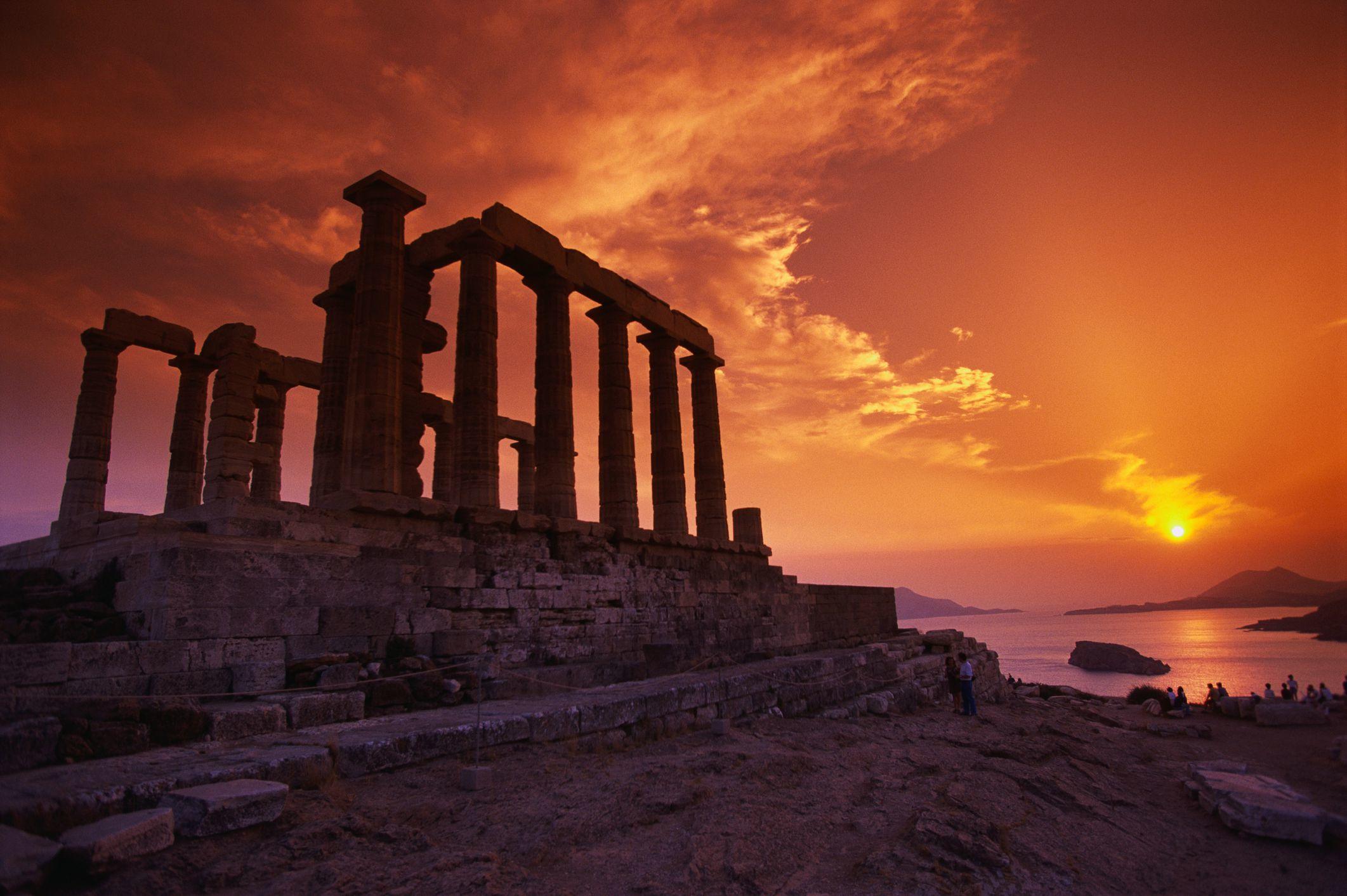
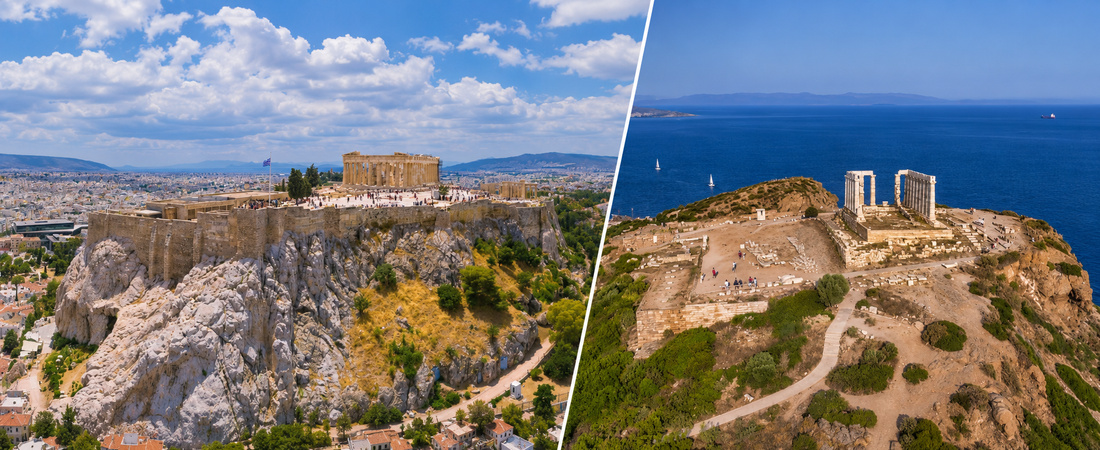
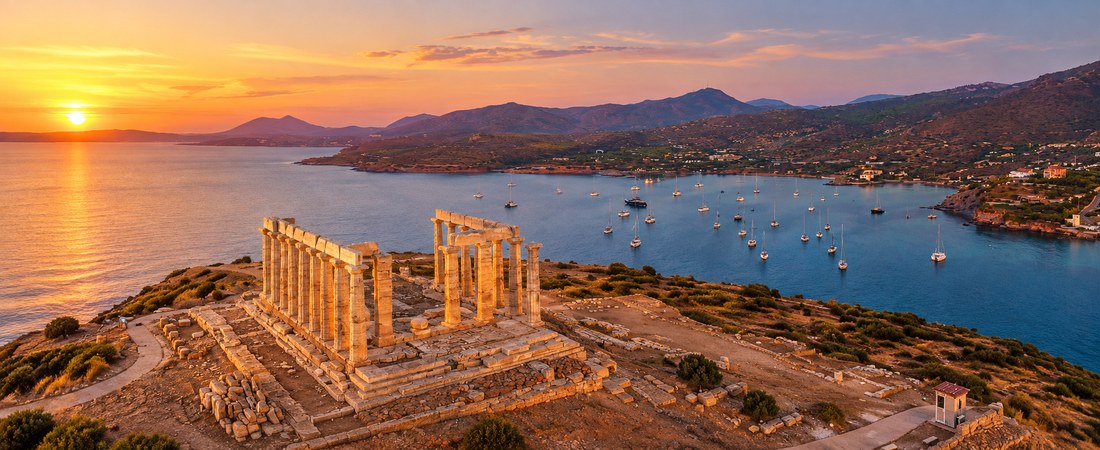
The Temple of Poseidon stands high above the Aegean Sea at Cape Sounion, at the southernmost tip of Attica.
Built during the Classical period, the temple formed the center of an important sanctuary dedicated to Poseidon, the ancient Greek god of the sea. Its dramatic position made it both a sacred place and a powerful landmark for sailors approaching the coast of Athens.
The Temple of Poseidon at a Glance
The surviving temple was constructed approximately between 444 and 440 BC, during the great architectural development of Classical Athens.
It was built from locally quarried marble from Agrileza, near Sounion, on the foundations of an earlier Archaic temple destroyed during the Persian invasion of Attica.
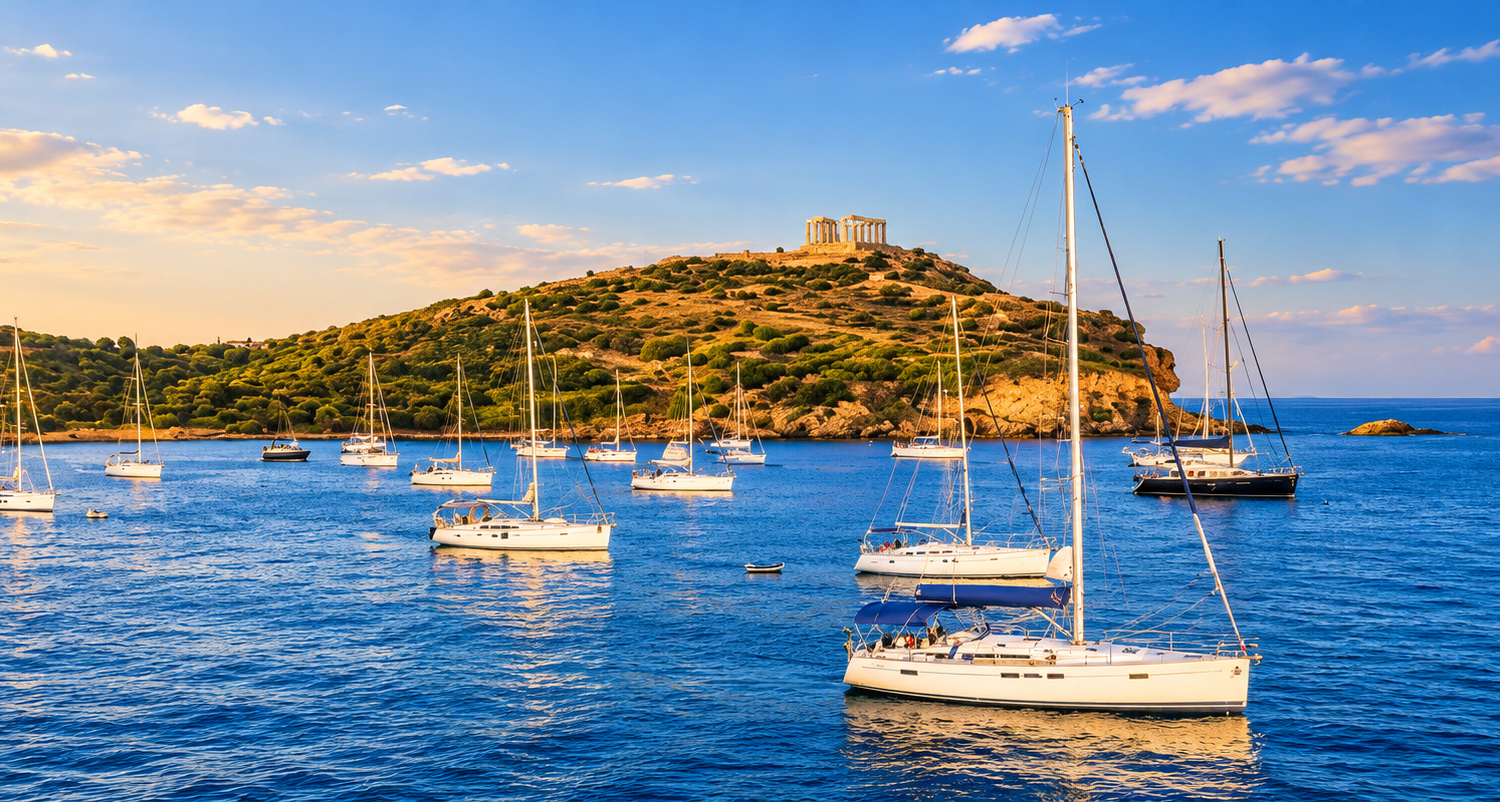
The temple occupies a spectacular position on a rocky headland high above the sea, with panoramic views across the Aegean.
Poseidon, God of the Sea
Poseidon was one of the principal gods of ancient Greek religion and mythology.
He was the brother of Zeus and Hades and was especially associated with the sea, earthquakes, horses, and maritime power.
In a country surrounded by water and dependent on shipping, fishing, trade, and naval power, Poseidon held particular importance for sailors and coastal communities.
Travelers and seafarers offered prayers, sacrifices, and valuable dedications to the god in the hope of receiving protection during dangerous journeys at sea.
The Sanctuary at Sounion
The Temple of Poseidon formed part of a larger sanctuary at Cape Sounion.
The religious importance of the site developed over many centuries, while Sounion itself also served as a strategic point overlooking important maritime routes around southern Attica.
For ships approaching Athens, the sanctuary would have been a highly visible landmark and a symbolic point of arrival or departure.
The sanctuary was also closely connected with the nearby silver-mining region of Laurion, which contributed significantly to the wealth and naval strength of ancient Athens.
Architecture of the Temple
The Temple of Poseidon is a Doric peripteral temple, meaning that its main structure was surrounded by a colonnade.
The outer colonnade originally consisted of six columns across the short sides and thirteen along the long sides.
The temple measured approximately 31.1 meters long and 13.5 meters wide.
Its marble columns stood a little over 6 meters high and were designed with sixteen flutes rather than the twenty more commonly seen in many Doric temples.
Although only part of the original structure survives today, the remaining columns clearly show the elegance and proportions of the Classical design.
The Earlier Archaic Temple
The Classical temple was not the first Temple of Poseidon built at Sounion.
An earlier monumental temple made from poros limestone was constructed during the Archaic period, around the beginning of the 5th century BC.
This earlier building was destroyed during the Persian invasion of Attica in 480 BC.
Several decades later, the Athenians built the marble temple that still dominates Cape Sounion today.
The Sculptural Decoration
The temple was decorated with architectural sculpture connected with well-known Greek myths.
Surviving fragments of its frieze include scenes from the Centauromachy, the legendary battle between the Lapiths and the Centaurs, as well as episodes from the Labors of Theseus.
These mythological subjects were common in Classical Greek art and reflected ideas about heroism, order, conflict, and the identity of Athens.
The Cult of Poseidon
At the center of the temple stood the naos, or main sacred chamber.
This inner space housed the cult image of Poseidon and formed the religious heart of the temple.
Ancient worship generally took place through offerings, prayers, festivals, and sacrifices, with many ceremonies performed outside the temple near the altar rather than inside the main chamber.
For sailors, merchants, and communities dependent on the sea, worship of Poseidon carried particular importance.
The Sounion Kouros and Archaeological Finds
Archaeological investigation at Sounion has revealed important sculptures, inscriptions, architectural fragments, and votive offerings.
One of the most famous discoveries is the monumental Sounion Kouros, an Archaic marble statue of a young man that once stood as a dedication within the sanctuary.
The statue dates to around the beginning of the 6th century BC and is now displayed in the National Archaeological Museum of Athens.
Systematic archaeological research at Cape Sounion developed during the late 19th and early 20th centuries and helped reveal the long history of the sanctuary and fortified settlement.
The Temple and the Sea Routes of Athens
The location of the Temple of Poseidon was closely connected with the maritime importance of ancient Athens.
From the headland, ships could be observed travelling along the southern coast of Attica and toward the Saronic Gulf and the Aegean Sea.
Nearby fortifications protected the sanctuary and helped secure important maritime supply routes to Athens.
The region was also strategically linked with the rich silver mines of Laurion, which played an important role in the economy and naval development of Classical Athens.
The Temple of Poseidon Today
Today, the Temple of Poseidon is one of the most impressive archaeological monuments in Attica.
Its surviving Doric columns rise above the sea, creating one of the most recognizable views in the wider Athens region.
The combination of Classical architecture, mythology, coastal landscape, and panoramic views makes Cape Sounion especially memorable around sunset.
Visitors can also explore the wider archaeological site and learn about the sanctuary, fortifications, ancient settlement, and maritime history of the area.
Visit the Temple of Poseidon from Athens
The Temple of Poseidon can be reached from Athens by following the scenic coastal road along the Athens Riviera toward Cape Sounion.
The journey combines coastal scenery, beaches, seaside communities, and the archaeological landscape of southern Attica.
Visit Cape Sounion and explore the Temple of Poseidon on our Cape Sounion and Temple of Poseidon Afternoon Tour.