
About Athens City
Athens is one of the world's most historic cities and the capital of Greece. Its history stretches back thousands of years, with evidence of human settlement dating to prehistoric times.
During the 5th century BC, particularly in the age of Pericles, Athens became one of the most influential cities of the ancient world. Philosophy, drama, architecture, political thought, and the development of democracy helped shape ideas that continue to influence societies today.
Over the centuries, Athens was transformed by Roman, Byzantine, Frankish, and Ottoman rule. These different periods left their mark on the city, creating a remarkable historical landscape where ancient monuments, medieval churches, neoclassical buildings, and modern architecture stand side by side.
In 1834, Athens became the capital of the modern Greek state. Since then, it has developed into a large and vibrant Mediterranean metropolis while preserving some of the most important archaeological monuments in the world.
Athens at a Glance
Modern Athens combines ancient history with contemporary city life.
The historic center is compact enough to explore largely on foot, with many of the city's most famous archaeological sites, museums, neighborhoods, cafés, restaurants, and shopping areas located relatively close to one another.
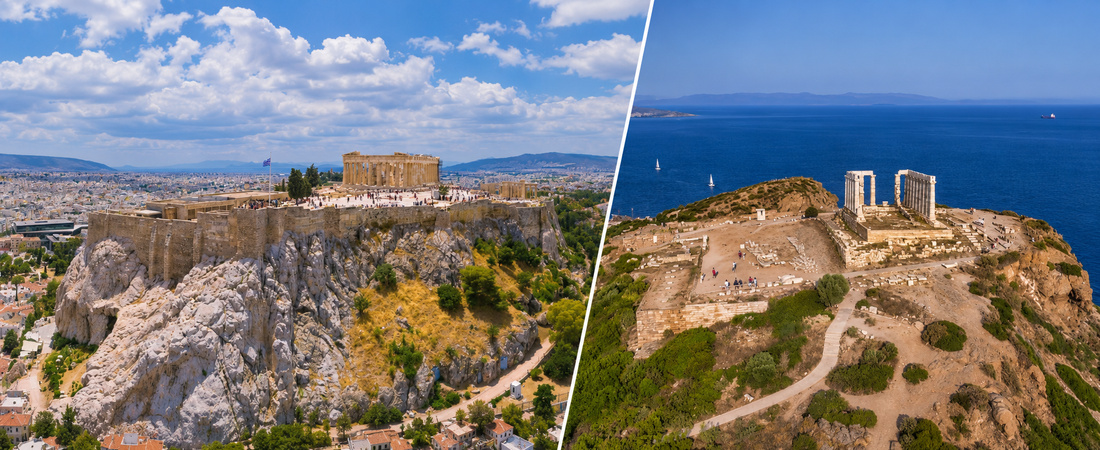
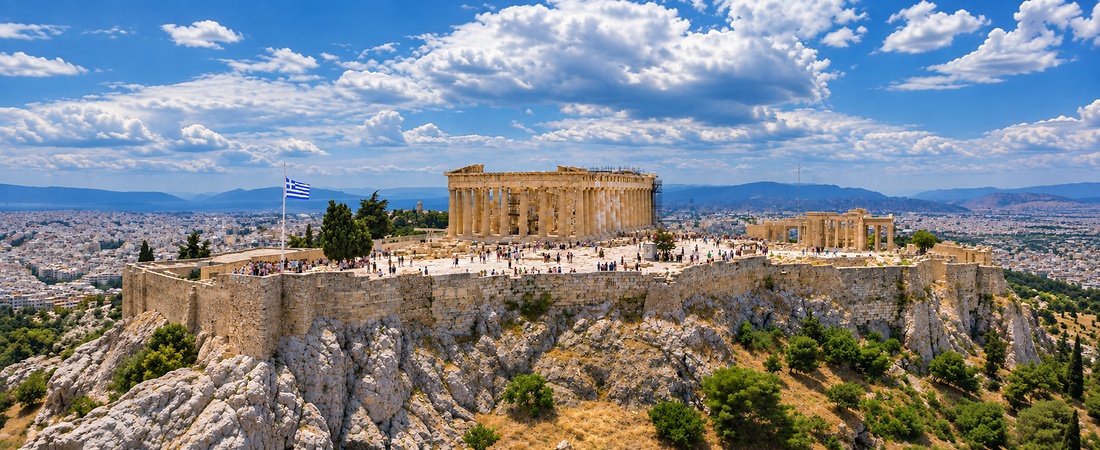
At the center of the city rises the Acropolis of Athens, crowned by the Parthenon and visible from many parts of the capital.
Around the Acropolis are historic neighborhoods such as Plaka, Monastiraki, Thissio, and Makrygianni, where ancient monuments and modern city life meet.
Ancient Athens and the Classical Golden Age
Athens reached one of the most important periods of its history during the 5th century BC, when the city became a major political, cultural, and military power.
Under the leadership of Pericles, the Acropolis of Athens was transformed by an ambitious building program that produced monuments including the Parthenon, the Propylaia, the Erechtheion, and the Temple of Athena Nike.
The city was also closely associated with major figures of ancient philosophy, literature, politics, and drama, including Socrates, Plato, Aristotle, Aeschylus, Sophocles, Euripides, and Aristophanes.
Athens also became famous for the development of direct democracy, with citizens participating in political institutions such as the Assembly that met on the Pnyx.
The Historic Center
The historic center of Athens contains an extraordinary concentration of monuments from different periods of the city's history.
Visitors can walk from the Acropolis to the Ancient Agora, Roman Agora, Hadrian's Library, the Temple of Olympian Zeus, Hadrian's Arch, and many smaller archaeological sites within a relatively compact area.
The combination of archaeological remains, traditional neighborhoods, Byzantine churches, neoclassical buildings, and modern streets makes central Athens one of the most distinctive historic city centers in Europe.
Plaka and Monastiraki
Plaka lies directly beneath the Acropolis and is one of the oldest and most atmospheric neighborhoods in Athens.
Its narrow streets are lined with traditional houses, neoclassical buildings, small churches, cafés, taverns, shops, and historic monuments.
Among the landmarks in and around Plaka are the Choragic Monument of Lysicrates, the Roman Agora, and the famous Tower of the Winds.
Nearby, Hadrian's Library was constructed in AD 132 during the reign of the Roman emperor Hadrian.
To the north, Monastiraki is one of the liveliest areas of central Athens, known for its square, flea market area, shops, restaurants, and views toward the Acropolis.
Major Archaeological Sites
The Acropolis of Athens is the city's most famous archaeological site, but it forms only part of the surviving ancient landscape.
The Ancient Agora was the political, commercial, and social heart of ancient Athens and includes the exceptionally well-preserved Temple of Hephaestus.
The Roman Agora reflects the city's development during the Roman period, while the nearby Tower of the Winds is one of the most unusual surviving monuments of ancient Athens.
The monumental Temple of Olympian Zeus was one of the largest temples in the ancient world, while nearby Hadrian's Arch marks another important connection between Athens and the Roman emperor Hadrian.
The Theater of Dionysus, located on the southern slope of the Acropolis, is closely associated with the development of ancient Greek drama.
Museums and Culture
Athens has a wide range of museums covering archaeology, history, art, and Greek culture.
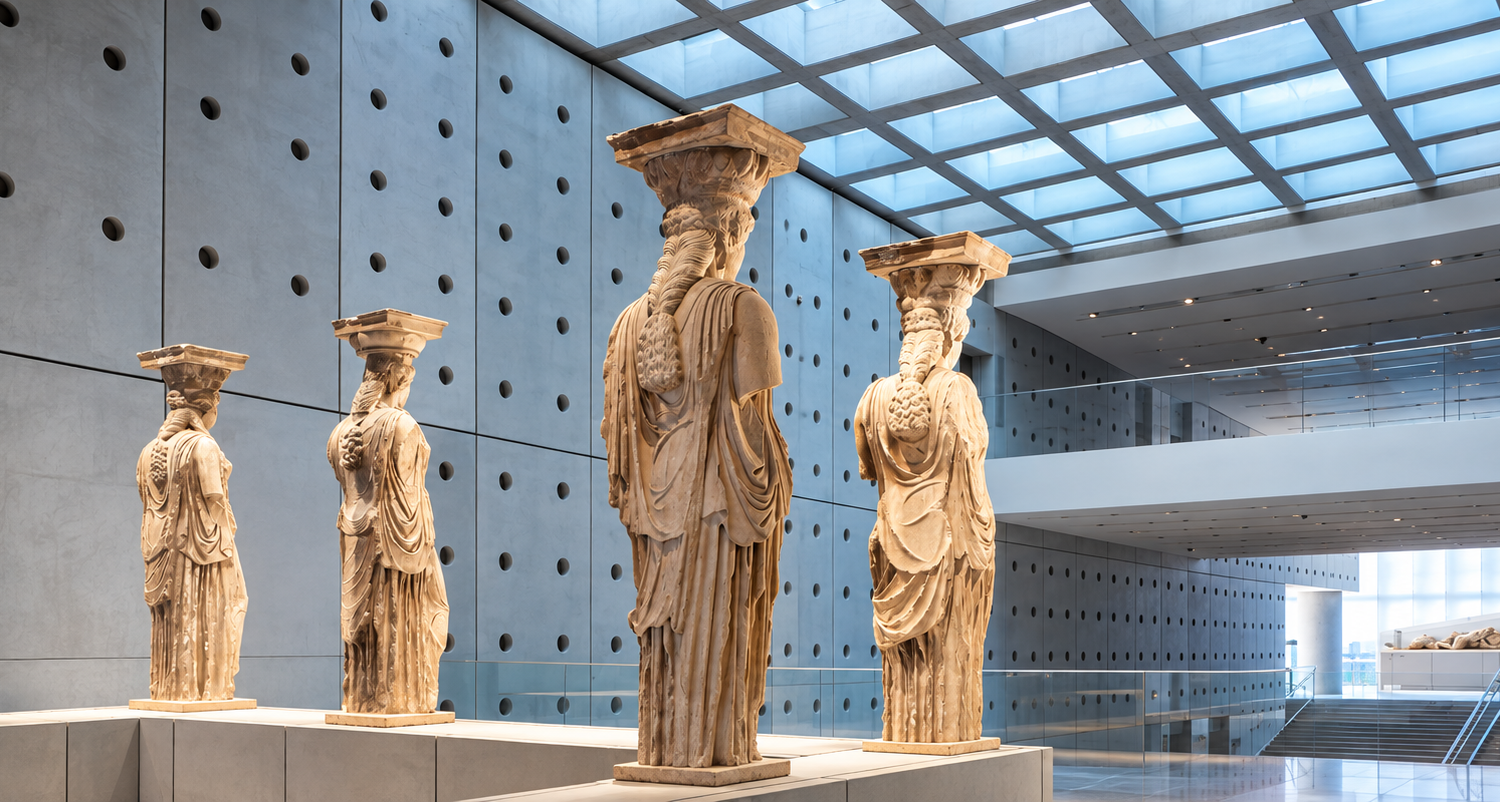
The Acropolis Museum, located near the southern slope of the Acropolis, displays sculptures and archaeological finds from the sacred rock and its surrounding slopes.
The National Archaeological Museum contains one of the world's most important collections of ancient Greek art and archaeology.
Visitors interested in later Greek culture can also explore the Museum of Modern Greek Culture and its collections, while the Museum of Greek Folk Musical Instruments presents traditional instruments from different parts of Greece.
Other important cultural institutions include the Benaki Museum, the Museum of Cycladic Art, the National Gallery, and numerous smaller museums and historic collections throughout the city.
The Panathenaic Stadium
One of the most distinctive monuments of modern Athens is the Panathenaic Stadium, also known as Kallimarmaro.
The stadium occupies the site of an ancient athletic venue and was reconstructed entirely in marble during the 19th century.
It hosted the opening and closing ceremonies of the first modern Olympic Games in 1896 and remains closely associated with the Olympic history of Greece.
The Athens Riviera
South of the historic center, the urban coastline of Athens extends along the Saronic Gulf and is widely known as the Athens Riviera.
Areas such as Palaio Faliro, Alimos, Glyfada, Voula, and Vouliagmeni combine marinas, beaches, seaside promenades, restaurants, cafés, shopping, and nightlife.
The coastal zone is particularly popular during the warmer months and offers a very different experience from the archaeological and historic center of Athens.
Continuing farther south along the coast eventually leads toward Cape Sounion and the spectacular Temple of Poseidon.
Modern Athens
Athens is not only an archaeological destination but also a modern European capital with busy commercial districts, universities, cultural venues, restaurants, nightlife, and residential neighborhoods.
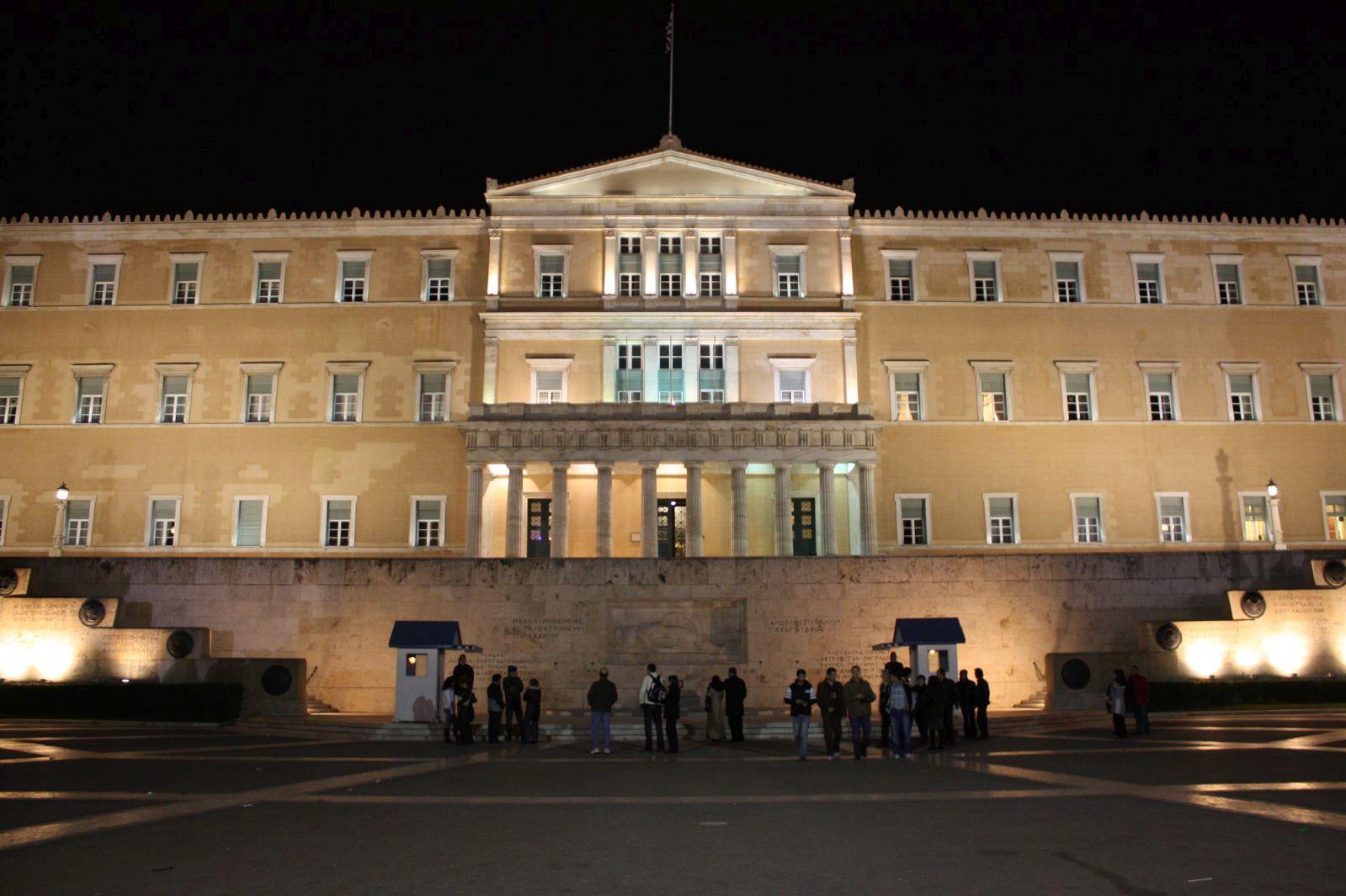
Syntagma Square forms one of the main centers of modern Athens and faces the Hellenic Parliament, where visitors can see the ceremonial changing of the guard at the Tomb of the Unknown Soldier.
To the north of the city center, Marousi is home to the Olympic Athletic Center of Athens, commonly known as OAKA.
The main Olympic Stadium opened in 1982, while the wider complex developed over the following decades. It was extensively upgraded before hosting major events during the 2004 Olympic Games.
Nearby, Kifisia is known for its tree-lined streets, villas, shops, cafés, and greener suburban atmosphere.
Day Trips and Historic Sites Around Athens
The wider region of Attica contains numerous archaeological, religious, and historic sites that can be visited from Athens.
Piraeus, Greece's largest passenger port, lies southwest of the city center and has been closely connected with Athens and the sea since antiquity.
The Daphni Monastery is one of Greece's most important Byzantine monuments and forms part of the UNESCO World Heritage property that also includes Hosios Loukas and Nea Moni of Chios.
The historic Kaisariani Monastery stands on the wooded slopes of Mount Hymettus and offers an interesting combination of Byzantine history and natural surroundings.
At Marathon, visitors can explore an area associated with the famous Battle of Marathon of 490 BC and visit the Tomb of the Athenians.
The archaeological site of Eleusis preserves the Sanctuary of Demeter and remains connected with the ancient Eleusinian Mysteries.
Other important sites in Attica include the Amphiaraion of Oropos and the archaeological site of Brauron (Vravrona), an important sanctuary dedicated to Artemis.
Cape Sounion and the Temple of Poseidon
One of the most popular excursions from Athens follows the coastal road to Cape Sounion.
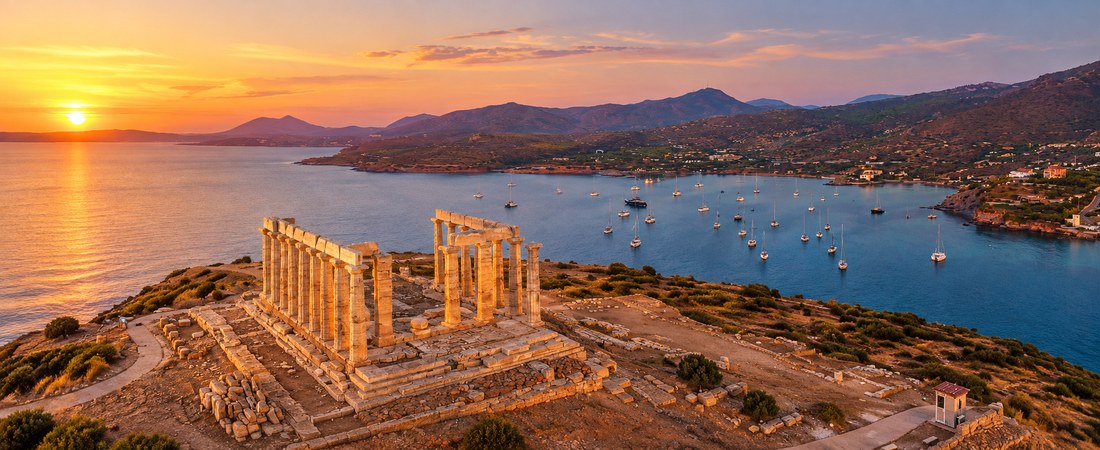
Standing high above the Aegean Sea is the Temple of Poseidon, constructed during the 5th century BC.
Its dramatic position at the southern tip of Attica offers panoramic sea views and makes Sounion especially popular around sunset.
Mountains and Nature Around Athens
Athens is surrounded by mountains that provide walking routes, forests, archaeological sites, monasteries, and panoramic viewpoints.
Mount Parnitha, north of the city, contains extensive forest areas and forms part of a national park.
Mount Hymettus rises east of central Athens and offers hiking routes and excellent views across the city and the Saronic Gulf.
Mount Pentelicus, or Mount Penteli, is historically famous for the marble quarried there and used in monuments including the Parthenon.
These mountain areas provide a natural contrast to the dense urban landscape of the capital.
Athens Today
Today, Athens combines more than three thousand years of recorded history with the energy of a modern Mediterranean capital.
Ancient monuments stand beside Byzantine churches, Ottoman-period remains, neoclassical buildings, contemporary architecture, lively neighborhoods, museums, restaurants, markets, and shopping streets.
Visitors can explore the Acropolis of Athens in the morning, walk through Plaka and Monastiraki, visit museums and ancient sites, enjoy the coastline in the afternoon, and experience the city's restaurants and nightlife in the evening.
This combination of ancient history, archaeology, culture, sea, mountains, and modern city life makes Athens much more than simply the gateway to the Greek islands.