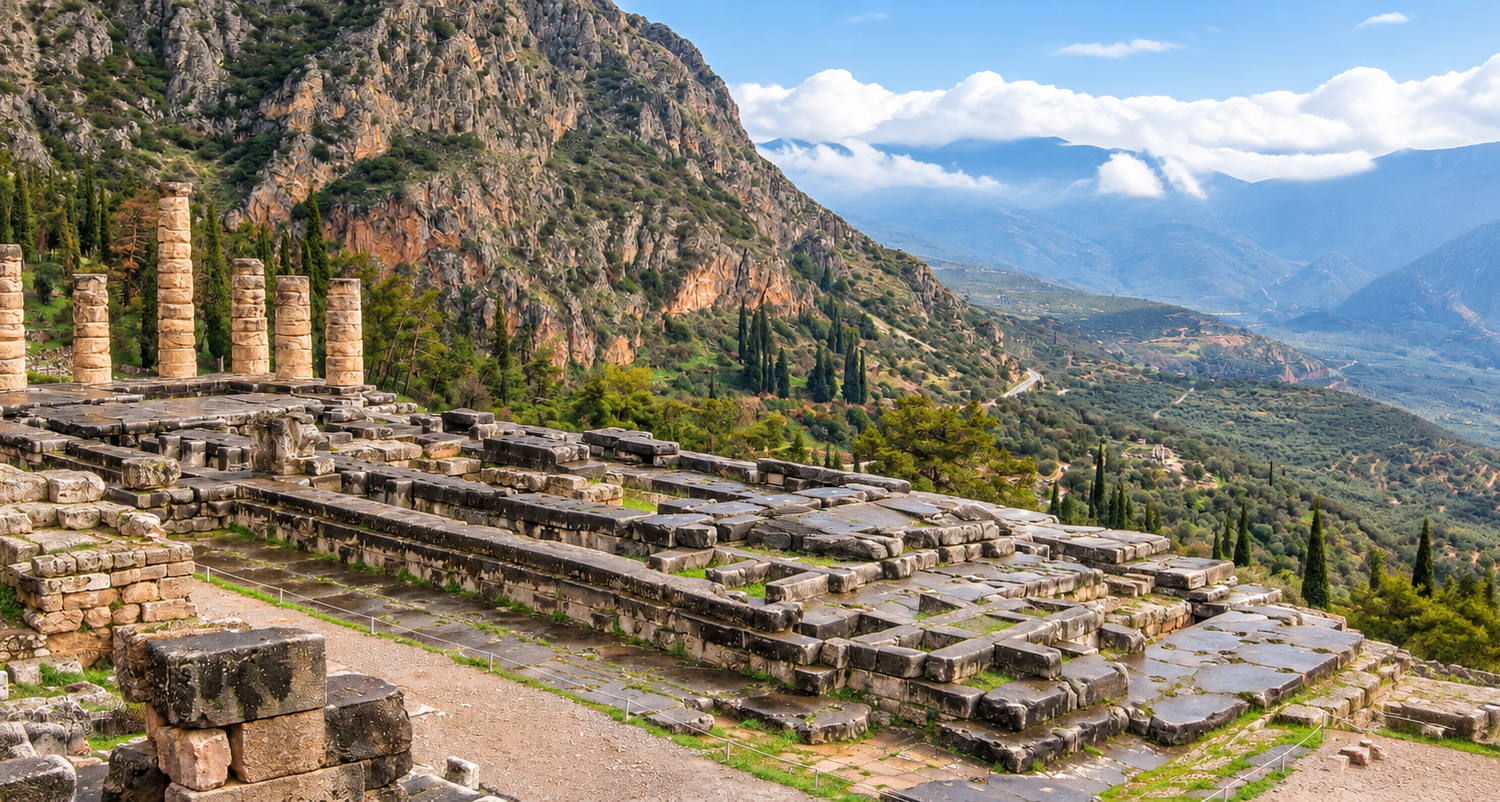

About Museum In Delphi Archaeological Site

The Archaeological Museum of Delphi is one of the most important museums in Greece and an essential part of any visit to the Delphi Archaeological Site. Its collections present the history of the famous Sanctuary of Apollo and the Delphic Oracle through sculptures, architectural decoration, bronze objects, inscriptions and precious votive offerings.
The collection covers a period beginning in the 2nd millennium BC, before the establishment of the Sanctuary of Apollo, and continues through the Archaic, Classical, Hellenistic and Roman periods to Late Antiquity.
Among the museum's most famous exhibits are the Charioteer of Delphi, the Sphinx of Naxos, the Kouroi of Delphi, the sculptural decoration of the Siphnian Treasury, the gold and ivory offerings and the White Kylix of Apollo.
The Archaeological Museum of Delphi at a Glance
- Location: next to the Delphi Archaeological Site in Central Greece
- First museum inaugurated: 1903
- Collections: from the 2nd millennium BC to Late Antiquity
- Main focus: the Sanctuary of Apollo and the Oracle of Delphi
- Famous exhibits: Charioteer of Delphi, Sphinx of Naxos, Kouroi of Delphi and Siphnian Treasury sculptures
- Other highlights: gold and ivory votive objects, White Kylix of Apollo, Antinous and architectural sculptures from the sanctuary
The History of the Museum
The first Archaeological Museum of Delphi was inaugurated on 2 May 1903, at the conclusion of the major archaeological campaign known as the Great Excavation.
The construction of the museum was financed by the Greek benefactor Andreas Syngros and designed by the French architect Albert Tournaire.
As archaeological research progressed and the number of discoveries increased, the museum was repeatedly reorganized and expanded. Its modern exhibition was designed to present the history of Delphi chronologically while also connecting individual objects with the monuments and religious activities of the sanctuary.
The Beginnings of the Sanctuary
The first part of the museum introduces the earliest history of Delphi, before the sanctuary became internationally famous as the home of Apollo's oracle.
Among the early objects are Mycenaean clay figurines and other finds demonstrating human activity in the area during the Late Bronze Age.
These objects are important because they show that the area had religious and cultural significance before the great Sanctuary of Apollo developed during the early historic period.
Early Offerings to the Sanctuary
As Delphi developed into an important religious center, worshippers began dedicating valuable objects to the gods.
The museum preserves numerous bronze tripods, cauldrons, figurines and decorative objects dating mainly to the Geometric and early Archaic periods.
Tripods became particularly associated with Apollo and the Delphic Oracle. In Greek mythology, the Pythia delivered the god's prophecies while seated on a sacred tripod.
Many bronze cauldrons were decorated with griffins and other fantastic creatures, demonstrating both the wealth of the offerings and the artistic connections between Delphi and other regions of the ancient Mediterranean.
The Kouroi of Delphi
Among the most impressive Archaic sculptures in the museum are the two monumental male statues known as the Kouroi of Delphi.
Created by the Argive sculptor Polymedes around 580 BC, the statues were dedicated by the people of Argos to Apollo.
They were traditionally identified as Kleobis and Biton, the two brothers celebrated by Herodotus for their devotion to their mother.
However, another interpretation suggests that the statues may represent the Dioscuri, Castor and Pollux. For this reason, it is more accurate today to refer to them simply as the Kouroi of Delphi while explaining the different proposed identifications.
The Sicyonian Monuments
The museum also preserves sculptural decoration associated with monuments dedicated by the people of Sicyon.
Among the most important pieces are Archaic metopes carved in local stone and originally belonging to an earlier monumental structure known as the Monopteros.
The reliefs depict mythological scenes and provide important evidence for the development of Greek architectural sculpture during the early 6th century BC.
The Gold and Ivory Offerings
One of the most remarkable groups of objects in the museum comes from a sacred deposit discovered near the Sacred Way.
The collection includes precious objects made from gold, silver and ivory, demonstrating the extraordinary wealth dedicated at Delphi during the Archaic period.
Among the most impressive finds are fragments of chryselephantine statues, created using gold and ivory, which have been associated with divine figures including Apollo, Artemis and Leto.
The museum also displays the remains of an extraordinary silver bull, another indication of the exceptional quality and value of the offerings presented to the sanctuary.
The Sphinx of Naxos
One of the most recognizable exhibits in the Archaeological Museum of Delphi is the monumental Sphinx of Naxos.
The inhabitants of the island of Naxos dedicated the Sphinx to Pythian Apollo around 560 BC.
The sculpture combines the head of a woman, the body of a lion and large wings. Originally, it stood above the sanctuary on an enormous Ionic column approximately 10 meters high, while the complete monument reached a height of approximately 12 meters.
An inscription added to the monument in the 4th century BC records the renewal of the privilege of promanteia for the Naxians, giving them priority when consulting the Delphic Oracle.
The Siphnian Treasury
The sculptural decoration of the Siphnian Treasury is one of the masterpieces of Archaic Greek art.
The wealthy inhabitants of the island of Siphnos dedicated the treasury to Apollo around 530–525 BC, when the island was prospering from its rich mines.
Instead of ordinary columns at the entrance, the building used two elegant female figures known as Caryatids to support the architectural structure.
The richly carved frieze depicted major mythological scenes, including the Gigantomachy, episodes connected with the Trojan War and other heroic traditions.
The pediment above the entrance depicted the struggle between Apollo and Heracles over the sacred Delphic tripod.
The Temple of Apollo Sculptures
The museum preserves important architectural sculptures from successive temples of Apollo at Delphi.
Fragments from the Archaic temple illustrate the arrival and divine world of Apollo, while sculptures from the later 4th-century BC temple demonstrate the development of Greek monumental art during the Classical period.
Displaying these sculptures in the museum allows visitors to better understand how richly decorated the Temple of Apollo originally was, even though only part of the building survives at the archaeological site today.
The Treasury of the Athenians
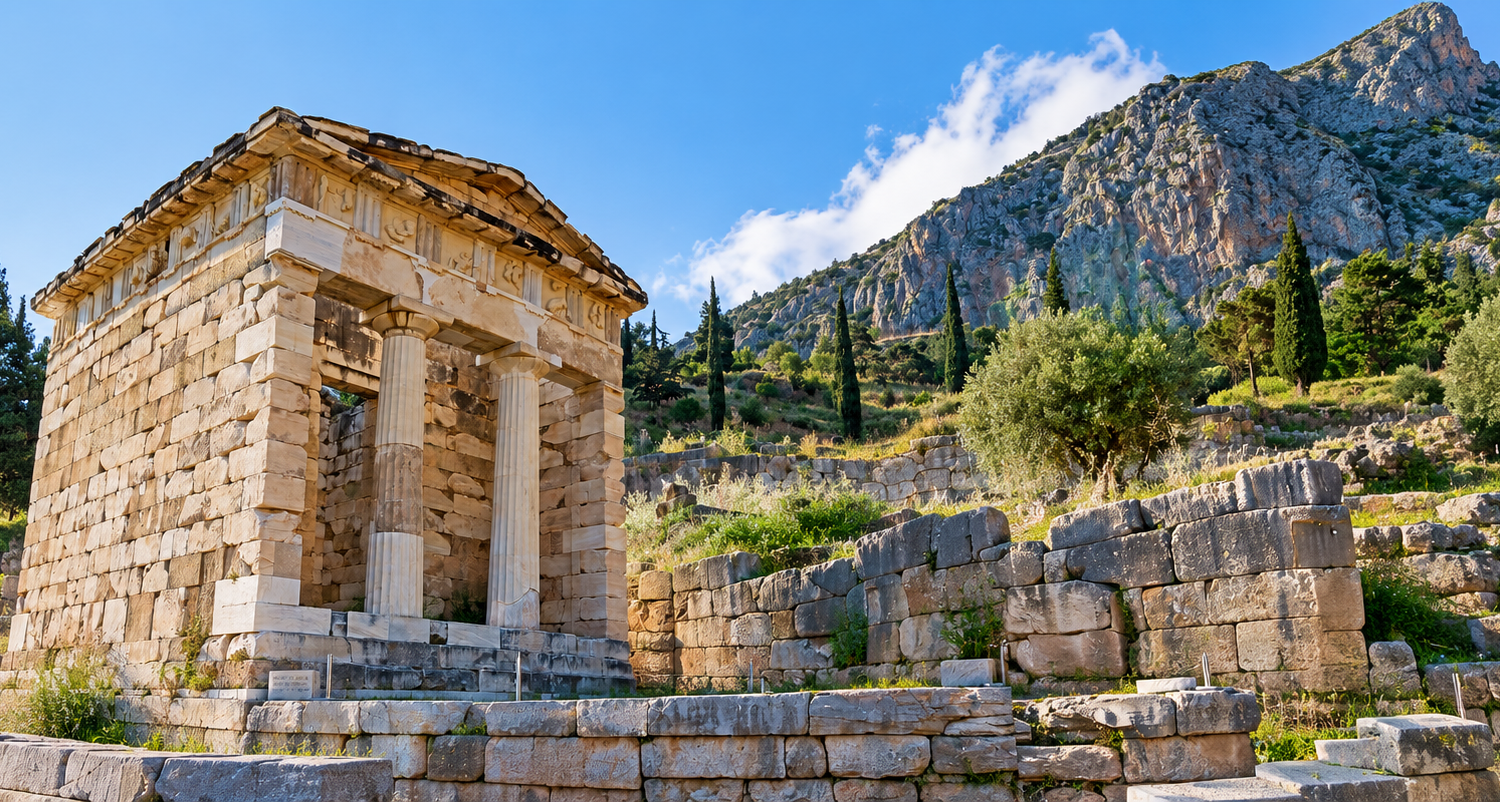
The Treasury of the Athenians was one of the most prominent monuments along the Sacred Way.
The museum preserves much of its original sculptural decoration, while copies have been placed on the reconstructed building at the archaeological site.
The treasury's metopes depict the heroic achievements of Theseus and Heracles. Scenes include battles with Amazons and famous mythological opponents such as the Minotaur.
The monument expressed both religious devotion to Apollo and the growing political confidence of Athens during the early 5th century BC.
The Hymns to Apollo
Among the museum's most unusual exhibits are stone blocks preserving two ancient Hymns to Apollo.
The inscriptions are particularly important because musical symbols survive between the lines of the Greek text, preserving some of the most extensive examples of ancient Greek musical notation.
These hymns provide a rare connection between archaeology and the actual music once performed during religious ceremonies at Delphi.
The White Kylix of Apollo
Another exceptional object is the famous White Kylix of Apollo, dating to approximately 470 BC.
The painted drinking cup depicts Apollo crowned with laurel and seated on an elaborate chair. He holds a seven-string lyre in one hand and a libation bowl in the other.
A black bird, often interpreted as a raven, appears beside him.
The image beautifully reflects Apollo's associations with music, poetry, prophecy and religious ritual.
Votive Offerings of the 5th Century BC
Not every offering at Delphi was a monumental dedication from a powerful city-state.
Many ordinary pilgrims also left smaller objects for Apollo. Bronze figurines, incense burners, vessels and other offerings reveal the personal religious devotion of individuals who visited the sanctuary.
These objects provide an important contrast to the enormous treasuries and monuments dedicated by wealthy Greek communities.
The Tholos of Athena Pronaia
The museum also contains architectural sculptures and fragments from the famous Tholos in the Sanctuary of Athena Pronaia.
Built during the 4th century BC, the circular structure is one of the most distinctive monuments of Delphi.
The purpose of the Tholos is still debated, but its sophisticated combination of architectural forms and rich sculptural decoration demonstrates the exceptional quality of Classical Greek architecture at Delphi.
Late Classical and Hellenistic Delphi
The collections also illustrate the continuing importance of Delphi after the Classical period.
Powerful individuals and communities continued to dedicate monuments and sculptures at the sanctuary during the 4th and 3rd centuries BC.
Important works from this period demonstrate how Delphi remained a place where political power, religious devotion and artistic prestige were closely connected.
Delphi During the Roman Period
Although Delphi gradually lost much of its earlier political influence under Roman rule, the sanctuary continued to attract visitors and benefactors.
One of the most historically important monuments is the relief from the monument of Lucius Aemilius Paullus, which depicts scenes from the Roman victory over the Macedonian king Perseus at the Battle of Pydna in 168 BC.
The museum also preserves Roman portraits and sculptures that demonstrate the continuing prestige of Delphi under the Roman Empire.
The Statue of Antinous
Among the finest Roman sculptures discovered at Delphi is the marble statue of Antinous.
Antinous was the young favorite of the Roman emperor Hadrian. After his death in the Nile, he was honored throughout the Roman Empire.
The beautifully preserved statue discovered at Delphi dates to approximately AD 131–132 and presents Antinous as an idealized youthful figure.
It is considered one of the finest surviving portraits of Antinous from the Roman world.
The Charioteer of Delphi
The most famous exhibit in the museum is the magnificent bronze Charioteer of Delphi, one of the greatest surviving masterpieces of ancient Greek sculpture.
The statue dates approximately to 480–470 BC and originally formed part of a much larger bronze group consisting of a four-horse chariot, horses, the Charioteer and additional figures.
The monument was dedicated by Polyzalos of Gela in Sicily in connection with a victory in the Pythian Games.
The Charioteer is exceptionally well preserved because the monument was buried after destruction in antiquity. The statue was rediscovered during the French excavations at Delphi in the late 19th century.
Its inlaid eyes, carefully modeled face and restrained expression make it one of the finest examples of the transition from Archaic to Classical Greek sculpture.
Why Visit the Archaeological Museum of Delphi
The Archaeological Museum of Delphi transforms the ruins of the archaeological site into a much clearer picture of what the sanctuary once looked like.
At the site, visitors see the foundations and remains of temples, treasuries and monuments. Inside the museum, they can see many of the original sculptures, architectural decorations and offerings that once filled those buildings.
The Charioteer, the Sphinx of Naxos, the Kouroi, the Siphnian Treasury sculptures and the gold and ivory finds demonstrate the extraordinary artistic wealth attracted to Delphi during more than a thousand years of religious activity.
Visit Delphi from Athens
A visit to Delphi is incomplete without exploring both the Delphi Archaeological Site and the Archaeological Museum of Delphi.
Our guided day tour from Athens gives visitors the opportunity to discover the Sanctuary of Apollo, the Temple of Apollo, the Treasury of the Athenians and the museum's most important masterpieces, followed by a visit to the mountain village of Arachova.


See the Delphi Archaeological Site with one of our tours:
- 1 Day Tour To Delphi and Visit of Arachova Village
-
2 Day Tour to Delphi Archaeological site and visit of Meteora Monasteries
-
3 Day Tour To Epidaurus, Mycenae, Nauplio, Olympia and Delphi Archaeological Sites
-
2 Day Tour to Delphi Archaeological site and Visit of Arachova
-
3 Day Tour to Archaeological Site and Museum of Delphi and Meteora Monasteries
-
5 Day Tour To Epidaurus, Nauplion, Mycenae, Olympia, Delphi and Meteora Monasteries
-
4 Day Tour To Epidaurus, Mycenae, Nauplion, Olympia, Delphi and Meteora Monasteries
Tours We Recommend


3 Day Tour to Archaeological Site and Museum of Delphi and Meteora Monasteries
From:
5 Day Tour To Epidaurus, Nauplion, Mycenae, Olympia, Delphi and Meteora Monasteries
From: