
About Mycenae Archaeological Site
The Mycenae Archaeological Site is one of the most important archaeological sites in Greece and one of the great centers of the Late Bronze Age. Its monumental fortifications, royal tombs, palace remains and extraordinary archaeological finds gave their name to an entire civilization: the Mycenaean civilization.
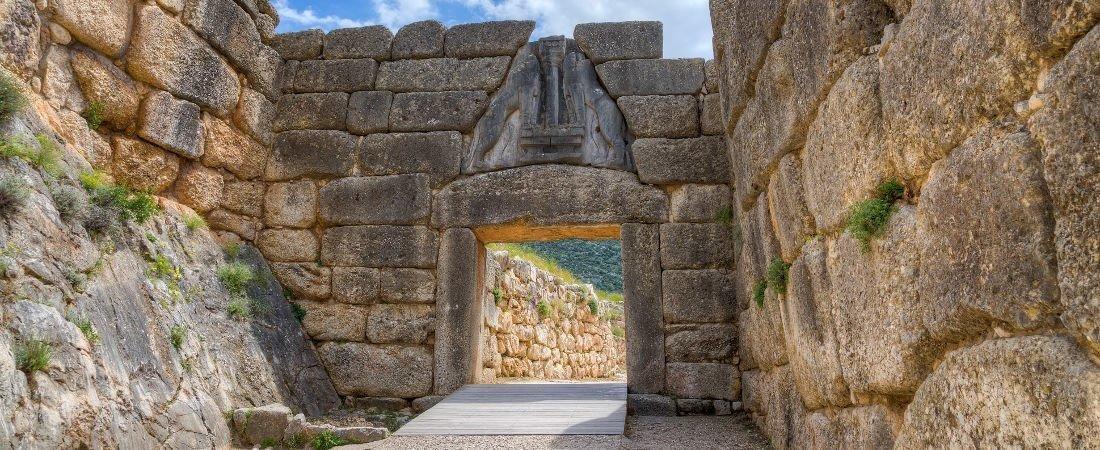
Visitors enter the citadel through the famous Lion Gate and walk beside the massive Cyclopean walls that protected the palace and the heart of the settlement. Nearby stands the monumental Treasury of Atreus, traditionally known as the Tomb of Agamemnon.
Mycenae is also inseparably connected with Greek mythology and the Homeric tradition. It is remembered as the kingdom of the legendary Agamemnon, leader of the Achaean forces in the Trojan War, although archaeology cannot confirm that the mythical king was a historical ruler of the site.
Mycenae at a Glance
- Location: Argolis, northeastern Peloponnese
- Earliest occupation: Neolithic period, around 4000 BC
- Major period of prosperity: Late Bronze Age, especially approximately 1600–1100 BC
- Major monuments: Lion Gate, Cyclopean Walls, Palace, Grave Circles A and B, Treasury of Atreus and Underground Cistern
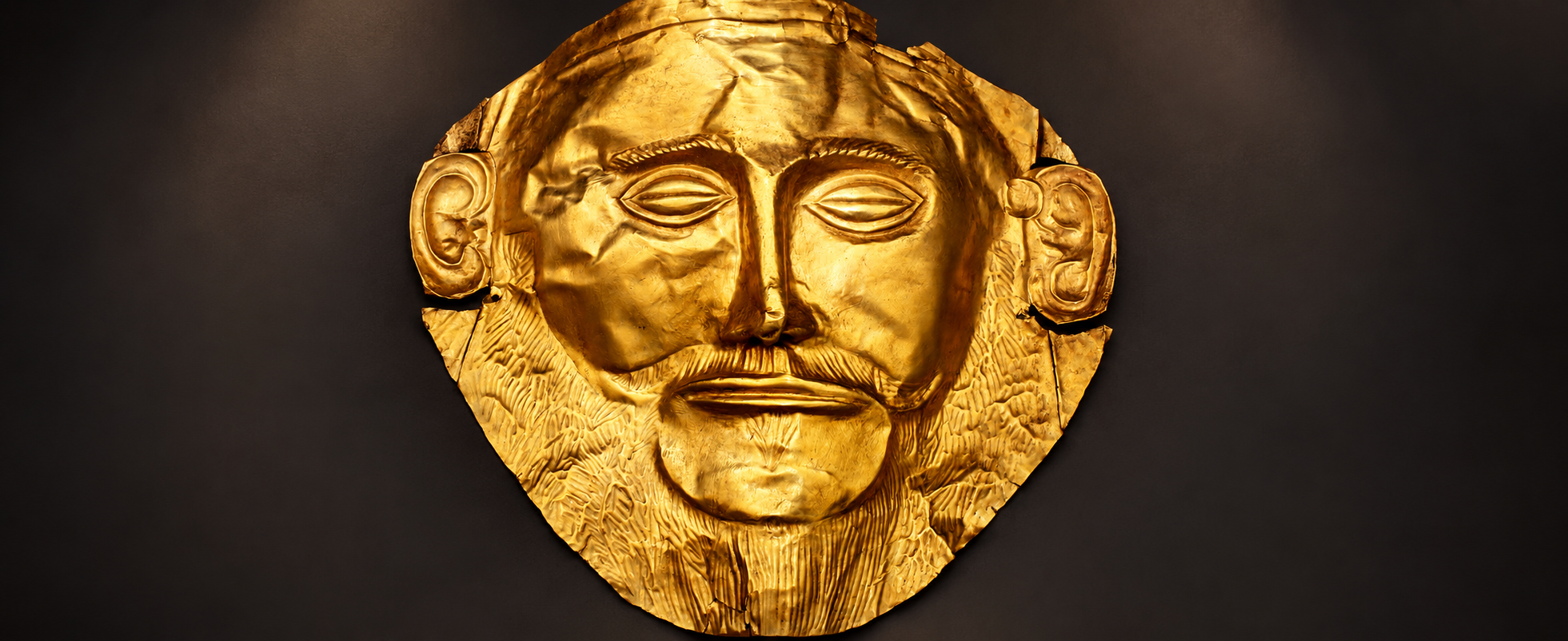
- Most famous archaeological discovery: the so-called Mask of Agamemnon
- Mythological association: Perseus, Atreus, Agamemnon, Clytemnestra, Orestes, Menelaus and Helen
- UNESCO: Archaeological Sites of Mycenae and Tiryns, inscribed on the World Heritage List in 1999
Why Mycenae Was So Important
Mycenae occupied a strategic position overlooking the Argolid Plain and controlling important routes between the Peloponnese, Corinth and central Greece.
During the Late Bronze Age, it developed into one of the richest and most powerful palatial centers of mainland Greece. Its rulers controlled agricultural production, workshops, trade and a complex administrative system.
The wealth discovered in its royal graves, together with imported materials and luxury objects, demonstrates that Mycenae participated in extensive trade networks connecting mainland Greece with the Aegean, Crete, Egypt, Anatolia and the eastern Mediterranean.
The importance of the site was so great that modern archaeologists adopted the name Mycenaean civilization for the Late Bronze Age civilization that flourished across much of mainland Greece.
From Neolithic Settlement to Mycenaean Power
Archaeological evidence indicates human activity at Mycenae as early as the Neolithic period, around 4000 BC, although remains from this early phase are limited.
During the Middle Bronze Age, cemeteries developed on the slopes of the hill. Grave Circle B dates mainly to the 17th century BC, while the richer Grave Circle A belongs largely to the 16th century BC.
During the following centuries, Mycenae developed into a major fortified palace center. Its period of greatest prosperity came during the Late Bronze Age, when monumental architecture, elaborate burial practices, international trade and centralized administration reflected the power of its ruling elite.
The Lion Gate and the Cyclopean Walls
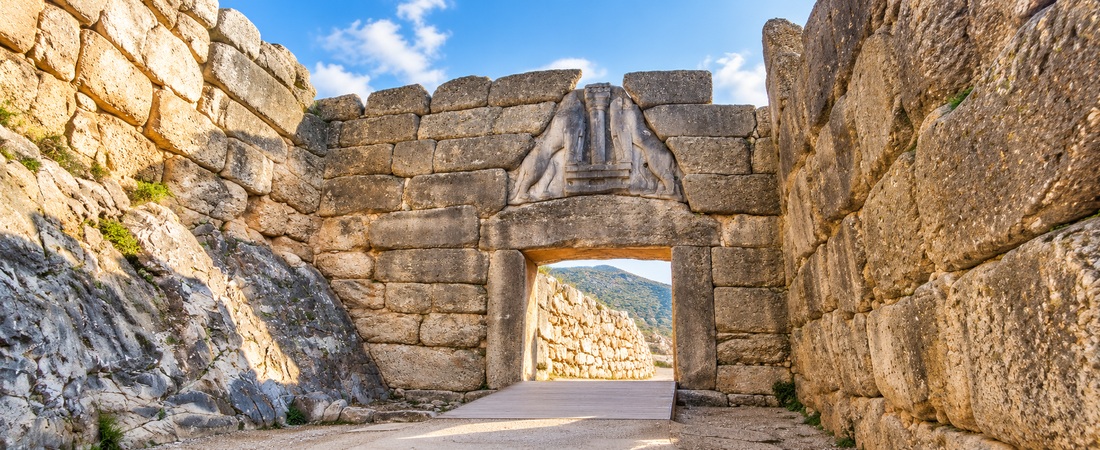
The most famous entrance to Mycenae is the Lion Gate, constructed around the middle of the 13th century BC during a major expansion of the citadel.
Above the enormous doorway is the celebrated relief showing two lions or lionesses standing on either side of a central column. It is one of the most recognizable surviving works of Mycenaean monumental art.
The gate forms part of the massive defensive walls surrounding the citadel. These walls were built from enormous blocks of limestone and later Greeks believed that stones of such size could only have been moved by the mythical Cyclopes. This tradition gave rise to the term Cyclopean masonry.
The fortifications developed in several major phases, approximately around 1350, 1250 and the late 13th century BC, as the citadel expanded and its defenses were strengthened.
The Palace of Mycenae
At the highest point of the citadel stood the Mycenaean Palace, the administrative and political center of the settlement.
The complex included a central megaron, courtyards, storerooms, workshops and other buildings associated with palace administration. The megaron, with its large central hall and throne area, was one of the characteristic architectural elements of Mycenaean palaces.
The palace administration controlled goods, workers, agricultural production and specialized industries. Clay tablets written in Linear B, the earliest known written form of Greek, provide important evidence about the bureaucratic organization of the Mycenaean world.
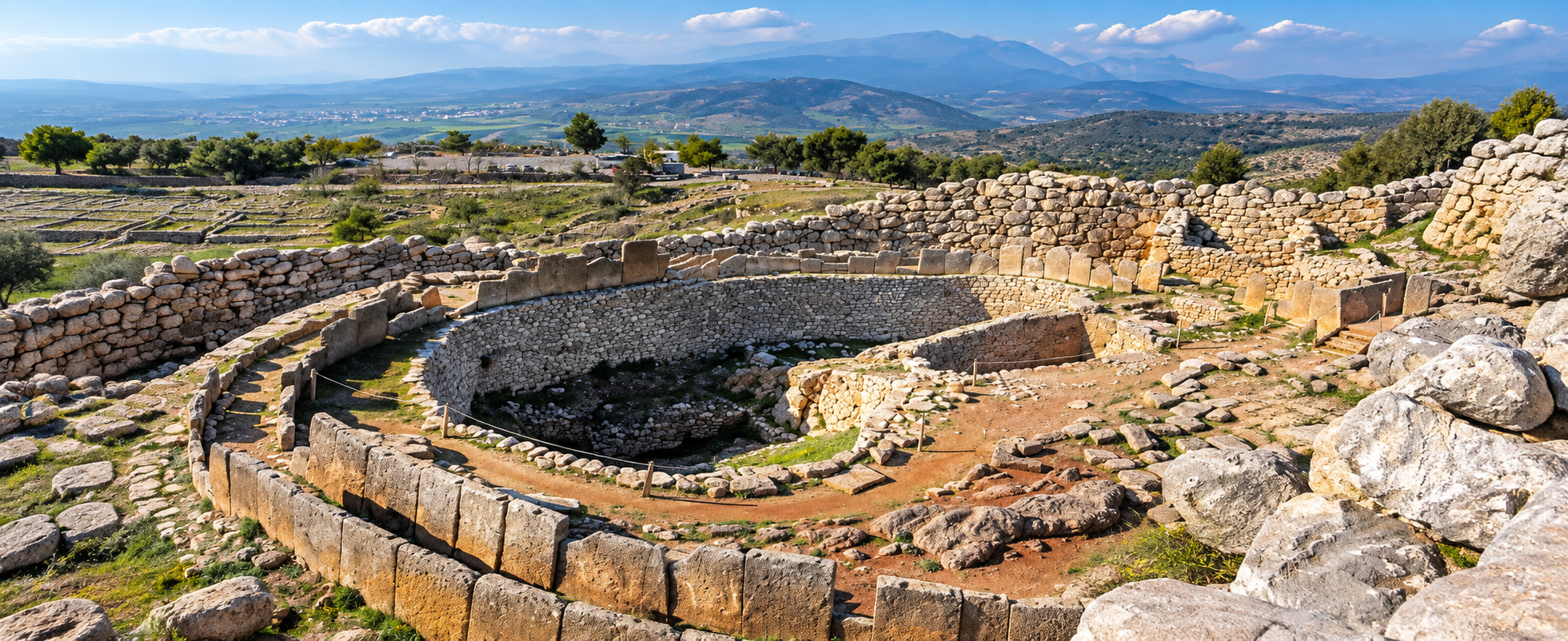
Grave Circle A and Grave Circle B
The royal grave circles are among the most important archaeological discoveries at Mycenae.
Grave Circle B, located outside the later citadel walls, contains shaft graves dating mainly to the 17th century BC.
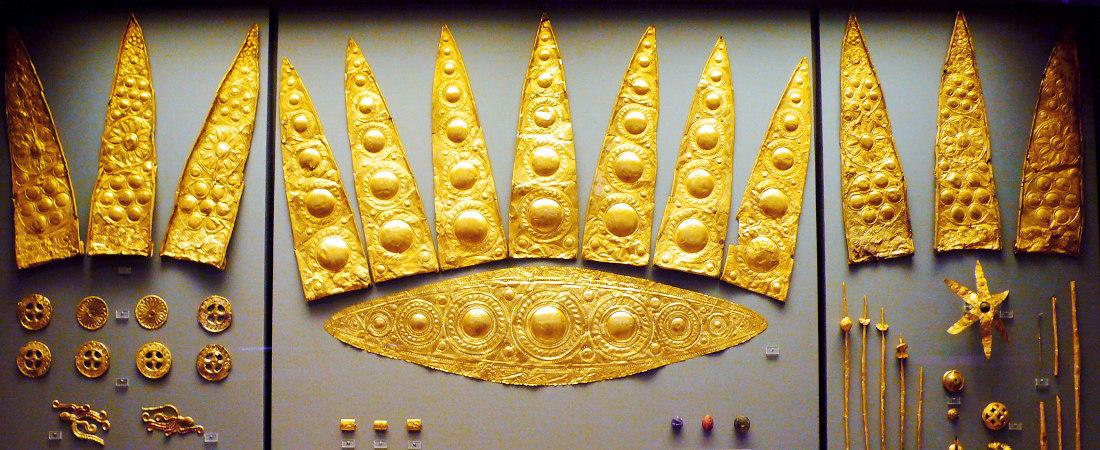
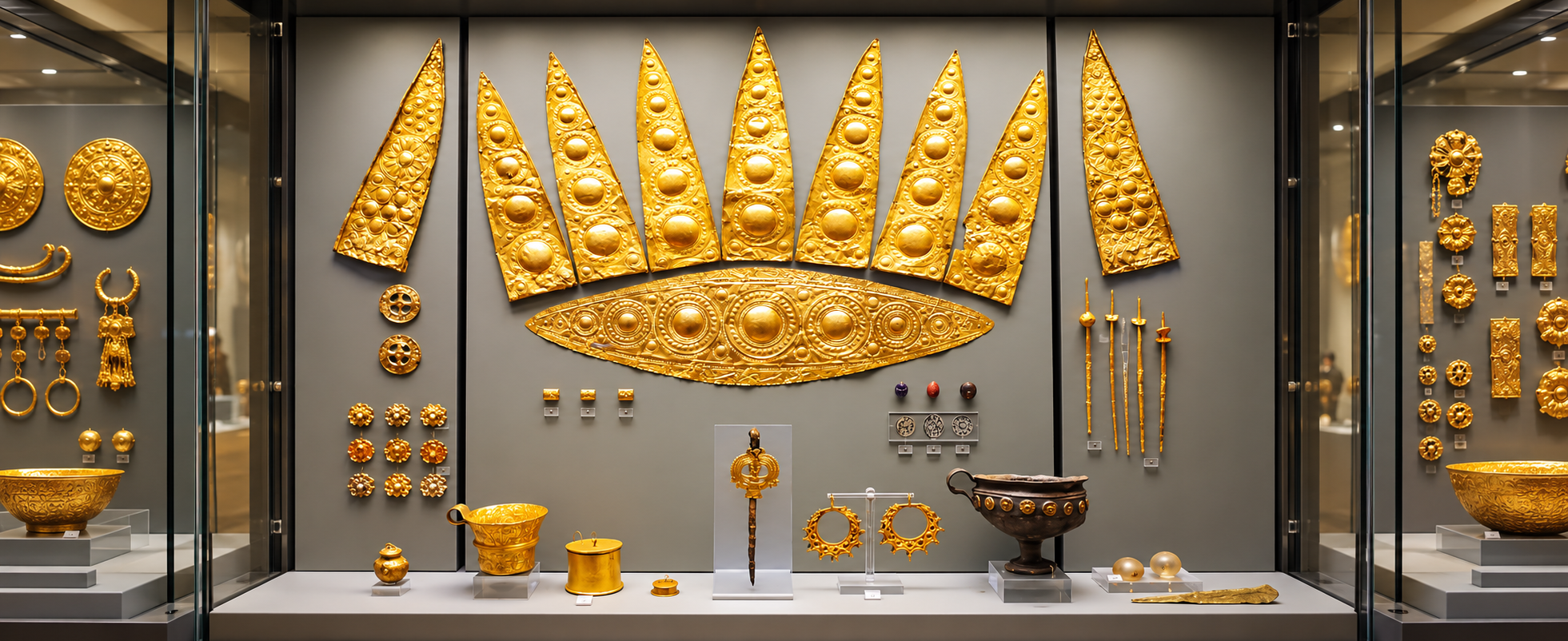
Grave Circle A, originally located outside the earlier fortifications, was later incorporated within the expanded citadel. Its shaft graves date mainly to the 16th century BC and contained extraordinary quantities of gold jewelry, weapons, vessels and other luxury objects.
The richness of these burials demonstrates the emergence of a powerful elite at Mycenae several centuries before the construction of many of the monumental buildings visible today.
The Treasury of Atreus – Traditionally Known as the Tomb of Agamemnon
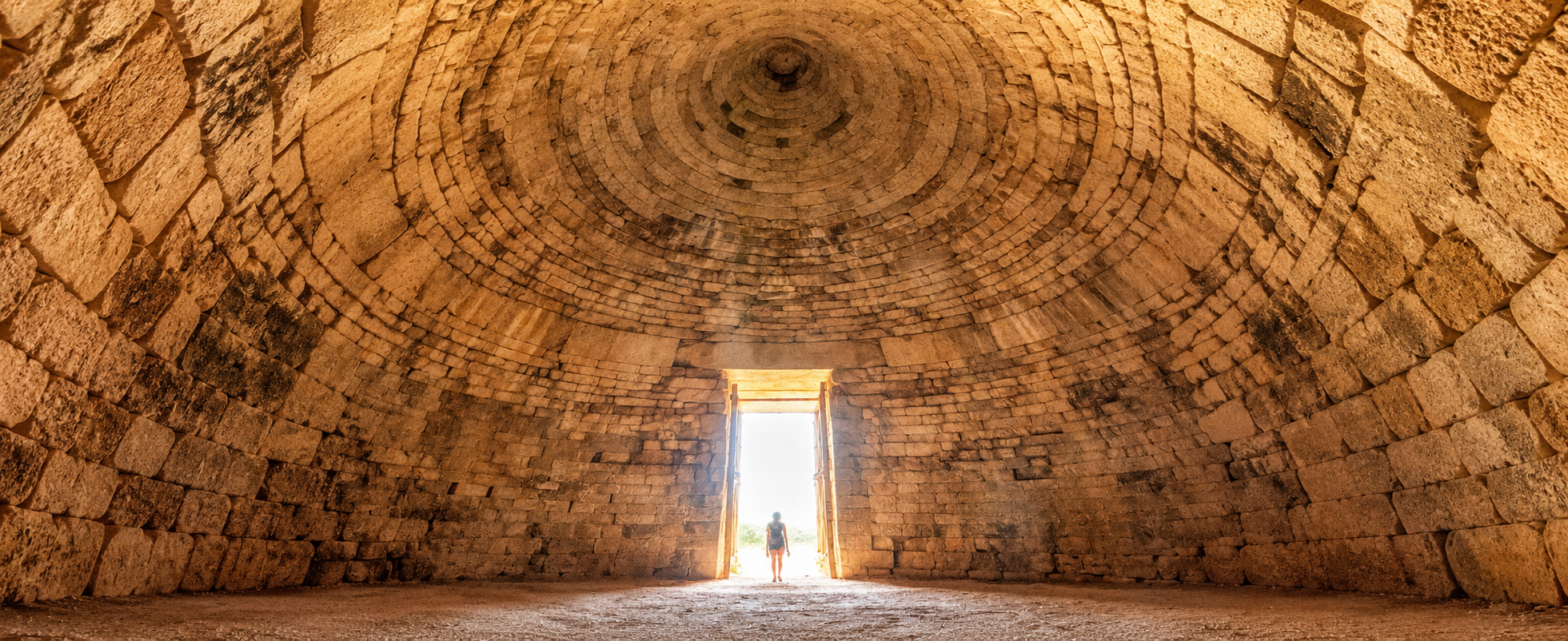
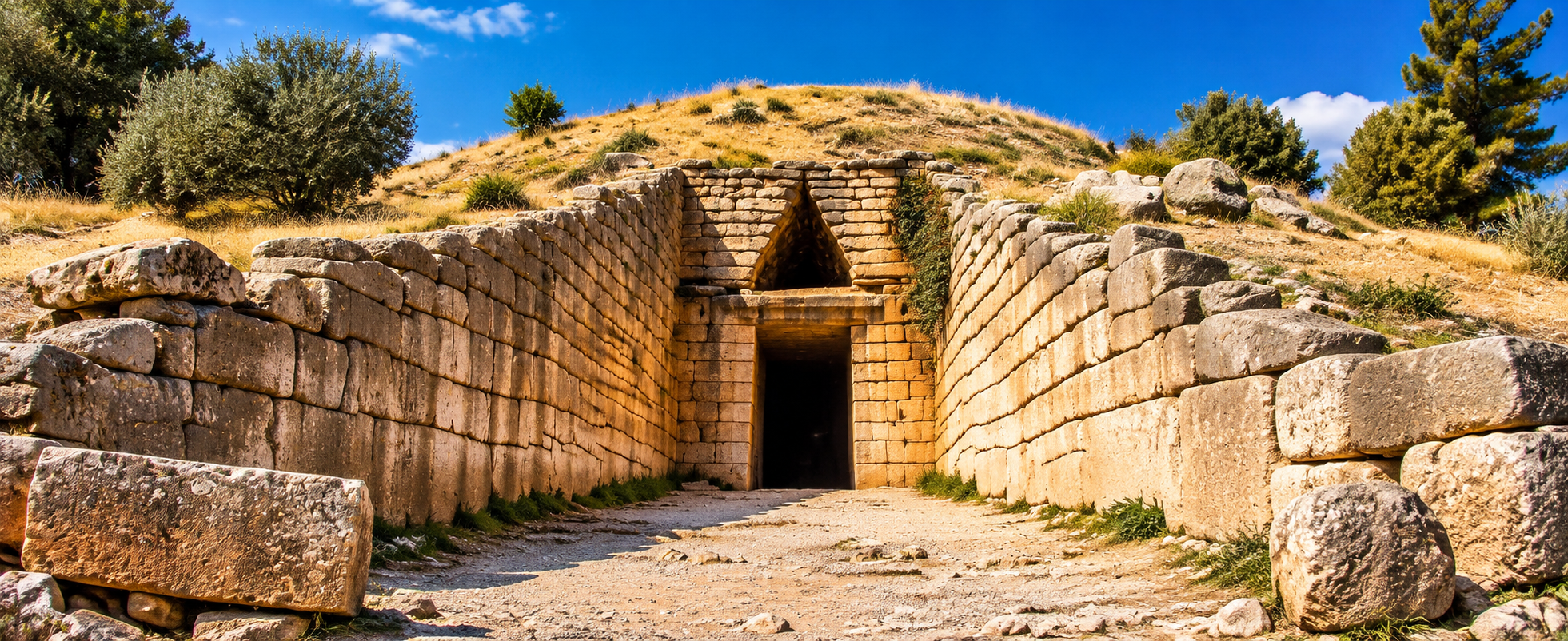
A short distance from the main citadel stands the monumental Treasury of Atreus, one of the finest surviving examples of Mycenaean funerary architecture.
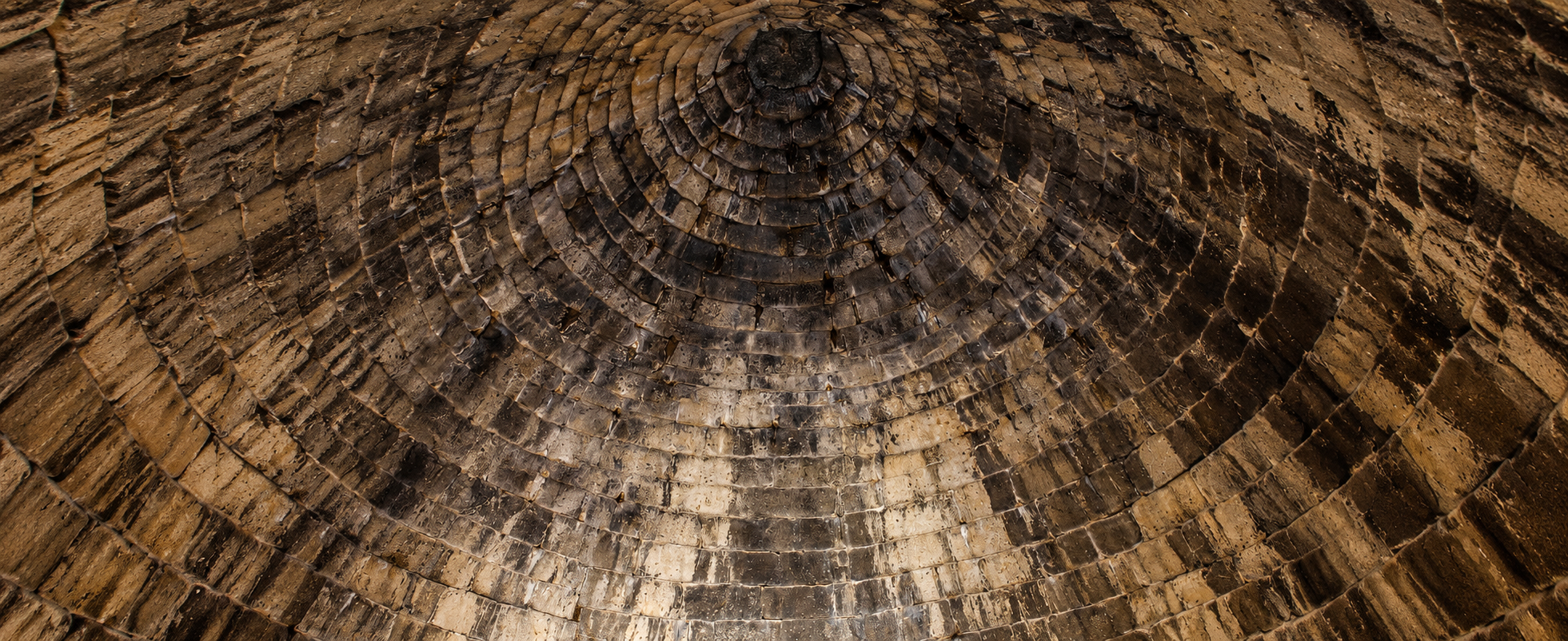
Built around 1250 BC, it is a monumental tholos tomb, characterized by a long entrance passage, an imposing doorway and a vast corbelled chamber shaped like a beehive.
The structure is also traditionally known as the Tomb of Agamemnon. However, there is no archaeological evidence proving that Agamemnon, or any other person known from Greek mythology, was actually buried there.
The ancient names of the people buried in the Treasury of Atreus are unknown. The traditional association with Atreus and Agamemnon reflects the powerful mythological connection between Mycenae and the legendary House of Atreus.
The Mask of Agamemnon
One of the most famous discoveries from Mycenae is the gold funerary mask traditionally known as the Mask of Agamemnon.
Heinrich Schliemann discovered the mask during his excavation of Grave Circle A in 1876 and believed that he had found the burial of the legendary king Agamemnon.
Modern archaeology has shown that this identification cannot be correct. The graves of Grave Circle A, including the burial associated with the famous mask, date mainly to the 16th century BC, several centuries earlier than the period traditionally associated with the Trojan War.
The name “Mask of Agamemnon” has nevertheless remained famous throughout the world.
The original mask, together with many of the richest objects discovered in the royal shaft graves of Mycenae, is displayed in the National Archaeological Museum in Athens.
Mythology of Mycenae – Perseus and the House of Atreus
The history revealed by archaeology must be distinguished from the rich mythology associated with Mycenae.
According to Greek mythological tradition, Perseus, the hero who killed Medusa, founded Mycenae. Later traditions connected the kingdom with the family of Atreus, whose story became one of the darkest and most famous family sagas in Greek mythology.
Atreus and his brother Thyestes became bitter rivals for power, and their conflict gave rise to the legendary curse of the House of Atreus.
The next generation included Agamemnon and Menelaus. In myth, Agamemnon ruled Mycenae while Menelaus became king of Sparta. They married the sisters Clytemnestra and Helen respectively.
These stories belong to Greek mythology and literary tradition and should not be treated as a direct historical record of the rulers who actually lived in Bronze Age Mycenae.
Agamemnon, Menelaus and the Trojan War
Mycenae is particularly famous because of its connection with the Trojan War described in Greek epic tradition.
According to the story, the Trojan prince Paris took Helen, wife of Menelaus of Sparta, to Troy. Menelaus appealed to his brother Agamemnon, who became leader of the coalition of Achaean kings and warriors that sailed against Troy.
The war forms the background to Homer's Iliad, while the return journeys of several Greek heroes became the subject of other ancient traditions, including Homer's Odyssey.
Ancient chronographers later attempted to assign historical dates to the Trojan War. Eratosthenes, for example, placed the traditional conflict approximately between 1194 and 1184 BC. Such dates belong to ancient chronological reconstruction and should not be considered archaeological proof that the events described in the myths occurred exactly as told.
The Return of Agamemnon and Orestes
The mythology of Mycenae continues after the Trojan War with the tragic return of Agamemnon.
According to the best-known versions of the myth, Agamemnon returned from Troy only to be murdered by Clytemnestra and Aegisthus. His son Orestes later avenged his father's death by killing them.
The story of Orestes, his sister Electra and the curse of the House of Atreus became central themes of Greek tragedy, inspiring works by Aeschylus, Sophocles and Euripides.
In Aeschylus' version of the story, Orestes is pursued by the Furies for killing his mother and is eventually tried at Athens, where Athena plays the decisive role in ending the cycle of revenge.
The Tombs of Clytemnestra and Aegisthus
Several tholos tombs around Mycenae carry names taken from the legendary House of Atreus, including the so-called Tomb of Clytemnestra and Tomb of Aegisthus.
These names are traditional. Archaeologists cannot identify the individuals originally buried in these monuments, and there is no evidence proving that Clytemnestra, Aegisthus or the other mythological figures were buried in them.
The Tomb of Aegisthus is among the earlier tholos tombs at Mycenae, dating approximately to the 16th century BC, while the Tomb of Clytemnestra belongs to a later stage of Mycenaean monumental tomb construction.
The Underground Cistern and Water Supply
One of the most impressive examples of Mycenaean engineering is the Underground Cistern near the northeastern section of the fortifications.
During the final expansion of the citadel in the late 13th century BC, the defenses were extended so that inhabitants could maintain protected access to a water supply even during a siege.
A corbelled passage and steep staircase descend beneath the fortifications to the underground water system approximately 18 meters below.
This sophisticated solution demonstrates the engineering knowledge of the Mycenaeans and the importance placed on maintaining a secure water supply during periods of conflict.
Houses, Workshops and Life Outside the Palace
Mycenae was much more than its fortified palace.
Archaeological remains outside and around the citadel reveal houses, workshops, storerooms and other buildings connected with the wider settlement.
Among the best-known structures are buildings traditionally called the House of the Oil Merchant, House of the Sphinxes, House of the Shields and West House.
Linear B tablets discovered in this area refer to workers, oil and perfumes, providing valuable evidence for specialized production and the highly organized economy of Mycenaean society.
The Decline of Mycenae
The Mycenaean palatial system entered a period of crisis around the end of the 13th and beginning of the 12th century BC.
Mycenae suffered destruction, fires and major disruption as part of the wider transformation generally known as the Late Bronze Age collapse.
The precise causes remain the subject of archaeological research. Earthquakes, political instability, economic disruption, warfare, population movements and the collapse of international trade networks may all have played a role.
The destruction of the palace did not mean that Mycenae was immediately abandoned. People continued to live at the site during the 12th century BC and later periods, although the great centralized palatial system never recovered its former power.
Heinrich Schliemann and the Excavations of Mycenae
Mycenae became internationally famous in the 19th century through the excavations of Heinrich Schliemann, who had previously carried out excavations at Troy.
In 1876, Schliemann excavated Grave Circle A under the supervision of the Greek archaeologist and Ephor of Antiquities Panagiotis Stamatakis.
The discovery of richly furnished shaft graves containing gold masks, jewelry, weapons and precious vessels attracted worldwide attention.
Schliemann interpreted several of the finds through the Homeric stories and believed that he had discovered the graves of Agamemnon and his companions. Later archaeological research demonstrated that the burials were considerably older than the traditional period of the Trojan War.
Modern archaeology therefore distinguishes carefully between the extraordinary Bronze Age remains uncovered at Mycenae and the mythological identities historically attached to them.
The Archaeological Museum of Mycenae
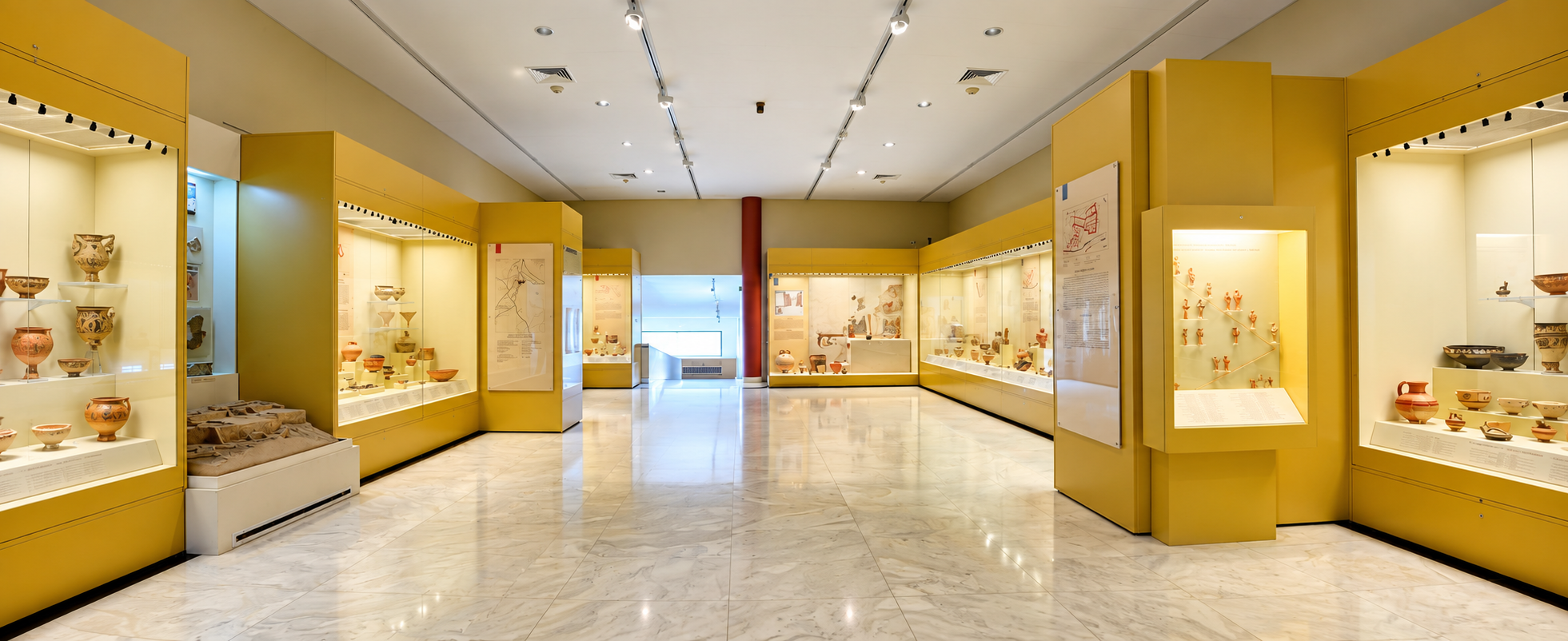
The Archaeological Museum of Mycenae is located within the archaeological site and provides important context for the monuments visitors see outside.
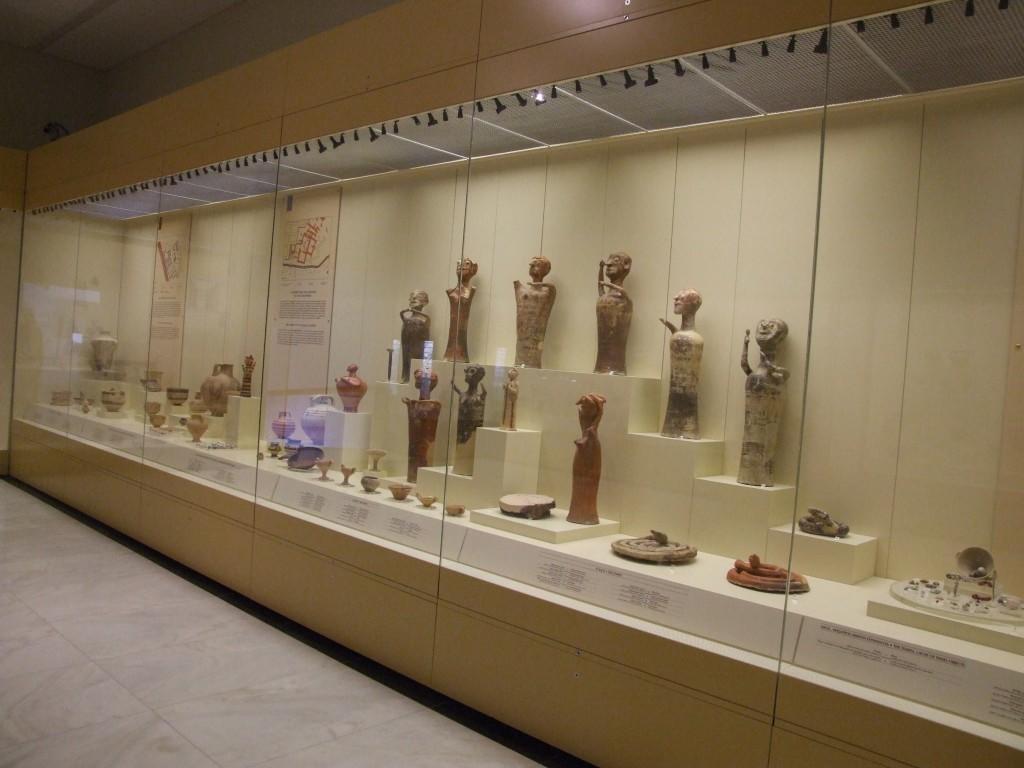
Its exhibitions present finds from the prehistoric and historic periods, with particular emphasis on the Mycenaean civilization, everyday life, religious practices and burial customs.
Visitors can see pottery, tools, figurines, jewelry, weapons and other objects discovered in the wider archaeological area.
Many of the most famous original finds from Grave Circle A, including the so-called Mask of Agamemnon and other exceptional gold objects, are preserved in the National Archaeological Museum of Athens.
Mycenae and UNESCO World Heritage
In 1999, the Archaeological Sites of Mycenae and Tiryns were inscribed together on the UNESCO World Heritage List.
UNESCO recognizes the sites for their outstanding architecture, monumental fortifications, royal tombs, artistic achievements and their exceptional importance for understanding the political, social and economic development of the Mycenaean world.
Mycenae is also recognized for its extraordinary connection with the Homeric epics, the Iliad and the Odyssey, whose influence on European literature and culture has continued for thousands of years.
Mycenae Archaeological Site Today
Today, Mycenae allows visitors to explore one of the most important landscapes of prehistoric Greece.
Entering through the Lion Gate, visitors can walk through the fortified citadel, see Grave Circle A, follow the ancient ramp toward the palace, explore the remains of houses and religious areas and discover the sophisticated underground water system.
Outside the main citadel, Grave Circle B and several monumental tholos tombs demonstrate the development of elite burial architecture over several centuries.
The nearby Treasury of Atreus remains one of the most impressive surviving monuments of Mycenaean engineering and architecture.
What makes Mycenae particularly fascinating is the meeting of two different worlds: the archaeological reality of a powerful Late Bronze Age civilization and the mythology of Agamemnon, Clytemnestra, Orestes, Helen and the Trojan War.
Visit Mycenae from Athens
Mycenae is one of the most important archaeological destinations to visit from Athens and can easily be combined with other major sites and cities of the Argolis region, including Nafplio and Epidaurus.
See the Mycenae Archaeological Site with one of our tours:
- 1 Day Tour To Mycenae and Nafplio
- 2 Day Tour To Mycenae, Nafplio City and Epidaurus
- 3 Day Tour To Epidaurus, Mycenae, Nafplio, Olympia and Delphi Archaeological Sites
- 4 Day Tour To Epidaurus, Mycenae, Nafplio, Olympia, Delphi and Meteora Monasteries
-
5 Day Tour To Epidaurus, Nafplio, Mycenae, Olympia, Delphi and Meteora Monasteries
Tours We Recommend

3 Day Tour To Epidaurus, Mycenae, Nauplio, Olympia and Delphi Archaeological Sites
From:
4 Day Classical Tour To Epidaurus, Mycenae, Nauplion, Olympia, Delphi and Meteora Monasteries
From:
5 Day Tour To Epidaurus, Nauplion, Mycenae, Olympia, Delphi and Meteora Monasteries
From: